Business
RCEP not a “shelter” from protectionism: Expert
The deal with the participation of 16 countries would make up nearly 50% of the world’s population, about 30% of global GDP and 28% of trade turnover.
Vietnamese enterprises should not expect the upcoming Regional Comprehensive Economic Partnership (RCEP) to be a "shelter" from growing global trend of protectionism, according to Nguyen Thi Thu Trang, director of the WTO Center and Integration under the Vietnam Chamber of Commerce and Industry (VCCI).
Trang, nevertheless, said the high expectation does not come as surprise, given the deal with the participation of 16 countries would make up nearly 50% of the world’s population, about 30% of global GDP and 28% of total trade turnover, Trang said at the conference discussing the RCEP on May 23.
Moreover, the consumer base of RCEP is considered not too demanding, except for countries like Japan, Australia or New Zealand, while Vietnam could expect strong demand for some of its key export staples, including tropical fruits and processed foods, among others, Trang added.
Similar to the Comprehensive and Progressive Trans – Pacific Partnership (CPTPP), the RCEP is a multilateral free trade framework but at a larger scale, consisting of China, Japan, India, South Korea, Australia, New Zealand and the 10 members of ASEAN.
“However, there remains concern over the deal,” Trang said, adding some countries are Vietnam’s direct trade competitors with higher competitiveness, while a large number of member countries means a major differentiation of requirements for goods quality.
“A shift and even disruption in trade flow should not be ruled out when the deal becomes effective, especially between countries with no free trade agreements,” Trang continued.
Pham Tuan Anh, deputy head of the International Cooperation Department under the Ministry of Finance (MoF), said the RCEP presents a stronger commitment compared to a bilateral trade deal, but at the same time acknowledges different development levels from member countries.
“After 25 rounds of talks, the deal has come to the final stage of negotiation as all parties are determined to conclude the process in 2019,” Anh informed.
Vietnamese enterprises should prepare for more competition from fields such as communications, logistics, while the investment and business environments are set to become more transparent and competitive, Anh continued.
Meanwhile, Trinh Thu Hien, head of the Import-Export Department under the Ministry of Industry and Trade (MoIT), noted enterprises should not concentrate purely on new FTAs as existing ones are still effective.
Hien cited an example that both Vietnam and Japan are members of the CPTPP and the Japan – Vietnam Economic Partnership Agreement (JVEPA), in this regard, Vietnamese enterprises should take advantage of the zero import tariff from JVEPA in certain goods categories for exporting to the Japanese market.

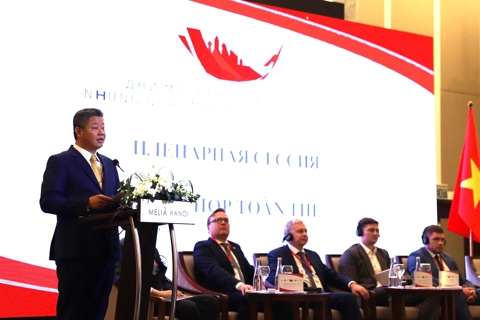
Overview of the conference. Source: Ngoc Thuy.
|
Moreover, the consumer base of RCEP is considered not too demanding, except for countries like Japan, Australia or New Zealand, while Vietnam could expect strong demand for some of its key export staples, including tropical fruits and processed foods, among others, Trang added.
Similar to the Comprehensive and Progressive Trans – Pacific Partnership (CPTPP), the RCEP is a multilateral free trade framework but at a larger scale, consisting of China, Japan, India, South Korea, Australia, New Zealand and the 10 members of ASEAN.
“However, there remains concern over the deal,” Trang said, adding some countries are Vietnam’s direct trade competitors with higher competitiveness, while a large number of member countries means a major differentiation of requirements for goods quality.
“A shift and even disruption in trade flow should not be ruled out when the deal becomes effective, especially between countries with no free trade agreements,” Trang continued.
Pham Tuan Anh, deputy head of the International Cooperation Department under the Ministry of Finance (MoF), said the RCEP presents a stronger commitment compared to a bilateral trade deal, but at the same time acknowledges different development levels from member countries.
“After 25 rounds of talks, the deal has come to the final stage of negotiation as all parties are determined to conclude the process in 2019,” Anh informed.
Vietnamese enterprises should prepare for more competition from fields such as communications, logistics, while the investment and business environments are set to become more transparent and competitive, Anh continued.
Meanwhile, Trinh Thu Hien, head of the Import-Export Department under the Ministry of Industry and Trade (MoIT), noted enterprises should not concentrate purely on new FTAs as existing ones are still effective.
Hien cited an example that both Vietnam and Japan are members of the CPTPP and the Japan – Vietnam Economic Partnership Agreement (JVEPA), in this regard, Vietnamese enterprises should take advantage of the zero import tariff from JVEPA in certain goods categories for exporting to the Japanese market.