Log in
Business

RCEP offers greater flexibility for Vietnam in exercising rules of origin

Vietnamese exporters might find it easy to meet the required rules of origin for their products as a significant portion of its production input is sourced from China and South Korea.

One of the most important benefits from the Regional Comprehensive Economic Partnership (RCEP) for Vietnam over existing free trade agreements (FTAs) is that the former offers greater flexibility on the use of raw materials sourced from member countries, according to Viet Dragon Securities Company (VDSC).

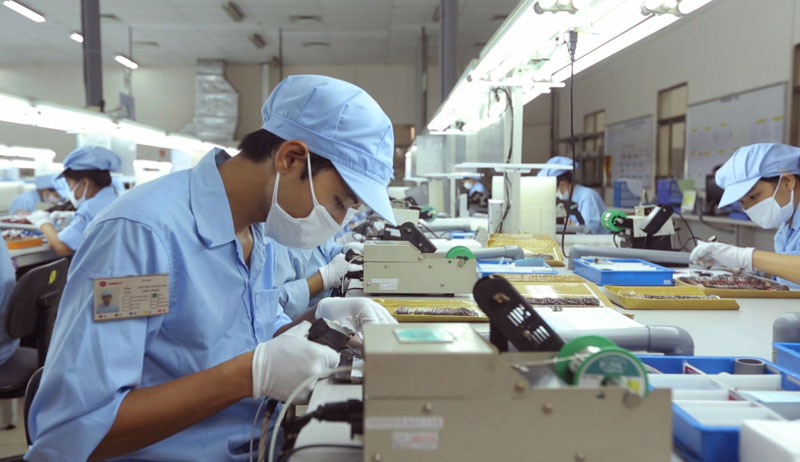
 Electronics production at Hanel Company. Photo: Chien Cong. 

Specifically, the RCEP does reduce complexity and compliance costs for Vietnamese exporters through a single rulebook that covers the other 14 RCEP markets, stated VDSC in its latest report.

Vietnamese exporters, thus, might find it easy to meet the required rules of origin for their products as a significant portion of its production input is sourced from China (textile products) and South Korea (tech products).

Limited impacts

Nevertheless, the main goal of the RCEP is to merge the existing FTAs that ASEAN has with five other Asia-Pacific countries into a single framework. Therefore, the RCEP eliminates tariffs mainly for goods that already qualify for duty-free treatment under existing FTAs of Vietnam.

The benefit of accessing new market and tariff cuts may be limited for Vietnam, noted VDSC.

In addition, due to the similarities in export products of many member countries, the deal is expected to boost competition for Vietnamese producers. For example, China had no existing deal with Japan and South Korea, lower tariffs for Chinese products under RCEP might deteriorate the competitive advantages of Vietnamese products exporting to these markets. On the other hand, given a sizable trade deficit between Vietnam and China, reducing trade barriers further could lead to rising imports without an enough compensating access to the Chinese market.

The RCEP countries represented 42% of Vietnam’s total exports and 56% of foreign direct investment into the country (worth US$22 billion) in 2019. Despite some drawbacks of the deal, experience from other regional trade agreements and econometric models suggest that Vietnam could benefit from the RCEP.

A study from the World Bank in 2019 revealed the trade deal could increase Vietnam’s GDP by around 0.4% by 2030, with extra productivity gains, economic gains could be 1.0%.

The Peterson Institute for International Economics, a US think tank, estimated that Vietnam’s real income could be 0.5% higher by 2030 due to the impact of RCEP. Meanwhile, according to the Ministry of Industry & Trade estimation, the RCEP could yield economic gains of 0.7% of GDP by 2030.

Following the signing of the deal, RCEP members must first ratify the agreement and the trade deal is expected to come into force either in  late 2021 or early 2022.

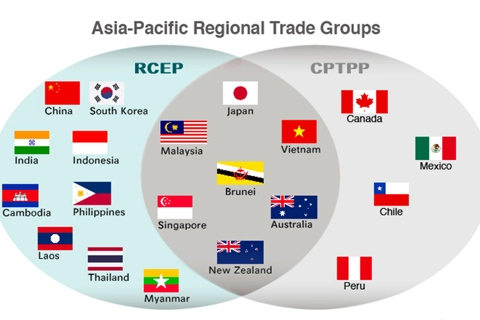
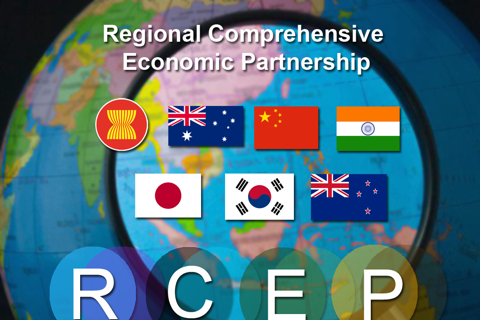
With the participation of China, South Korea, Japan, Australia, New Zealand and 10 ASEAN countries, the RCEP would cover a market of 2.2 billion people, or almost 30% of the world's population, and a combined GDP of US$26.2 trillion or about 30% of global GDP, and accounts for nearly 28% of global trade (based on 2019 figures).

The deal, however, does not include India, which dropped out of the negotiation process in November 2019.
Reactions:
Share:
Trending
Most Viewed
Related news
Vietnam honors 50 transparent listed companies as stock market reaches new milestones

Vietnam honors 50 transparent listed companies as stock market reaches new milestones

Vietnam honored 50 listed companies for excellence in transparency at the 2025 Vietnam Listed Company Awards, which spotlighted standout annual reports, corporate governance and sustainability disclosures amid rising foreign investor interest and growing alignment with international reporting standards.

Vietnam to tighten biometric authentication for new bank cards next year

Vietnam to tighten biometric authentication for new bank cards next year

Bank card issuers must conduct a face-to-face meeting and match the biometric data of individual customers or the legal representative of organizational customers with their identity documents.

Make in Vietnam forum spotlights breakthroughs shaping digital future in the country

Make in Vietnam forum spotlights breakthroughs shaping digital future in the country

Vietnam will host the seventh National Forum on Vietnamese Digital Technology Enterprises on December 25 in Hanoi, highlighting policy directions, strategic technologies and progress under the “Make in Vietnam” initiative as the country pushes toward a stronger digital economy.

Hanoi and Moscow seek new economic momentum as partnership marks 75 years

Hanoi and Moscow seek new economic momentum as partnership marks 75 years

At the Moscow–Hanoi Business Forum, leaders from both capitals said 75 years of Vietnam–Russia ties provide a strong foundation to deepen economic and investment cooperation, especially in technology, trade and urban development.

Vietnam manufacturing maintains strong momentum despite storms disrupting supply chains

Vietnam manufacturing maintains strong momentum despite storms disrupting supply chains

Vietnam’s manufacturing sector continued to expand in November, marking the fifth straight month of improvement, even as severe storms caused supply-chain delays and slowed production, according to S&P Global.

Techfest 2025 returns to Hanoi, spotlighting Vietnam’s vibrant startup community

Techfest 2025 returns to Hanoi, spotlighting Vietnam’s vibrant startup community

Hanoi’s Hoan Kiem pedestrian street will host Techfest Vietnam 2025 from December 12 to December 14, welcoming entrepreneurs, investors and the public to explore emerging technologies and celebrate the country’s growing culture of innovation.

Vietnam expands major entrepreneurship program to unlock opportunities for women nationwide

Vietnam expands major entrepreneurship program to unlock opportunities for women nationwide

The Vietnam Women’s Entrepreneurship Support Program has surpassed nearly every target set for 2017–2025, empowering more than 118,000 women to launch new ventures and laying the groundwork for a stronger, more inclusive entrepreneurial ecosystem in the next decade.

HHTIP accompanies businesses in efficient energy use for sustainability

HHTIP accompanies businesses in efficient energy use for sustainability

As green transition becomes a decisive factor shaping future growth, Hanoi is intensifying efforts to push energy efficiency across its industrial zones. The city’s management board is building a development model centered on clean energy, responsible production and sustainable operations.