Renewables are solution to Vietnam's power thirst
Renewable energy has been developing rapidly, especially in 2019, mainly due to the impact of the government's initiatives.
In order to ensure power supply amid upward demand, developing renewable energy should be prioritized when traditional resources are depleting, according to local authorities.
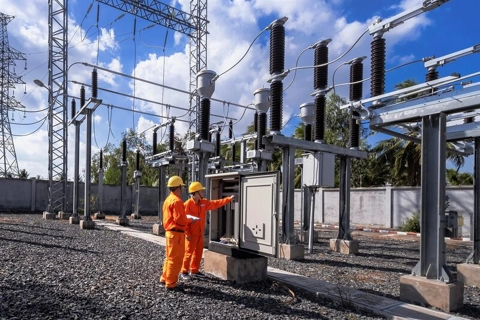
| Photo: EVN |
In the 2011 - 2015 period, power supply increased 13%, but the growth slowed to about 8% in the following five years. Total produced and imported electricity volume reached 239 billion kWh.
In the power mix, thermal power and coal take the highest proportion and will continue to increase in the coming time, estimated at nearly 50,000MW by 2030, accounting for 33.6% of the total.
Hydropower is currently the second largest source, but has reached limits and its proportion has tended to decrease in recent years. The growth of this source was only 5% per year in the 2016 - 2019 period.
Meanwhile, gas-fired power is the third largest source and also tends to decrease, mainly due to the depleting gas fields offshore the Southeast region from 2022.
Against this backdrop, Vietnam needs to increase electricity production while reducing reliance on non-renewable resources, especially coal. Recently, there have been many proposals on tapping into other resources such as solar, wind, and ocean energy which are abundant thanks to the country’s geographical location.
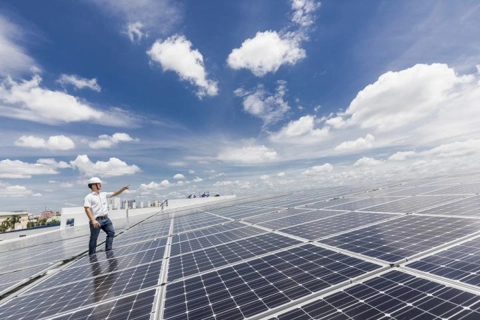
Renewable energy has been developed rapidly in recent years, especially in 2019, mainly due to the impact of the government's initiatives for the sector. By the end of June, there were 89 solar power farms connected to the grid with a total capacity of 4,442MW. In addition, wind power farms, located mainly in Ninh Thuan, Binh Thuan, have a combined capacity of 4,880MW, raising the share of renewables to over 10% in the energy mix.
As planned, by 2025 around 12,500MW of solar power and 7,200MW of wind power, and about 2,000MW of rooftop power will likely be connected to the national grid, but short of the planned 35,000MW of renewable energy, of which two-third is solar and one-third is wind.
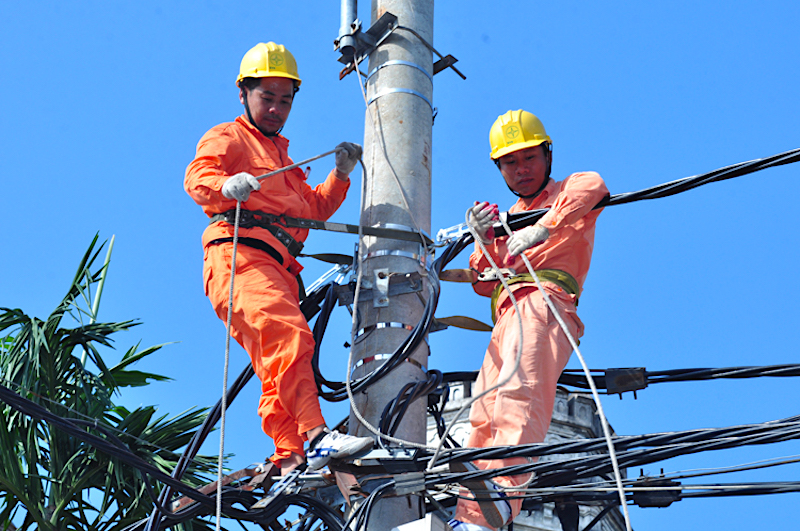
| Photo: EVN |
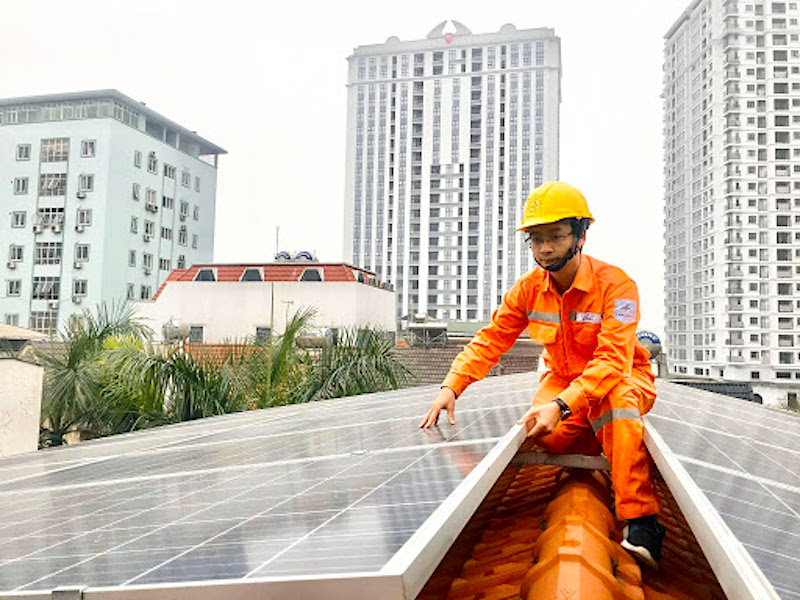
In order to achieve the target, Vietnam needs to focus on solving a number of issues. The first is investment capital. Private investors are interested in and capable of investing in power plants with an average investment of VND1 trillion (US$43 million) each. The second problem is site clearance which requires support from localities.
Another problem is the transmission and connection from 110KV to 220KV and 500KV lines. State-run Electricity of Vietnam (EVN) needs to urgently build the grid to match the power development. Last but not least, the Feed-inTariff (FiT) is the decisive factor.
As Cambodia has more advantages in irradiance, the FiT is only VND900 (US$0.04) per kWh. Meanwhile, Vietnam offers a tariff for solar power plants built before July 2019 at VND2,086 (US$0.09) per kWh and for wind power farms at VND1,928 (US$0.08) per kWh, drawing great interest from investors.
Demand on the rise
The number of blackouts in 2020 has decreased, partly due to the Covid-19-caused decrease in demand for production and business.
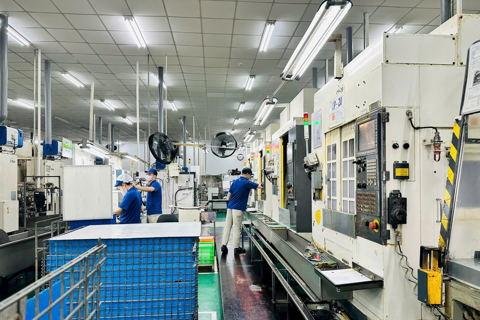
Electricity consumption of industrial use accounts for 59.1% of the total, with an average price of VND1,684 (US$0.07) per kWh. The growth rate of industrial electricity is 10 -13% per year.
On the other hand, the low electricity price for industrial purposes makes bring double benefits for foreign investors. Therefore, investors are not paying much attention to acquiring energy-efficient equipment and technology.
Electricity used for other needs include business (that accounts for 6.6%) with an average price of VND2,809 (US$0.12) per kWh; public services 3.8%, with an average price of VND1,845 (US$0.08) per kWh; residential use 28.24%, with an average price of VND2,056 (US$0.09) per kWh.
The average electricity consumption per capita in Vietnam has continuously increased at a relatively high rate, reaching 133.1 kWh in 1990 and 2,356.9 kWh in 2019. It is forecast to reach 2,375.5 kWh by 2020, representing an average annual increase of more than 10%.
Vietnam's Prime Minister Nguyen Xuan Phuc has repeatedly required EVN to ensure electricity supply and avoid power cuts by 2030.