Resolution 15 outcomes: Strong leap forward
Today, the city has a new urban space and a renewed profile, thanks to numerous modern and civilized urban works.
Hanoi today celebrates the 15th anniversary of expanding its administrative boundaries, carried out under Resolution No.15 of the National Assembly. Over the past 15 years, the city has significantly expanded its size and administrative functions to meet the needs of its multi-functional urban region and promote strong development.
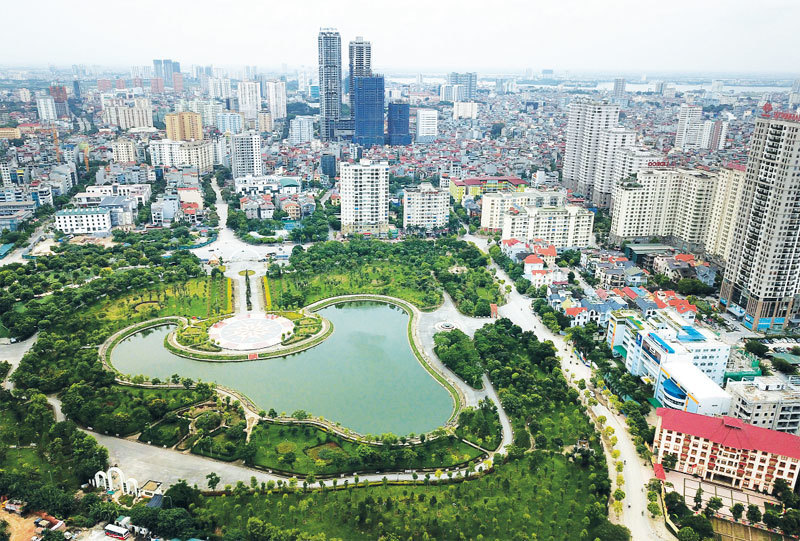
| Hanoi from above. Photo: Cong Hung/The Hanoi Times |
According to experts, Resolution 15 represents a crucial milestone and a highly significant turning point in Hanoi's development.
Initially, there were concerns and uncertainties when the National Assembly raised the issue of expanding the city's administrative boundaries for discussion. The benefits and opportunities were only prospective, and achieving them required determined and systematic efforts.
However, Hanoi managed to overcome the challenges and carried out the expansion methodically and successfully.
The policy of expanding Hanoi's administrative boundaries has been recognized by many experts as essential to the city's development. Without this policy, Hanoi would lack the space to grow. The city's careful and methodical approach to implementing Resolution 15 has yielded tangible results over the past 15 years.
According to Vice Chairman of the Hanoi People's Committee Ha Minh Hai, during this period, Hanoi consistently maintained a higher growth rate and made significant contributions to the country's overall economic growth. From 2011 to 2022, Hanoi's GRDP increased by 1.12 times compared to the national growth rate, reaching VND772.2 trillion (US$32.6 billion) in 2022, which was 2.17 times higher than the figure in 2010.
Hai informed that Hanoi's per capita income hit VND141.8 million ($5,950) in 2022, 1.45 times higher than the national average ($4,110) and 3.5 to 3.8 times higher than in 2008 ($1,697).
Since the administrative boundary expansion in 2008, Hanoi's economic structure has undergone a positive transformation. As a result, state budget revenues have consistently exceeded the central government's estimates.
Hai added that Hanoi has also improved the investment and business climate, increasing the confidence of both domestic and foreign investors. Notably, the total investment capital mobilized annually for social development has grown at an impressive rate of 11.04% from 2008 to 2022.
Hanoi accounts for 12.59% of national GDP, 17.07% of State budget revenue, 4.61% of export turnover, and 10.77% of import value for the whole country.
This shows that Hanoi is playing a crucial role as the driving force behind the development of the northern key economic region and occupies an increasingly important position in the national economy.
To further its development, Vice Chairman of the Hanoi People's Committee Le Hong Son said the city is continuously improving its infrastructure system, implementing administrative reforms, and optimizing its bureaucratic apparatus.
"The city aims to become a "smart city" with improved infrastructure, applying cutting-edge technology to its e-government system for better governance," said Son.
In addition, Hanoi is committed to protecting the environment, improving public services, and promoting social welfare."
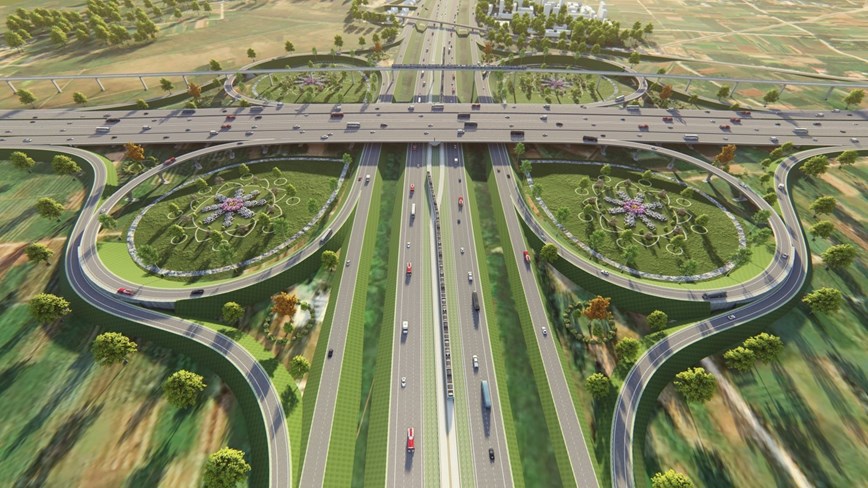
| The rendered image of the Ring Road No.4 project in Hanoi. |
Transformation in urban and rural landscapes
After 15 years of implementing Resolution 15 of the National Assembly and the Strategy and Master Plan for the Socio-Economic Development of Hanoi Capital to 2030 with a Vision to 2050, Hanoi has undergone significant changes in its urban and rural landscapes. Today, the city has a new urban space and profile thanks to numerous modern and civilized urban works.
The development of ring roads, radial roads, and bridges has resulted in a more comprehensive and interconnected transportation system, improving overall traffic efficiency. In particular, the launch of the Ring Road No.4 project in collaboration with neighboring provinces marks a milestone in the region's development, in line with Politburo's decisions on Hanoi's growth and the socio-economic development of the Red River Delta.
For Hanoi, this project serves as a foundation for urban planning and infrastructure development, facilitating the city's continued growth. It creates a critical transportation axis that fosters strong industrial and regional linkages while maximizing the benefits of multi-directional urban connectivity.
The project also supports population settlement and economic development. In addition, it is stimulating the development of metropolitan areas and satellite towns such as Soc Son, Hoa Lac, Son Tay, Xuan Mai, and Phu Xuyen, thereby reducing traffic congestion on existing road systems.
Hanoi has not only experienced significant infrastructural growth but has also improved its environmental quality. The city is now greener and cleaner. In addition, tree-planting initiatives have been synchronized with underground power cables and communication systems, further enhancing the city's aesthetic appeal and sustainability.
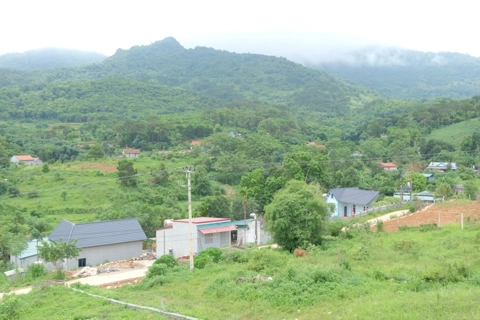
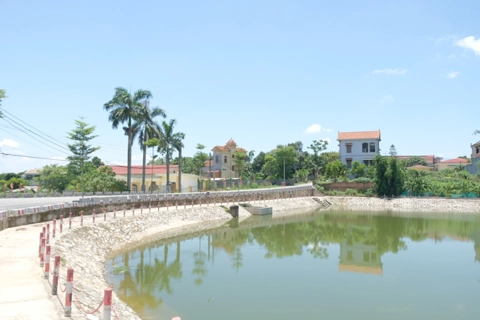
Nguyen Xuan Dai, director of the Hanoi Department of Agriculture and Rural Development, said Hanoi has become one of the leading regions in the country in terms of rural development.
At present, 15 out of 18 districts and towns have already met the new-style rural standards, and the remaining three districts are in the process of completing the required documentation, he noted.
| New-style rural areas in Phuc Tho District, Hanoi. Photo: Tung Nguyen/The Hanoi Times |
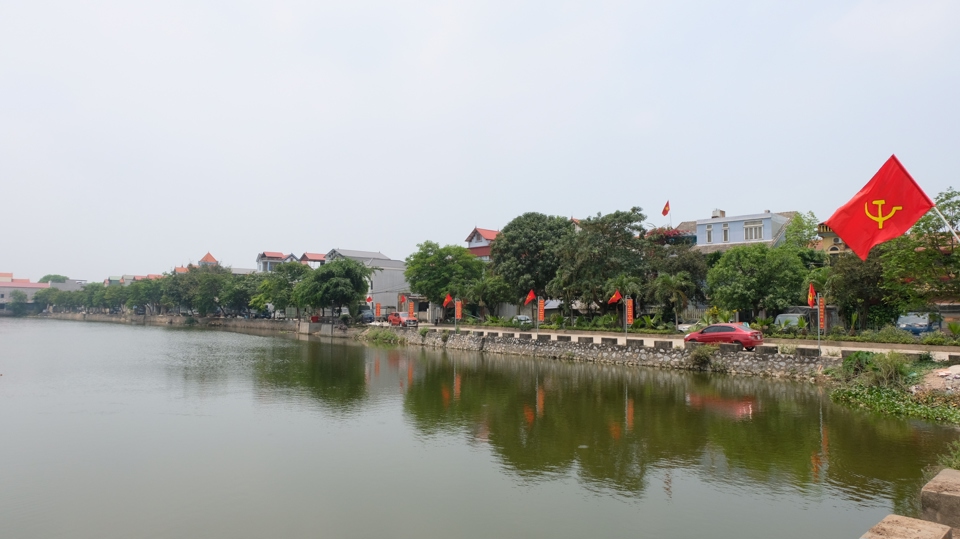
This transformation has led to a more civilized and modern rural landscape in Hanoi, along with a significant reduction in the number of poor households and improved living standards for farmers.
"The city is focusing on strengthening preferential policies for businesses, such as offering credit support, providing suitable premises, and enhancing trade promotion. The ultimate goal is to develop agriculture in a modern and sustainable way," Dai added.
Hanoi is now actively working on the formulation of the Hanoi Capital Planning for the period 2021-2030, with a vision to 2050. In addition, the Capital Construction Master Plan is being adjusted for the period up to 2045, with a vision up to 2065. Among these planning projects, special emphasis is being placed on the zoning of satellite urban areas and the construction planning of districts in the city.
While Hanoi has made effective use of new resources to meet the demands of long-term and sustainable development, it also faces certain challenges due to rapid urbanization. The imbalance in urban development, where social infrastructure has not kept pace with housing and population growth, is a pressing concern.
Associate Professor, Dr. Tran Dinh Thien, a member of the National Monetary and Financial Policy Advisory Council, said Hanoi is currently presented with a unique and "unusual" opportunity to revolutionize its way of thinking and redefine the development structure of the capital.
"The focus should not only be on the local development but on creating a model that can lead the entire country. Therefore, any planning projects must be coherent, aligned in the same direction, and interconnected. The goal is not merely to address existing challenges or rectify past shortcomings, but to embrace a larger mission – to shape the future and seize the development opportunities befitting the new era," Thien said, emphasizing the importance of this approach to elevate Hanoi to a level worthy of its significance in the modern age.