Setting up economic corridors a key part of Vietnam 2021-2030 master plan
The overall target of the master plan is for Vietnam to become a modern industrial country with upper-middle income status by 2030.
The main priority of Vietnam’s 2021-2030 master plan would be to establish economic corridors in the direction of North-South and East-West, which would serve as the main driving force for growth.
| Overview of the session. Source: quochoi.vn |
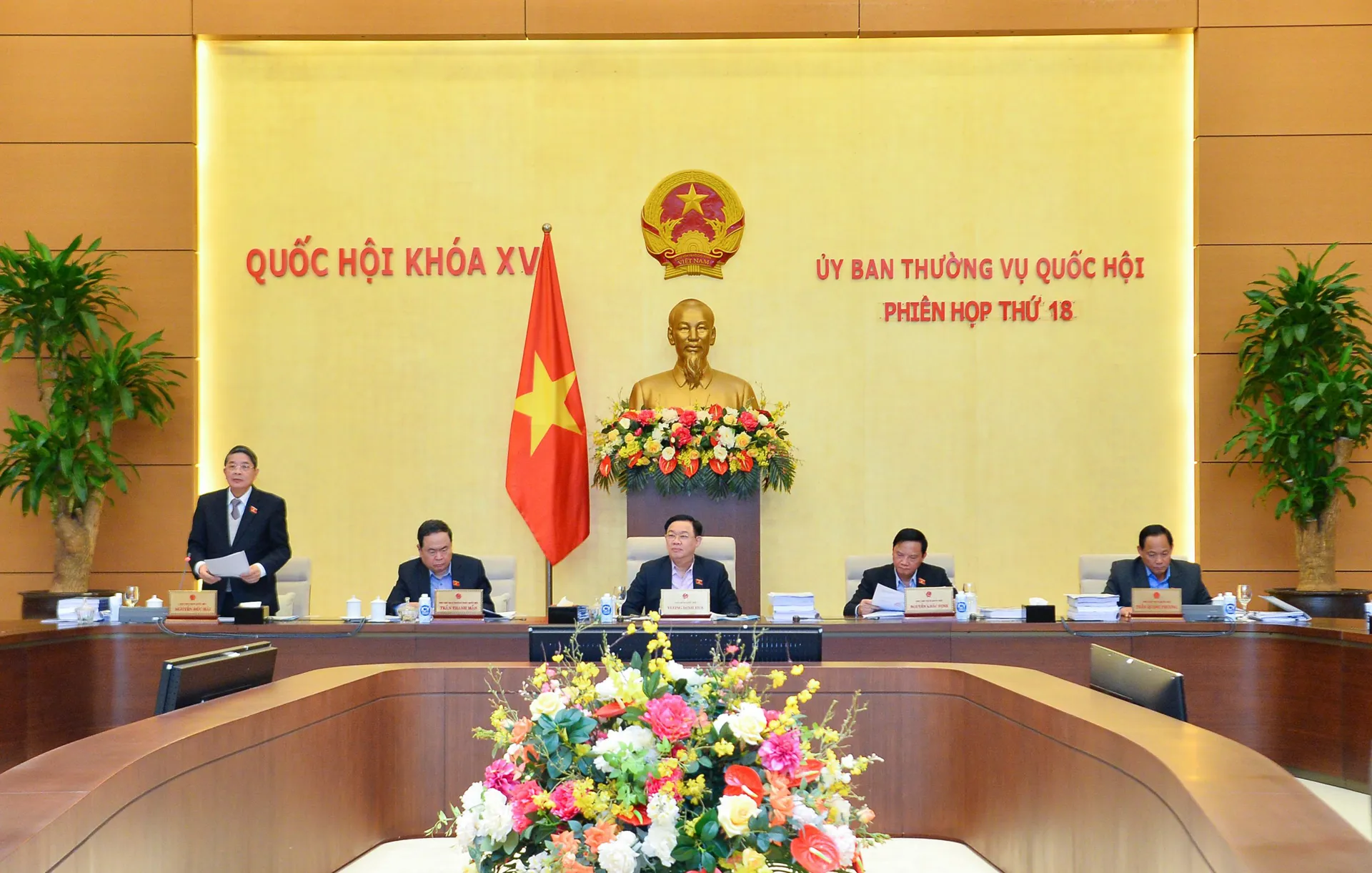
Minister of Planning and Investment Nguyen Chi Dung briefed during a discussion session held by the National Assembly's Standing Committee on December 21 on the country's master plan for the 2021-2030 period, with a vision for 2050.
According to Dung, the development space under the national planning framework should be compatible with those at the provincial level, while ensuring smooth inter-provincial linkage and tapping the potential of localities.
In this context, Dung advocated the importance of promoting growth poles to serve as an engine for Vietnam's development, especially economic corridors under the North-South and East-West axes, along with a coastal economic ring connecting seaports, airports, border area, and major commercial centers.
Dung said the master plan would select several locations with favorable advantages to establishing economic, financial, and administrative centers with extraordinary legal mechanisms.
| Minister of Planning and Investment Nguyen Chi Dung. |

"The master plan will push forward economic restructuring in line with the revision of the growth model; prioritize high-potential sectors in association with the new development space; promote national growth poles to spearhead economic growth," Dung said.
Chairman of the National Assembly's Economics Committee Vu Hong Thanh urged the government to take into account factors such as national competitiveness, legal institutions, culture and population characteristics before finalizing the master plan.
"It is important to ensure the financial viability of planning and its alignment with the country's socio-economic development potential," Thanh said.
National Assembly Chairman Vuong Dinh Hue stressed the importance of promoting regional and international linkages during the planning process.
Given the constraint of state resources, Hue expected the Government to select key priorities in the short term, including economic corridors of North-South, East-West, Lao Cai – Hanoi – Haiphong – Quang Ninh, Lao Bao – Dong Ha – Danang, and Moc Bai – Ho Chi Minh City – Vung Tau.
| Chairman of the National Assembly Vuong Dinh Hue. |

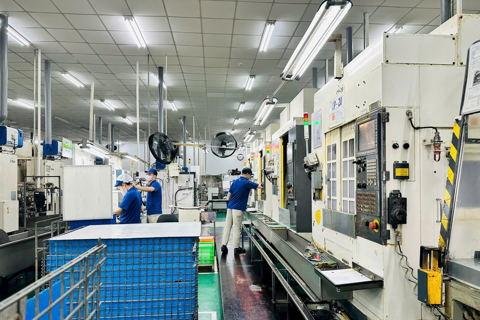
The overall target of the master plan is for Vietnam to become a modern industrial country of upper-middle income status by 2030. Vietnam’s growth model should be based on science-technology, innovation, and digitalization.
The master plan calls for Vietnam to have a population of 105 million in 2030 and 115 million in 2050. Average GDP growth would reach 7% per year during the 2021-2030 period, and 6.5-7.5% in 2031-2050; with the southeastern region of the country growing at an average of 8-8.5% per year, and the Red River Delta at 9%. By 2030, GDP per capita is expected to reach US$7,500.
The National Assembly is scheduled to review the master plan for the 2021-2030 period at the irregular session on January 5, 2023.
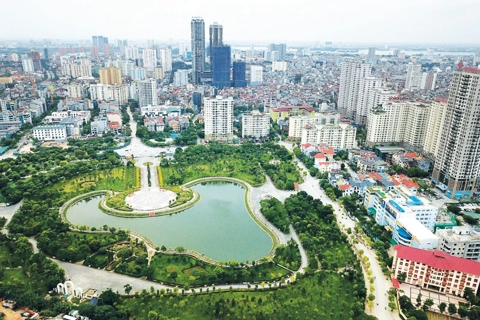
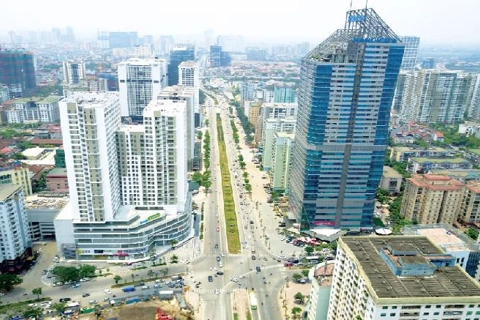
Hanoi and Ho Chi Minh City would serve as the growth pillars in the key Northern and Southern economic zones. In this context, both are envisioned to become dynamic and creative metropolitan cities that are highly competitive at regional and international levels, at the same time having a key role in Southeast Asian urban networks. To ensure the harmonized and sustainable development among regions and localities, the Government expects to mobilize resources to support the development of economic hubs namely the triangle of Hanoi – Haiphong – Quang Ninh in the key northern economic zone, with Hanoi as the core; and the quadrangle of Ho Chi Minh City – Binh Duong – Dong Nai – Ba Ria – Vung Tau in the key southern economic zone, with Ho Chi Minh City as the growth engine. |