14TH NATIONAL CONGRESS OF THE COMMUNIST PARTY OF VIETNAM
Log in
Business

Singapore’s GIC, Credit Suisse no longer hold shares of Vinmart operator?

It is unclear whether the GIC-led consortium has fully withdrawn from VCM or transferred its stake to other investors.

The respective amounts of holding of Singapore’s sovereign wealth fund GIC and Credit Suisse Singapore Branch at VCM Services and Trading Development Company (VCM), the operator of the Vinmart chain, have been reported at 0%, according to data at the Vietnam National Business Registration Portal. 

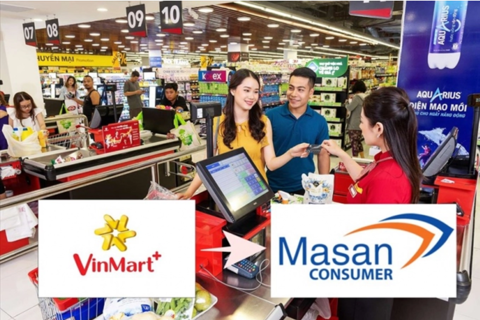
 Illustrative photo. 

VCM’s registered capital, however, remains unchanged at VND6.43 trillion (US$277.04 million).

Last September, the GIC-led consortium collectively invested US$500 million to buy a 16.26% stake in VCM, in which Credit Suisse Singapore Branch held 6.5% and Ardolis Investment Pte, a subsidiary of GIC, 9.76%. The deal valued VCM at US$3.08 billion.

On January 1, Masan announced its acquisition of 540 million shares or a 83.74% stake in VCM from Vingroup as a final step to take over the latter’s retail business.

It is unclear whether the GIC-led consortium has fully withdrawn from VCM or transferred its stake to other investors.

VCM was established last August with registered capital of VND1 billion (US$43,121), in which Vingroup held a 64.3% stake and Deputy General Director of Vingroup Mai Huong Noi served as VCM’s chairwoman.

By mid-September 2019, VCM raised its registered capital to VND6.43 trillion (US$277.19 million) and owned a 100% stake at Vingroup’s retail arm VinCommerce, the operator of super markets and convenience stores VinMart and VinMart+.

On December 3, Vietnam’s leading privately-run conglomerates Vingroup and Masan annouced their agreement to merge some of their businesses to create “the largest retail group in Vietnam”, said Vingroup.

As a result, Vingroup’s VinCommerce and its farming subsidiary VinEco would merge into Masan Consumer Holdings, the consumer business of Masan. The latter would take charge of the new company.

Vingroup would swap its stake in VinCommerce for that of the new company and become a stakeholder. 

The agreement with Masan allows Vingroup to focus on its emerging businesses namely manufacturing and technology, while Masan obtains its last piece of a puzzle to build an empire of consumer retail, with the ultimate aim of expanding to international markets.

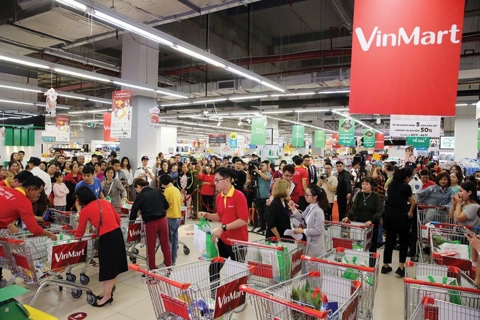
The new company would own VinCommerce’s network of 2,600 VinMart and VinMart+ outlets across 50 provinces and cities in Vietnam, along with a customer base of millions.

In a latest move, Mai Huong Noi is no longer the chairwoman of VCM and replaced by Truong Cong Thang, chairman of board of Masan Consumer Holdings.

The current chairman of VCM is Nguyen Dang Quang, who is also chairman of Masan Group.

Notably, Ardolis Investment is currently holding a 5.64% stake in Masan Group.

VinMart and VinMart+ are Vietnam’s largest retail network in terms of the number of stores, accounting for 25% of Vietnam’s retail market share, according to Masan.

Reactions:
Share:
Trending
Most Viewed
Related news
Vingroup exits completely from retail market

Vingroup exits completely from retail market

18 Dec, 21:37

This move is part of Vingroup’s restructuring process, aiming to reallocate its resources to core businesses of industry and technology to compete globally, said a company executive.

What's behind Masan-Vingroup merger?

What's behind Masan-Vingroup merger?

06 Dec, 13:29

Vingroup is now able to focus on its core businesses while Masan found its last piece of a puzzle to build an empire of consumer retail.

Vietnamese goods reach rural areas through Tet fairs

Vietnamese goods reach rural areas through Tet fairs

Hanoi is intensifying communication and outreach for the “Vietnamese people prioritize using Vietnamese goods” campaign to boost consumption ahead of Tet, the country’s most important holiday.

Vietnamese goods dominate Tet market 2026 in Hanoi

Vietnamese goods dominate Tet market 2026 in Hanoi

Vietnamese-made goods, including agricultural products and Tet gift items, are dominating the domestic retail market ahead of the 2026 Lunar New Year.

Ho Chi Minh City launches Vietnam International Financial Center

Ho Chi Minh City launches Vietnam International Financial Center

Ho Chi Minh City launched the Vietnam International Financial Center in a major push to become a regional hub for capital markets, fintech and strategic investment.

Suburban Hanoi Tet Fair drives domestic consumption and OCOP promotion

Suburban Hanoi Tet Fair drives domestic consumption and OCOP promotion

As Lunar New Year shopping accelerates, a suburban Hanoi commune is using a consumer goods exhibition to connect local producers with residents and strengthen demand for high-quality Vietnamese products.

Quoc Oai launches creative OCOP Center boosting craft production and tourism

Quoc Oai launches creative OCOP Center boosting craft production and tourism

The launch of a Creative Design and One Commune One Product (OCOP) Promotion Center in Quoc Oai Commune marks a step toward sustainable rural economic development, connecting traditional craft village products with tourism while enhancing market access and promoting local cultural identity.

Vietnam tech groups back state push on innovation, digital and green transition

Vietnam tech groups back state push on innovation, digital and green transition

Vietnam is counting on its technology sector to power the next phase of economic growth, with business leaders committing to innovation, digitalization and green transition under newly launched emulation movements.

Hanoi brings "Made in Vietnam" for Tet shopping 

Hanoi brings "Made in Vietnam" for Tet shopping 

The programs aim to stimulate local trade and meet Tet (the Lunar New Year) shopping demand, while supporting the growth of Hanoi’s cultural industries and tourism.

From clay toys to tea: culture shapes shopping at Spring Fair 2026

From clay toys to tea: culture shapes shopping at Spring Fair 2026

Beyond its record-breaking scale, the first Spring Fair 2026 feels less like a marketplace than a cultural crossroads, where regional identities, handcrafted goods and digital ambition converge, hinting at how Vietnamese products may find new value ahead of the Lunar New Year 2026.