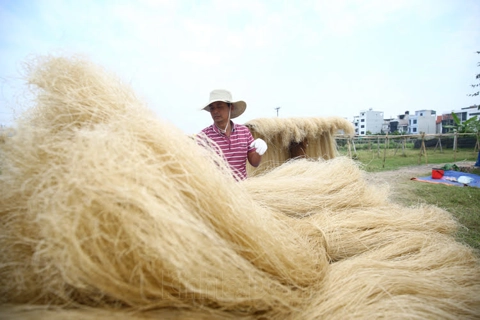
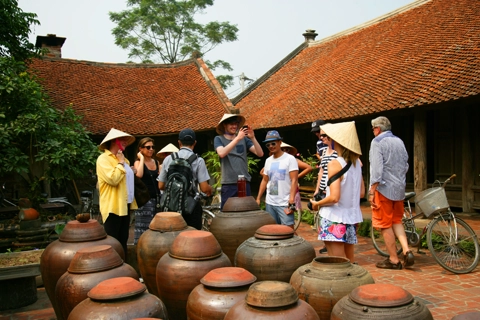
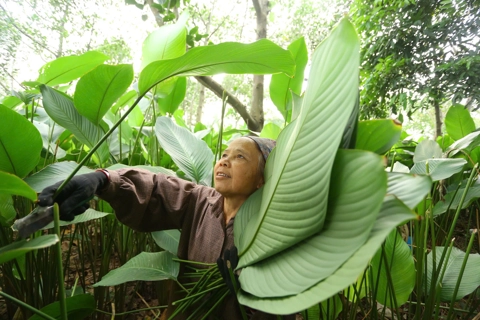
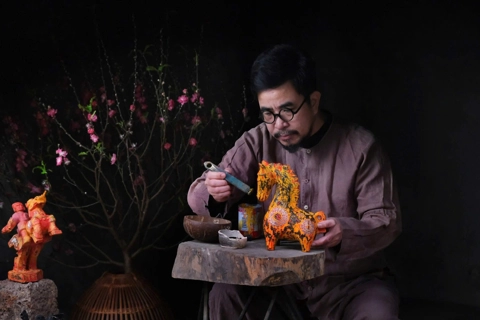
About 20km from Hanoi's center, Cu Da ancient village still holds many imprints of Vietnamese villages with roofs, banyan trees, water wharves, especially the French-style architecture of some houses. Not only famous for its unique cultural space, the ancient village is also known for its traditional vermicelli making and soy sauce making.
The craft of making soy sauce in Cu Da has been around for a long time. This soy sauce is made from four main ingredients: soybean, glutinous rice, water and white salt and has a unique and attractive scent.
It must be through the hands of the Cu Da people that the soy sauce can taste right and delicious. Sauce made from about April to August is the best, because of the favorable weather. The beautiful sunshine bakes the bean and which after being fermented yields a special flavor.
|
| Cu Da village has been making soy sauce since its founding some 500 years ago. In the past, every local household stored several jars of soy sauce to use all year round. Today, soy sauce is made not only for villagers’ own use, but to sell outside the village. |
|
| The soy sauce is made of glutinous rice, salt, soybeans, and water. The sauce is more delicious if it is made with rain water. The rice should be ‘Nep cai hoa vang’, a special variety of sticky rice of high quality and special flavor grown mainly in the northern delta and midland provinces. |
|
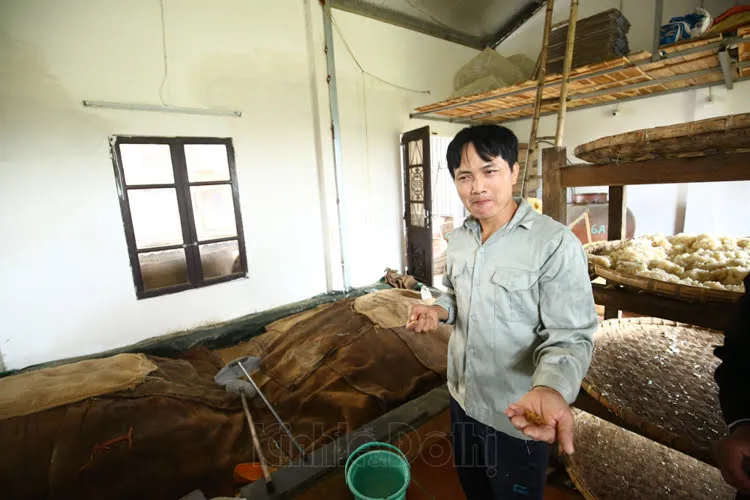
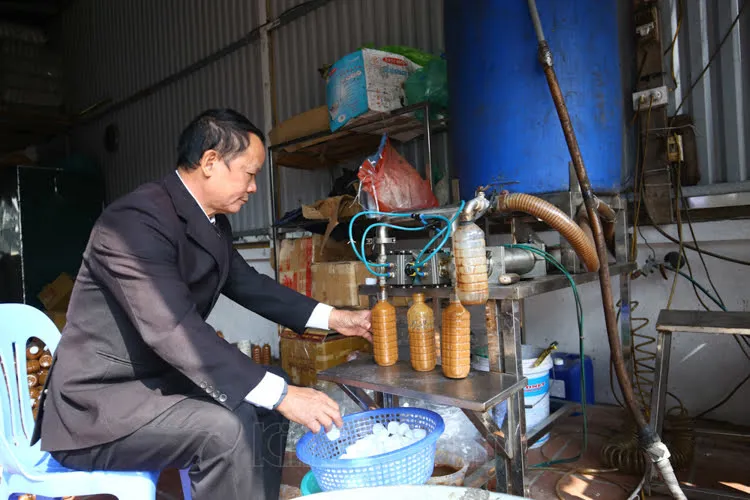
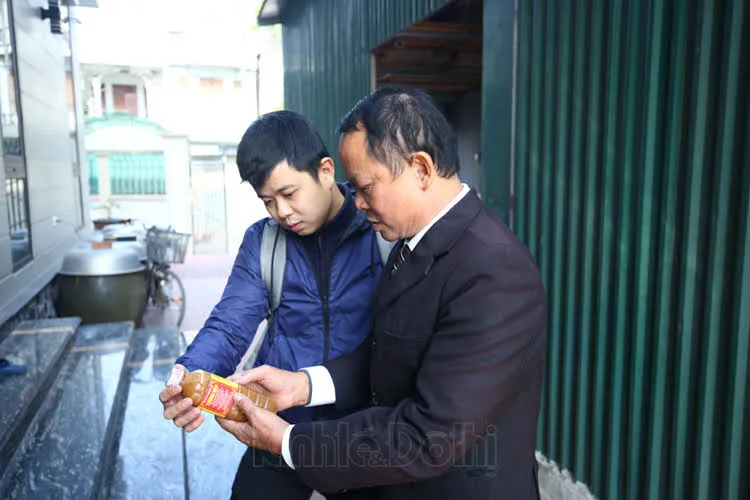
| Mr. Dinh Van Tinh, whose family has been engaged in the craft for five generations, has a 100-year-old soy sauce workshop branded “Trong Tinh”. |
|
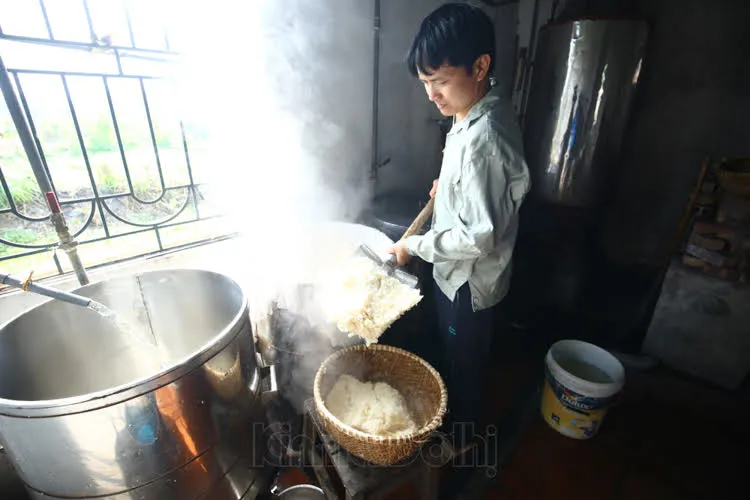
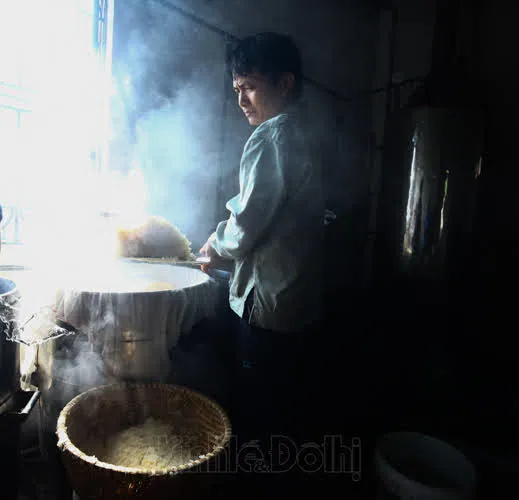
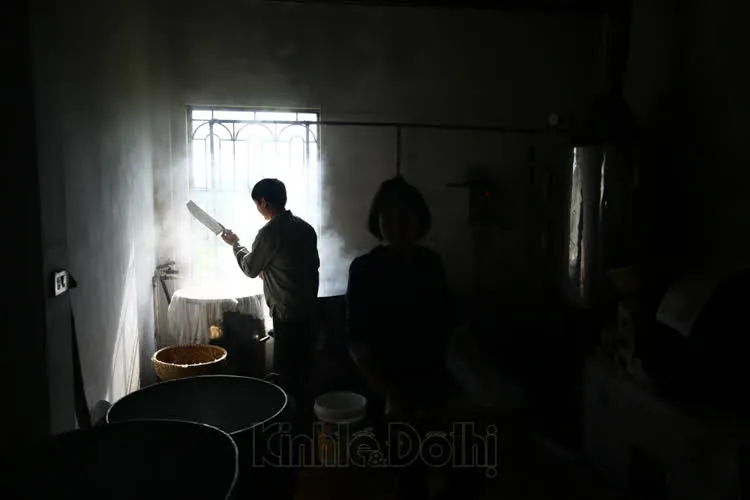
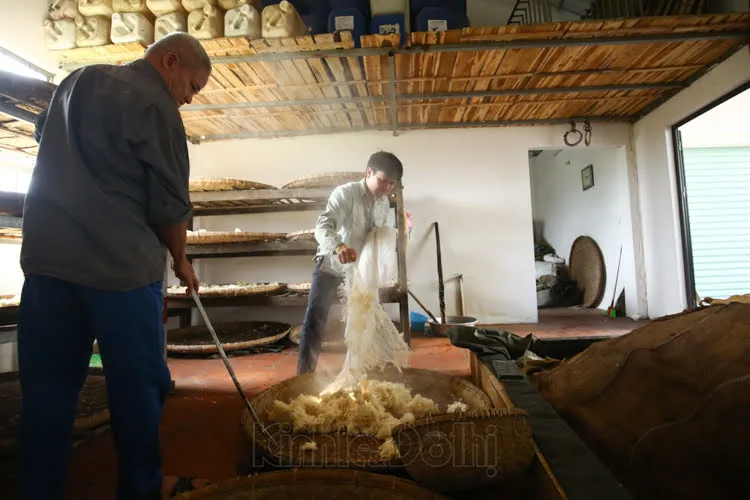
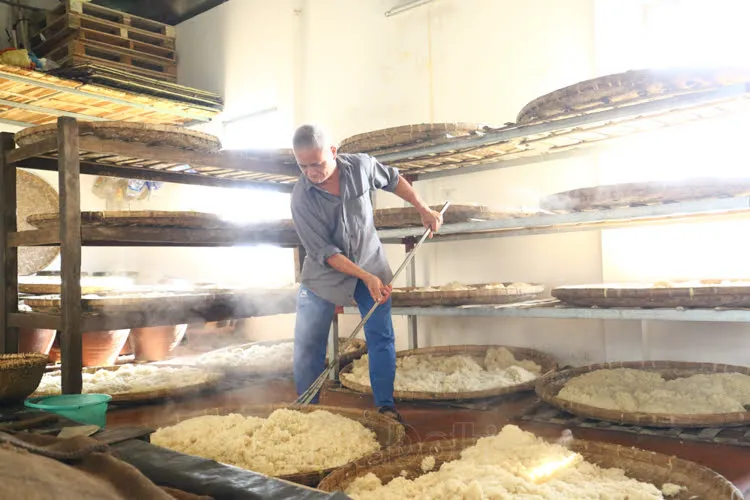
Mr. Tinh's soy sauce workshop is always busy as they cook hundreds of sticky rice pots per day to make the sauce. |
|
| According to the village's artisans, Cu Da soy sauce makes its own brand thanks to its sweet taste and fragrance. |
|
| Currently, Mr. Dinh Van Tinh's grandson, Dinh Cong The, is the family fifth generation practicing this trade. |
|
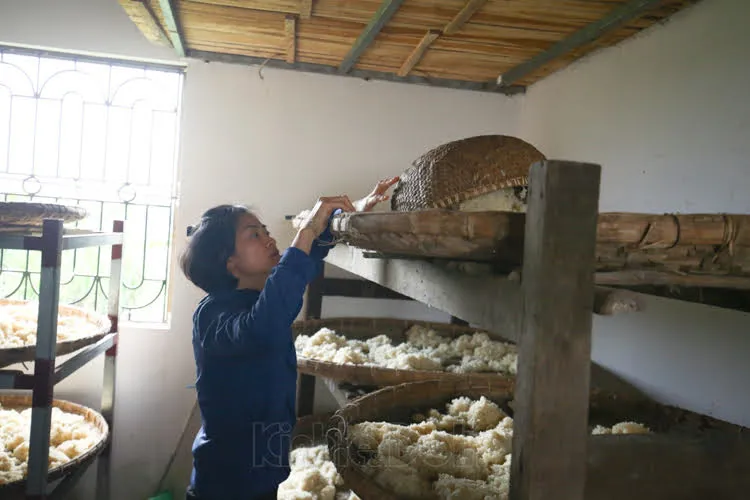
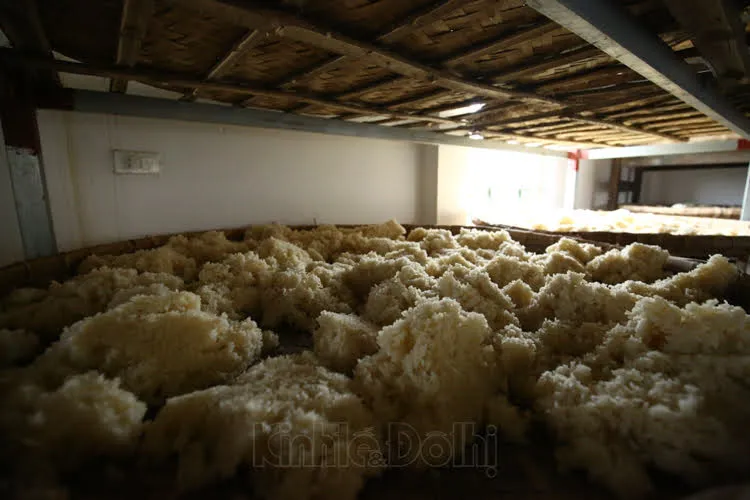
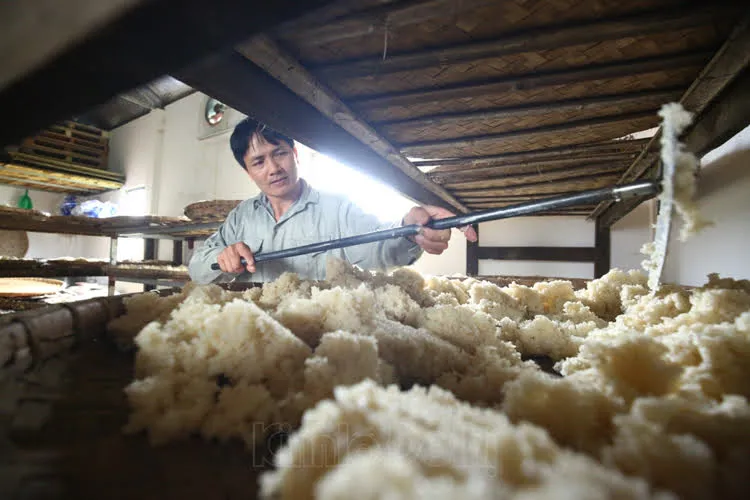
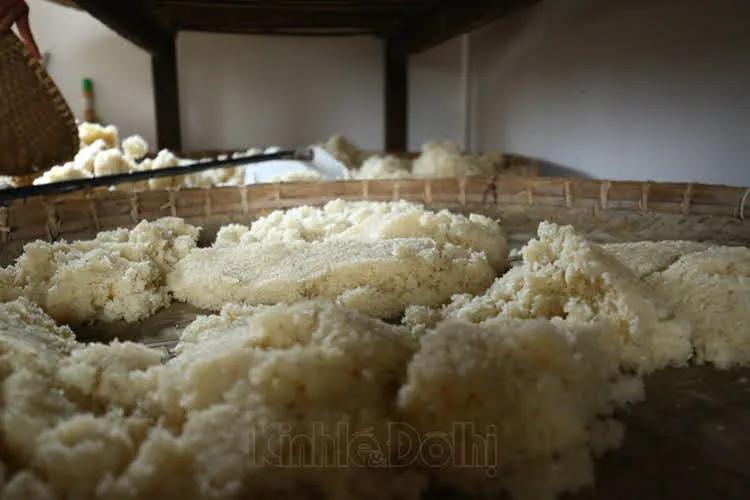
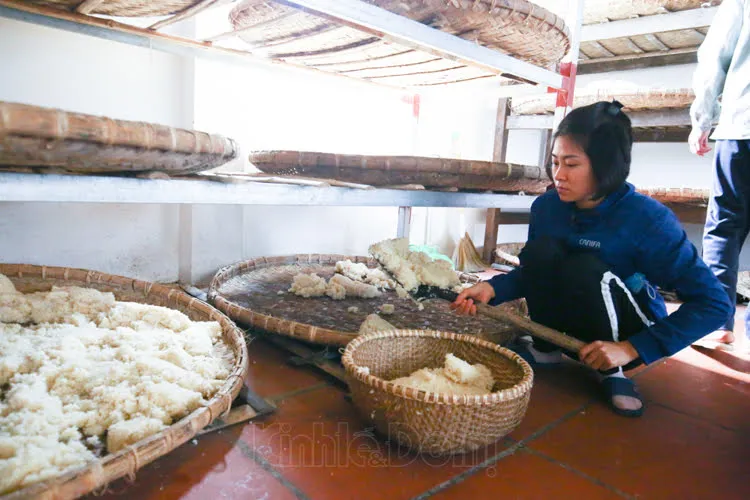
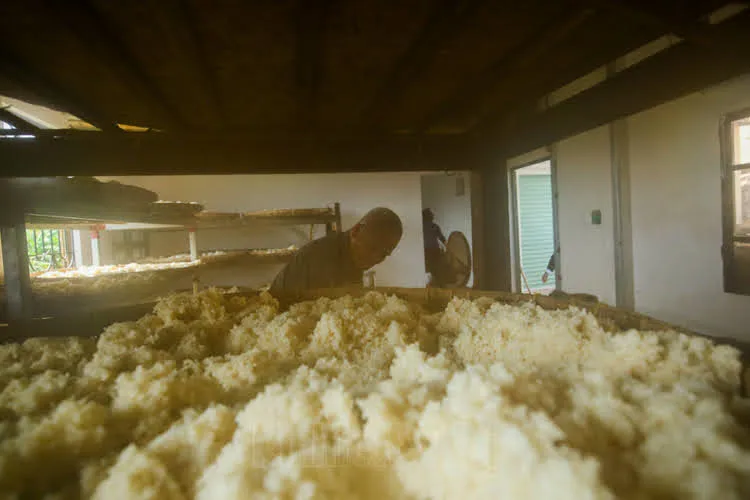
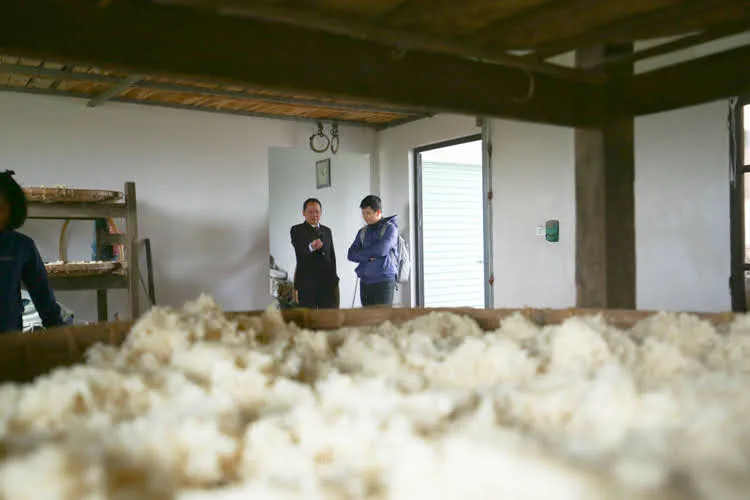
| “Technically, making soy sauce involves two steps. Cooked glutinous rice is fermented for several days in an incubation chamber. After 5 or 6 days, the rice koji, resembling soft green-lentil cake, is moved to a salt tank. That’s the first step, making koji,” said Dinh Cong The. |
|
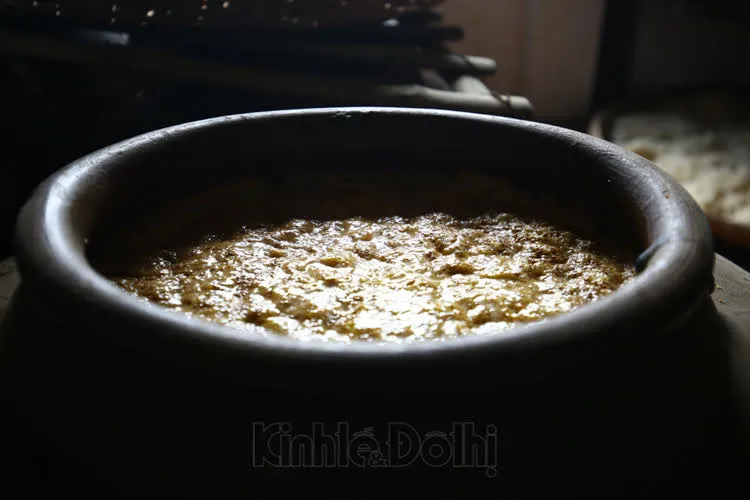
| “The second step is to make bean sauce. Roasted soybeans are ground, then cooked again, and boiled for an hour before being scooped into basins to cool down, then poured into jars." |
|
| “Making koji, called mốc in Vietnamese, is the most difficult and tedious part of the soy sauce manufacturing process,” he stressed. |
|
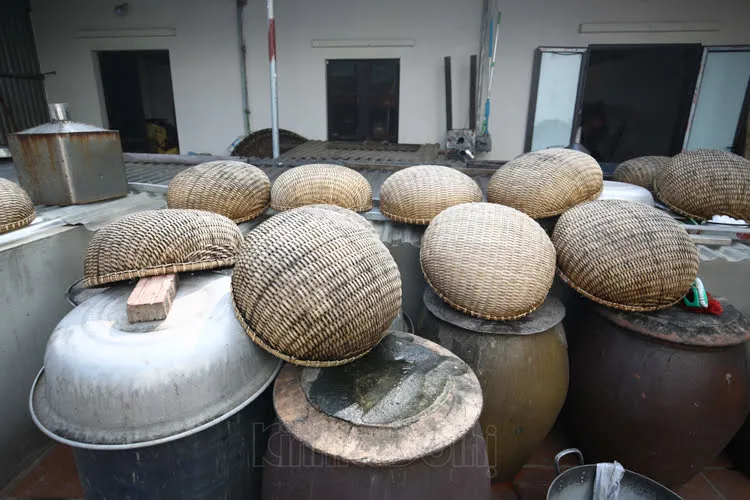
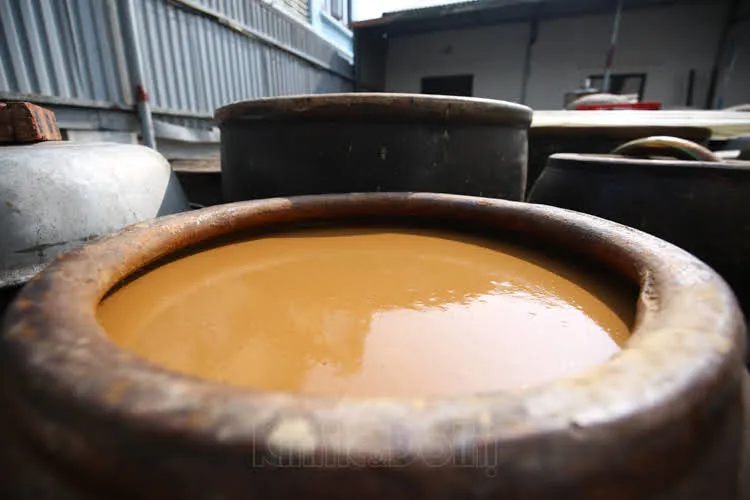
| "Depending on the size of the jars, it takes 15 to 20 days to steep the bean sauce, which is then mixed with the koji. The paste is returned to the jars and dried under the sun as long as possible,” Cong The added. |
|
| “Koji must be dried as long as possible. Then the sauce can be mixed with the koji to become soy sauce." |
|
Delicious soy sauce tastes sweet. It doesn’t depend on how long it takes to steep the mixture. It takes less time to make soy sauce in the summer and more time in the winter,” Cong The said. |
|
| He affirmed that if the soy sauce makers don’t have good technique, it will be impossible to make soy sauce during the winter, when it takes at least a month to make a batch. |
|
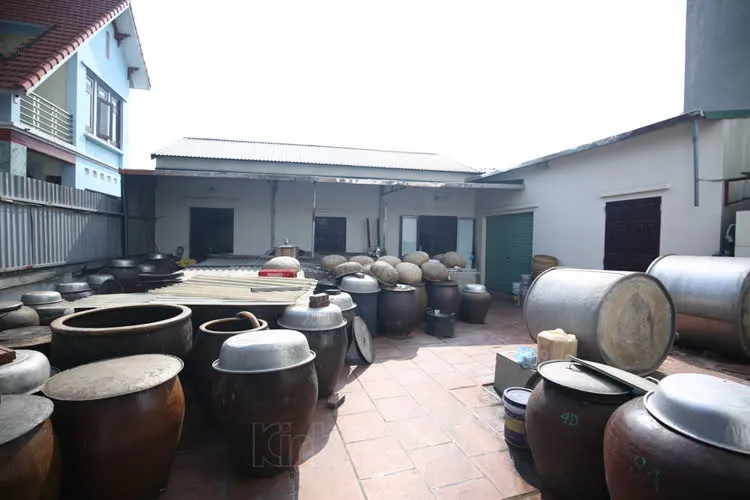
There are hundreds of soy sauce jars in his house, which have been prepared for his consumers. |
|
| It’s hard to confuse Cu Da soy sauce with soy sauce from other places, thanks to its sweetness and special aroma. |
|
| Cu Da soy sauce has become a product that enriches the culinary life of Hanoians in particular and Vietnamese people in general. |
|
| Mr. Vu Van Thanh, a resident in Cu Da village said that they are longing to be granted land by the local government to create a production area so that they can save the traditional profession and increase productivity. |
|
With a trademark granted by the Intellectual Property Agency, Cu Da soy sauce has found a firm foothold in the market. It is sold in big supermarkets in provinces and cities nationwide and is exported to Asian countries. |
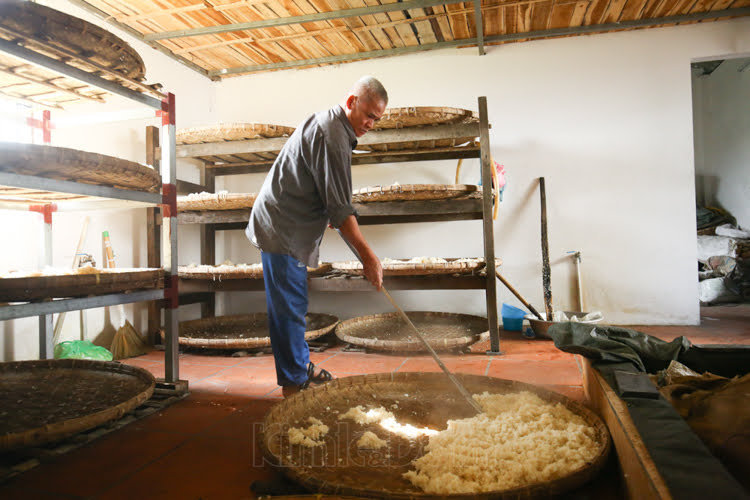 However, despite hard work, the income of soy sauce producers is not high, which discourages them from pursuing this craft. Currently, only five workshops remain making soy sauce. |
| |
|
Hanoian Quang Tan said: “Cu Da soy sauce is sweeter and tastier than others. In the summer, it’s very delicious to eat spinach, pickled eggplant, and braised fish with soy sauce. During the Tet holiday, boiled beef, veal, and pork served with soy sauce are delightful.” |