Special consumption tax under scrutiny to avoid negative economic impact
To avoid negative impacts on the economy, specialists and businesses have requested lawmakers to improve their draft on special consumption tax.
THE HANOI TIMES — In view of the ongoing economic difficulties, the increase in the special consumption tax should be carried out cautiously and thoroughly reviewed to avoid adverse repercussions on the economy and society.
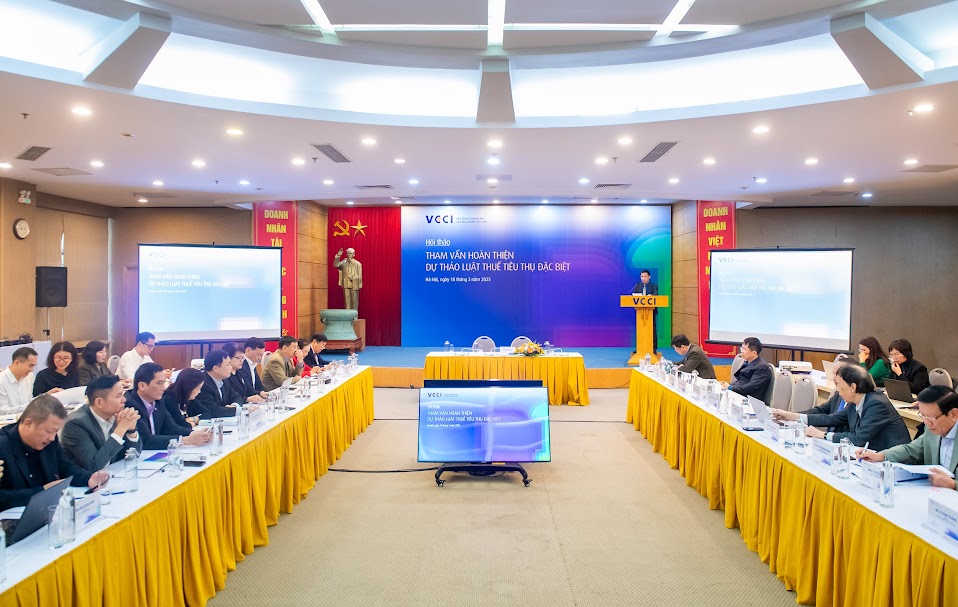
An overview of the March 18 workshop on the special consumption tax. Photo: Vietnam Chamber of Commerce and Industry
Can Van Luc, Chief Economist at the Bank for Investment and Development of Vietnam (BIDV) and Director of BIDV Training and Research Institute, said that uncertainties remain amid the recovery of the global and Vietnamese economies.
Key risks include geopolitical tensions, changes in US trade policy under President Donald Trump's administration, and global inflation, he said at a March 18 workshop on the special consumption tax organized by the Vietnam Confederation of Commerce and Industry.
Other concerns outlined by Luc include the slow recovery of major economies, energy security, food security, supply chain disruptions, cybersecurity, and climate change.
Regarding Vietnam's economy, Luc said it has almost returned to pre-pandemic levels, with consumer spending contributing 60% of national income in 2024.
However, the rate is still below regional and global averages and only two-thirds of pre-pandemic levels, indicating weak consumer demand, he said.
The economist also pointed out that the special consumption tax has contributed only 6% of total budget revenue over the past five years.
Increasing the tax may discourage consumption, make the tax less effective and create additional challenges for industries such as packaging, transportation, tourism and hospitality, he said.
For the beverage industry, the revised special consumption tax law stipulates steep tax hikes on spirits and beer. The tax rate is set to rise from 65% to 80% in 2026, and then by 5% annually, reaching 100% by 2030.
The proposal also includes imposing a 10% special consumption tax on sugary drinks with more than 5g of sugar per 100ml, as defined by Vietnamese standards.
Nguyen Van Viet, Chairman of the Vietnam Beer, Alcohol and Beverage Association (VBA), stressed the need for prudent tax policies to support businesses and sustain economic growth.
"The beverage industry boosts domestic consumption, stimulates tourism, and provides jobs for about 1.3 million people. It also contributes over VND60 trillion (US$2.4 billion) to the state budget annually, accounting for 3% of GDP," he said.
The industry has already suffered from the COVID-19 pandemic, damage from Typhoon Yagi in 2024, and stricter enforcement against drunk driving, he said.
Tran Ngoc Anh, Senior External Affairs Director at Heineken Vietnam, warned of a "double trap" affecting both exports and domestic consumption amid current economic uncertainties.
A sudden tax hike would drive up beverage prices, leading to the consumption of unregulated, low-quality alternatives that pose health risks, she said.
A report by market research firm NielsenIQ presented at the workshop showed a significant increase in the consumption of unregulated and home-brewed beer. In 2023, their sales increased by 28% over the previous year, and in 2024, they surged by 71% year-on-year.
The market share of these products increased from 4.2% at the beginning of 2024 to 5.8%. In the Mekong Delta, they now hold 8% of the market as their lower price - 25-35% cheaper than branded beer - attracts price-sensitive consumers.
A NielsenIQ survey of 1,000 consumers in Hanoi, Ho Chi Minh City, and Nam Dinh and Ben Tre provinces found that most respondents were neutral about the tax hike. However, opposition came mainly from low-income earners making less than VND9.5 million ($372) a month and frequent beer drinkers who were concerned about increased personal expenses.
The survey also found that consumers would reduce their beer use on average by 40% (about two cans per drink). In rural areas of Nam Dinh and Ben Tre provinces, consumers would likely switch to cheaper alternatives such as homemade spirits, which have no quality control and pose greater health risks.
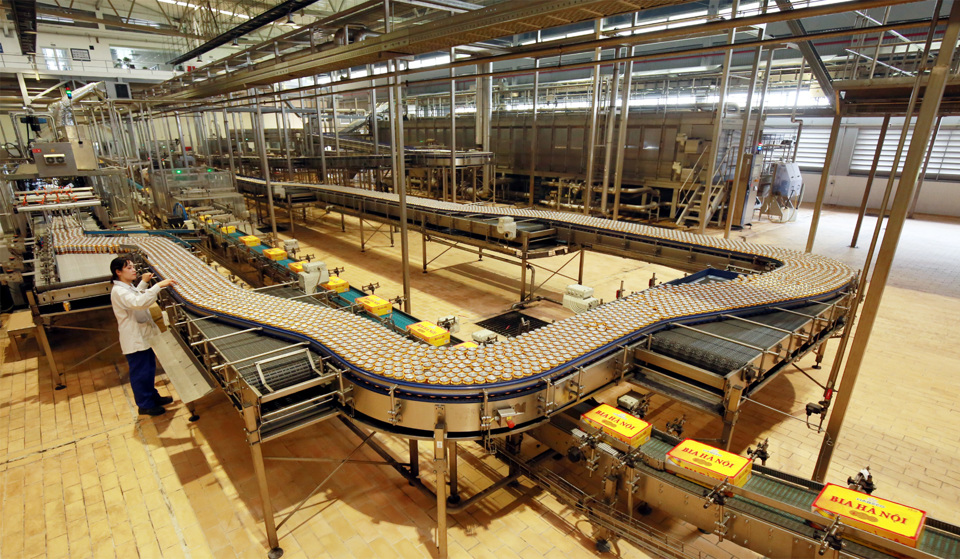
A production facility of the Hanoi Beer Alcohol Beverage (Habeco). Photo: Pham Hung/The Hanoi Times
Nguyen Chi Nhan, General Secretary of the Vietnam Tobacco Association (VTA), stressed that tobacco is the only industry subject to absolute tax rates. The revised Special Consumption Tax Law offers two options: increase the tax by VND2,000 (7.8 US cents) per pack annually, or impose a one-time hike of VND5,000 (20 cents) per pack, followed by an annual increment of VND1,000 (3.9 cents). Both approaches aim to achieve a total increase of VND10,000 (39 cents) per pack by 2030.
Nhan acknowledged the government's goal of reducing smoking rates, but stressed the difficulties facing the industry.
"The business environment is tough, and excessive tax hikes could force local tobacco companies to shut down. The proposed rates are unprecedented and could force many businesses into bankruptcy," he said.
In addition to businesses, he said, rural communities that rely on tobacco farming for income would also suffer.
"Tobacco is the most economically valuable crop for many farmers," Nhan added.
Calls for policy adjustments
BIDV chief economist Luc suggested that the revised special consumption tax law must balance the interests, responsibilities, and feasibility of the government, businesses, consumers, workers, and farmers.
He urged a comprehensive impact assessment based on scientific and practical analysis to secure revenue while ensuring policy consistency.
"Tax increases should be phased in gradually, taking into account the timing and level of increases to avoid economic shocks that could drive consumers to harmful alternatives," Luc said.
He recommended delaying the law's effective date from Jan. 1, 2026, to Jan. 1, 2028, to give businesses time to adapt and invest in new technologies.
VTA general secretary Nhan also called on the National Assembly and the Government to set realistic tax rates based on Vietnam's consumer market.
"Tax policies should be designed to achieve smoking reduction targets while ensuring budget stability," he said.
Nhan emphasized the need to curb illegal tobacco imports and help local businesses transition to producing higher quality, less harmful products.
"We propose a special consumption tax increase of VND2,000 (7.8 cents) per pack in 2026, rising to VND4,000 (16 cents) in 2028 and reaching VND6,000 (24 cents) in 2030."
"This approach balances revenue growth while allowing domestic businesses to adjust their prices and strategies to remain competitive," he said.
For the beverage sector, VBA chairman Viet suggested delaying the tax hike on alcoholic beverages until 2028 and reconsidering subjecting sugary drinks to a special consumption tax.
Vo Tri Thanh, former Vice President of the Central Institute for Economic Management, and Director of the Institute for Brand Strategy and Competition Research, argued that raising taxes alone will not reduce consumption, as consumers often switch to illegal products.
"We need a more comprehensive approach than just raising taxes. Any tax proposal must be carefully studied for its economic, fiscal, labor and fairness impacts," he said.