14TH NATIONAL CONGRESS OF THE COMMUNIST PARTY OF VIETNAM
Log in
Business

Supporting policies for domestic firms equally important as FDI attraction incentives

In contrast to a wide range of investment incentives for multinationals, investment procedures for local enterprises, especially small and medium ones, remain complicated.

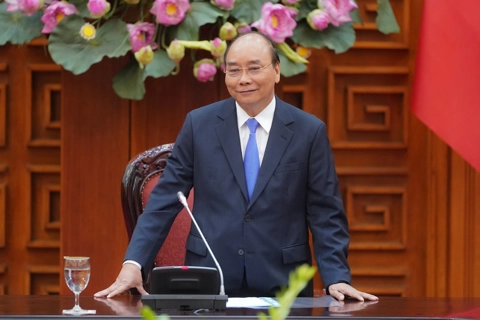
While Vietnam is stepping up efforts to attract fresh foreign direct investment (FDI) in the post-Covid-19 period, efficient and strong supporting policies for domestic firms are equally important to boost the economic recovery, according to National Assembly (NA) deputy Bui Thanh Tung.

 Supporting policies for domestic firms equally important as FDI attraction incentives.

In contrast to a wide range of investment incentives for multinationals, investment procedures for local enterprises, especially small and medium ones, remain complicated, said Tung at an NA discussion session on June 15.

An equitable and fair treatment for both domestic and foreign-invested sectors would enhance trust and confidence of the business community in the government, a key step in speeding up Vietnam’s economic recovery, Tung suggested.

Tung pointed to the fact that ambiguities and inconsistencies in the government’s guidances for the implementation of a number of laws, including the Investment Law, the Construction Law, the Law on Planning, the Land Law, among others, cause confusion among government agencies and subsequent delays in realizing administrative procedures.

NA deputy from Nghe An province Nguyen Thanh Hien said Vietnam should be more selective in attracting high quality FDI, along with an active approach from each locality.

Hoang Van Cuong, vice principal of the National Economics University, added special mechanisms are needed for foreign investors to play a more prominent role in supporting domestic production.

This could be done via government incentives for multinationals to form partnerships with local enterprises, so that the latter could join the former’s supply chain, he added.

In addition to incentive policies, many NA deputies urged the government to invest in strategic infrastructure, including expressways, airports, seaports, telecommunications, IT and e-commerce.

Vietnam’s FDI approvals in the January – May period fell 17% year-on-year to US$13.9 billion. The figure, however, is higher than that of the same five-month period from 2016 to 2018, posting increases of 37.6%, 14.8% and 40.4% compared to the corresponding period of 2016, 2017 and 2018, respectively.

Meanwhile, disbursement of FDI projects in Vietnam totaled US$6.7 billion during the period, down 8.2% year-on-year.

The data shows that out of 96 countries and territories investing in Vietnam in the first five months of 2020, Singapore took the lead with US$5.3 billion. Thailand came second with US$1.46 billion, while the third place belonged to China with US$1.27 billion.
Reactions:
Share:
Trending
Most Viewed
Related news
Vietnam welcomes quality FDI from China, says PM

Vietnam welcomes quality FDI from China, says PM

13 Jun, 14:46

As the existing global supply chains have been disrupted by the Covid-19 pandemic, Prime Minister Nguyen Xuan Phuc hoped more Chinese investors would come to Vietnam and address this issue.

Actual FDI to Vietnam rebounds in May

Actual FDI to Vietnam rebounds in May

28 May, 13:43

Due to travel restrictions, disbursement of FDI projects in Vietnam totaled US$6.7 billion in the first five months of 2020, down 8.2% year-on-year.

Vietnam commits 3% budget to turbocharge AI and data economy

Vietnam commits 3% budget to turbocharge AI and data economy

At least 3% of state budget spending will fund digital transformation, accelerating Vietnam’s shift toward a data-driven and AI-powered economy.

From labor-intensive to high-tech: Hanoi retrains for global edge

From labor-intensive to high-tech: Hanoi retrains for global edge

Raising the skill standards of high-tech workers is emerging as a decisive factor in strengthening Hanoi’s competitiveness as the capital accelerates its shift toward a knowledge-based industrial economy.

Hanoi craft villages resume production early, aiming for growth in 2026

Hanoi craft villages resume production early, aiming for growth in 2026

After the Lunar New Year break, Hanoi’s traditional craft villages have quickly resumed production, fulfilled orders and prepared for new markets while blending heritage craftsmanship with modern technology to strengthen competitiveness and sustain growth in 2026.

Vietnam stock market poised for post-Tet gains

Vietnam stock market poised for post-Tet gains

The post-Tet period often presents attractive opportunities for investors in the following months.

Spring Fair draws 500,000 visits, elevates Vietnamese brands nationwide

Spring Fair draws 500,000 visits, elevates Vietnamese brands nationwide

Drawing large crowds and strong commercial momentum, the 2026 Spring Fair turned Hanoi into a vibrant showcase of Vietnamese products, culture and innovation, where shopping met heritage experiences and businesses forged valuable partnerships.

Firms seek clearer policy framework for new tech, digital platforms

Firms seek clearer policy framework for new tech, digital platforms

Hanoi’s tech firms are calling for clearer demand mechanisms and transparent evaluation as the city pilots its Technology Exchange and Digital Transformation Market to boost commercialization, innovation and digital growth.

Vietnam Airlines to open first nonstop Hanoi-Amsterdam route to enhance Europe ties

Vietnam Airlines to open first nonstop Hanoi-Amsterdam route to enhance Europe ties

The move aims to open a new gateway to Europe and advance the national flag carrier’s strategy to expand its European network.

Vietnamese goods reach rural areas through Tet fairs

Vietnamese goods reach rural areas through Tet fairs

Hanoi is intensifying communication and outreach for the “Vietnamese people prioritize using Vietnamese goods” campaign to boost consumption ahead of Tet, the country’s most important holiday.