Technology, innovation identified as key drivers for Hanoi's growth
Hanoi is a hub for scientific and technological cooperation among many provinces and cities in Vietnam, as well as research institutions around the world.
The Capital Law (Amended) has provided groundbreaking policies to build Hanoi into a center of science, technology, and innovation in Southeast Asia, said Nguyen Ngoc Ky, Director of the Hanoi Institute for Socio-Economic Development Studies (HISEDS).
He argued that those factors are considered growth engines for the local economy and create favorable conditions for the development of businesses, organizations, and individuals.
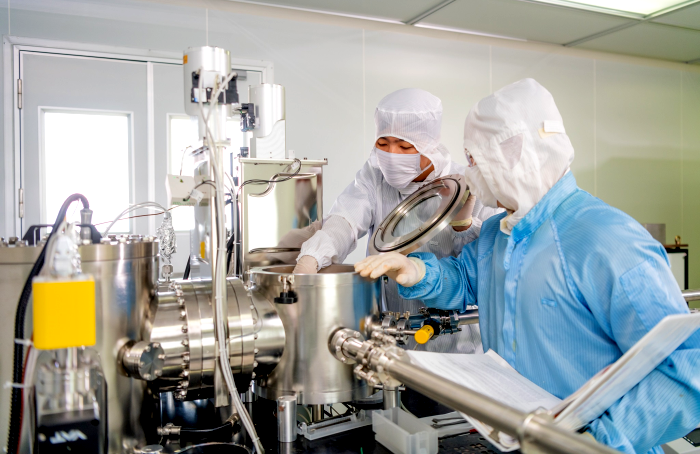
Scientific research at the laboratory of the Nano and Energy Center at the University of Science under the Vietnam National University, Hanoi. Photo courtesy of the university |
"Hanoi is also a hub for scientific and technological cooperation among many provinces and cities in Vietnam, as well as research institutions around the world. However, this advantage has not been fully exploited over the years," Ky added.
He cited as an example that among the 325,000 scientific and technological units registered to operate in the city, only a few dozen of them can produce marketable results for scientific and technological tasks due to cumbersome administrative procedures. The transfer of applications into practice is still limited, especially in agricultural production, and not commensurate with the potential of the capital city. Hanoi falls short of a mechanism to support the information and communication technology sector to keep up with the rapid development of the 4th Industrial Revolution.
Article 25 of the Capital Law (as amended) allows new technologies, products, services or business models to be tested under the special control of the relevant state authorities. The maximum period for conducting controlled testing is three years, which may be extended once for a maximum of three years.
During the pilot period, enterprises and scientific and technological organizations will not only receive support from the city budget for the purchase and operation of machinery and equipment but will also enjoy additional incentives similar to those provided to high-tech enterprises for the performance of their tasks.
The law also opens up opportunities for public universities, vocational training institutions, and other scientific and technological organizations in the city to establish enterprises, invest capital in enterprises to commercialize scientific research results and develop technologies under the intellectual property rights of these institutions and organizations.
"If Hanoi takes the lead in innovation, it will get advantages in attracting foreign direct investment, especially foreign investment funds to promote the pioneering role of the capital in developing science and technology, and innovation in the right direction and tasks of developing the capital by 2030, with a vision to 2045," Ky stressed.
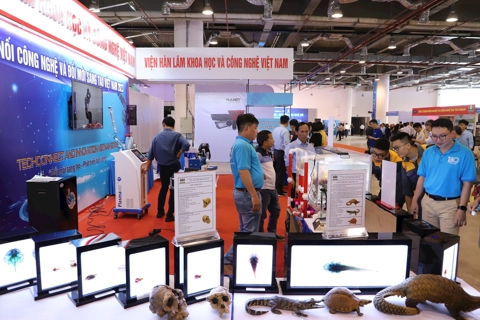
Speaking at the Techconnect and Innovation Vietnam 2024 held in Hanoi in late September, Minister of Science and Technology Huynh Thanh Dat highlighted innovation as a driver for fast and sustainable development.
He underlined that in such crucial sectors as agriculture, construction, health, education, and industry, science technology, and innovation are not only the main driver for productivity improvement or sustainable growth but help create new business models and enhance the competitiveness of enterprises in the international arena.
Permanent Vice Chairman of the Hanoi People’s Committee Le Hong Son said the capital is home to more than 70% of the country's science and technology organizations, universities, research institutes, and 82% of the country's laboratories, including 14 national key laboratories, which employ more than 65% of the leading scientists.
"Hanoi will keep accompanying enterprises, organizations, and scientists and create the best possible conditions for the development of science, technology, and innovation," Son said.
Ambassador Julien Guerrier, Head of the EU Delegation to Vietnam, expressed his belief in the huge potential for closer cooperation between the EU and Vietnam, particularly in areas such as green technology, digital innovation, and sustainable agriculture.