The significance of Vietnam for US businesses and why they should take notice: Standard Chartered
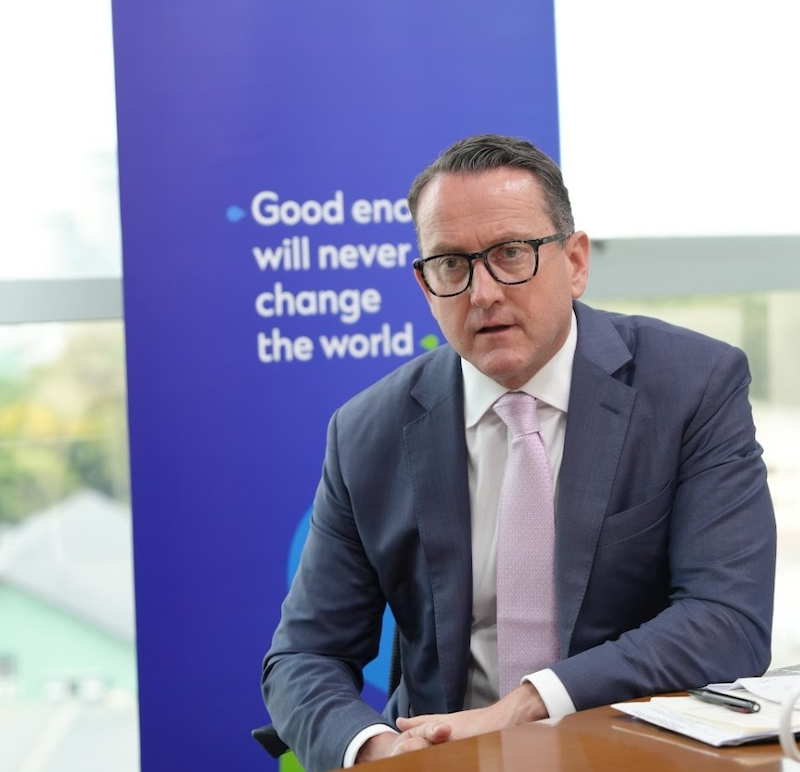
The CEO and Regional Head, Client Coverage, Americas, Standard Chartered, shared his view on Vietnam's significance for US businesses and why Vietnam is potential for foreign investors.
Vietnam has gone from being a frontier economy in ASEAN to a flourishing, cost-effective industrial nation. Firms and investors looking for new markets to grow, source, or manufacture their products – especially in Asia – should consider Vietnam’s long-term potential and stay updated on its opportunities.
| Steven Cranwell, CEO and Regional Head, Client Coverage, Americas, Standard Chartered. Photo: Standard Chartered |
In recent years, Vietnam has benefited from the trade tensions between the US and China. With US companies adopting a ‘China plus one’ approach to their supply chains, the percentage of exports from Vietnam to the US has risen by approximately nine percent between 2018 and 2021.
It is, however, important to note that Vietnam has been an alternative to China for general manufacturing in Asia long before the Covid-19 pandemic, and its long-term prospects remain bright.
Despite the uncertainty from global economic conditions, we remain confident in Vietnam’s outlook. The country’s business-friendly atmosphere, strategic location as a gateway to other fast-growing markets, plentiful and skilled labor, competitive labor cost, and incentives have been compelling propositions to companies looking to expand their manufacturing in the region.
Take Apple, for example. While Vietnam has yet to host an Apple plant, the country is already home to 31 companies with 160,000 workers producing and assembling parts for Apple products. Other tech companies, such as Intel Corporation, plan to increase their investments in the country.
Nike is another example of a company that has expressed interest in expanding its investment and production in Vietnam. The recent increase in the S&P Global Vietnam Manufacturing Purchasing Managers' Index to above 50.0 in February is a positive sign of its manufacturing sector's renewed strength.
Vietnam holds numerous advantages for US corporates
ASEAN is poised for long-term prosperity and is on track to become one of the world’s largest trading blocs, benefitting from global supply chain shifts and favorable demographics. It is one of the few economic blocs in the world where every major economy wants to do further business, and the opportunities in trade, investment, digitization, and sustainable finance are well acknowledged. As the only international bank present in all 10 ASEAN markets, Standard Chartered is well-placed to advise clients looking to expand into ASEAN and beyond.
Over 90% of the 500 global business leaders we recently surveyed indicated plans to expand in ASEAN, and over 80% mentioned that they would increase investments in the region. This is consistent with feedback from US-based respondents, where 92% have existing and plans to expand sales in the region, and 51% currently have or plan to have production capabilities in Vietnam.
While we are optimistic that more respondents will increasingly have plans to expand into Vietnam, there are challenges to ensure this trajectory continues at pace.
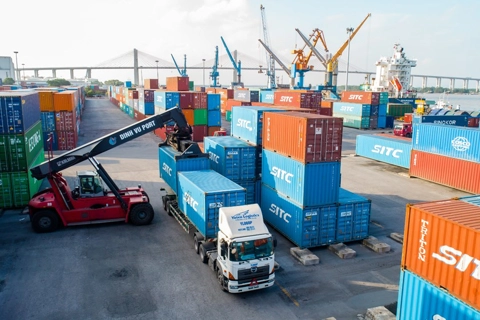
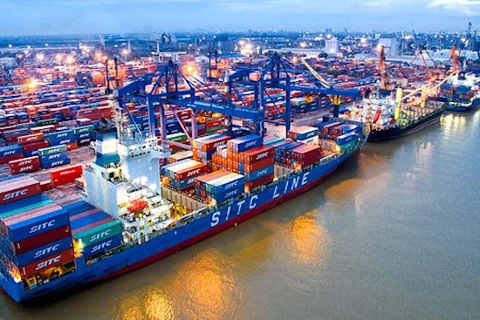
It is not uncommon to hear of companies voicing concerns that Vietnam's infrastructure needs improvement, particularly in ports, transportation infrastructure, and logistics capabilities, to continue its growth rate. Additionally, Vietnam's reliance on raw materials from China may impede the diversification efforts of companies as production may be disrupted if supplies from China cease. For example, the garment and textile industry relies on China for 70-80% of the material they require.
But these challenges come with opportunity. To enhance the national transportation network, the country’s Transport Infrastructure Master Plan is expected to support upgrading all transport infrastructure by 2030 and solve Vietnam’s traffic and congestion issues through public-private investments.
Vietnam participates in numerous Free Trade Agreements (FTAs). Some of them include the Regional Comprehensive Economic Partnership (RCEP), Comprehensive and Progressive Agreement for Trans-Pacific Partnership (CPTPP), EU-Vietnam FTA (EVFTA), and UK-Vietnam FTA (UKVFTA) – all of which will improve the country’s ability to participate in worldwide and regional supply chains. This enables businesses established in Vietnam to diversify and access a broader range of markets at favorable conditions.
Foreign direct investment (FDI) to support the country's growth is also expected to continue through attractive tax and investment schemes. For example, special sectors like healthcare, technology, renewable energy, and infrastructure development can expect to receive preferential corporate income tax rates. Projects in specific sectors and regions may also qualify for tax exemptions and reductions if they meet specific criteria.
Last but not least, as industries transition into more sustainable fuel sources, Vietnam is well-positioned to partake in the energy transition. With the country’s recent agreement to be part of the Just Energy Transition Partnership, it will benefit from an initial US$15.5 billion of public and private finance over the next three to five years to support the country’s shift to renewable energy sources.
Given Vietnam's access to various renewable energy sources, such as solar, wind, biomass, and hydropower, it is evident that there will be significant growth opportunities for businesses involved in promoting clean energy, sustainable infrastructure, and decarbonization technologies.
Vietnam is set to become one of the most important players in the Indo-Pacific and is making significant investments in the region. With certain geopolitical tensions persisting and the RCEP estimated to further enhance regional growth, Vietnam's draw as a growth market and manufacturing hub will likely rise as companies seek to expand in ASEAN. Companies that take notice will only stand to benefit.