USAID will intensify life improvement of children with disabilities in Vietnam
The extended efforts help reduce the severity of disabilities among children under 6 years old in the long run and overall severe disability prevalence in the population thanks to early disability detection and support.
The US Agency for International Development (USAID) will continue its efforts to improve the quality of life for children with disabilities in Vietnam, through activities in Tay Ninh and Binh Phuoc in the time to come.
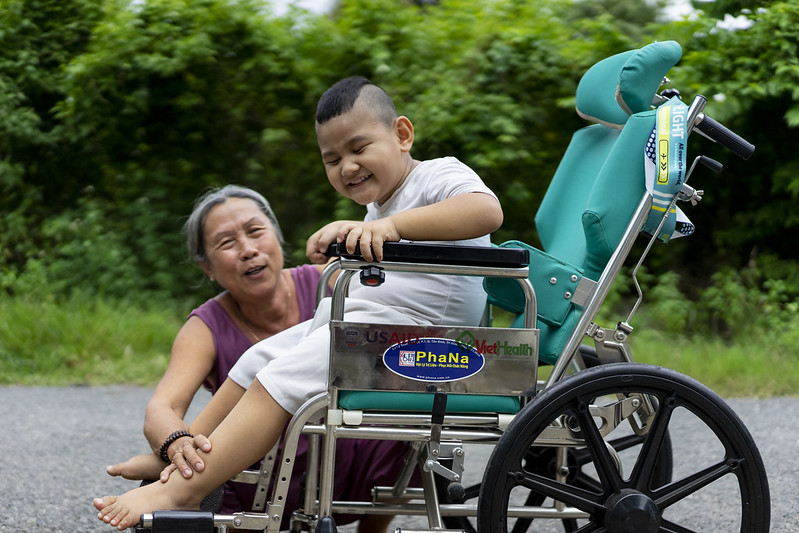
| A child of disability benefits USAID's project. Photo: USAID Vietnam |
The move will proceed with the recently-ended six-year project that has made significant improvements in early childhood disability detection and support in Vietnam, demonstrating USAID efforts for disadvantaged children in this country since 2005.
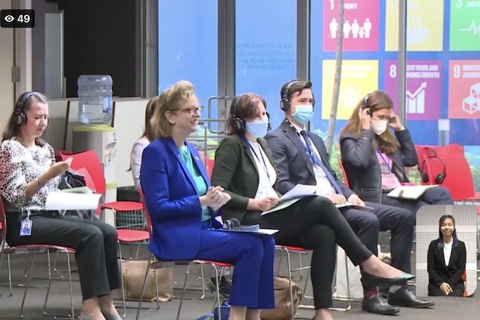
Under USAID’s Disabilities Integration of Services and Therapies Network for Capacity and Treatment (DISTINCT) project, the accomplishments were highlighted at a ceremony attended by representatives of Vietnam’s Ministry of Health and National Committee for Persons with Disabilities, project implementing partners VietHealth and the Medical Committee Netherlands-Vietnam, and other key partners and stakeholders.
The two countries celebrated the end of the project on the occasion of the International Day of Persons with Disabilities which falls on December 3.
At the meeting celebrating the end of the project held on December 8, Aler Grubbs, USAID/Vietnam Mission Director highlighted the project’s partners for their collective success in improving the quality of life for children with disabilities. “Children are the future, and the US is a committed partner of Vietnam in brightening their lives,” he said.
| A child among beneficiaries in USAID's support project. Photo: USAID Vietnam |
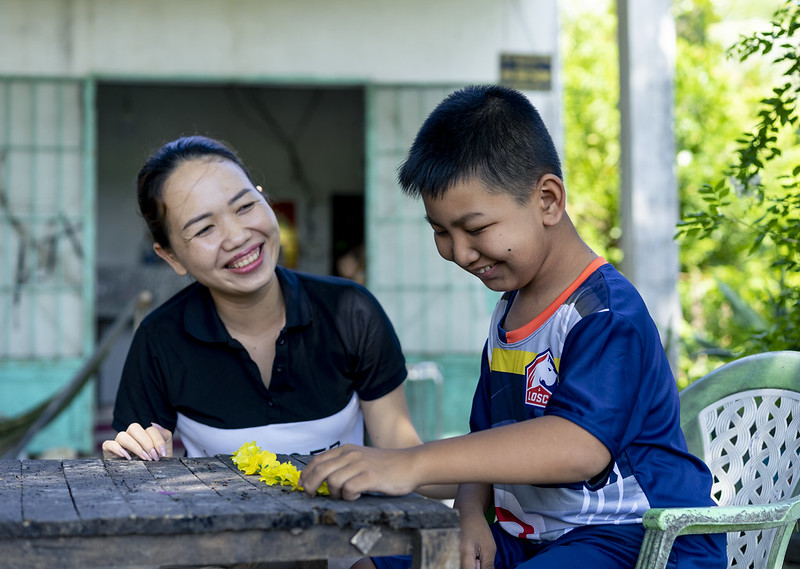
The project, which benefits children in three provinces of Tay Ninh, Binh Phuoc, and Dong Nai, reduces the severity of disabilities among children under six years old in the long run and also overall severe disability prevalence in the population thanks to early disability detection and support, including medical care, rehabilitation, and special education.
In fact, prior to the 2015 start of USAID’s project, the three provinces did not have a system in place to provide such services, leaving caregivers to seek what care and support they could at provincial hospitals.
USAID has helped the three provinces to begin providing these crucial early childhood health services, including in schools and health centers, making them more accessible. The project also supported the creation of 18 therapy and resource rooms in the community.
USAID directly supported nearly 5,000 children identified for follow-up through the newly-established provincial screening system by providing them with rehabilitation services such as physical and speech therapies, school- and home-based special education, and assistive devices.
The project also expanded the country’s rehabilitation workforce by helping create Vietnam’s first Bachelor’s and Master’s of Rehabilitation degree programs, specializing in speech and language therapy, from which the first students graduated this year. USAID also trained more than 3,000 early childhood educators and caregivers in special education and more than 2,000 healthcare workers and caregivers in physical and speech therapy.
| Persons with disabilities at a job bazaar in Hanoi. Photo: Tran Oanh/The Hanoi Times |
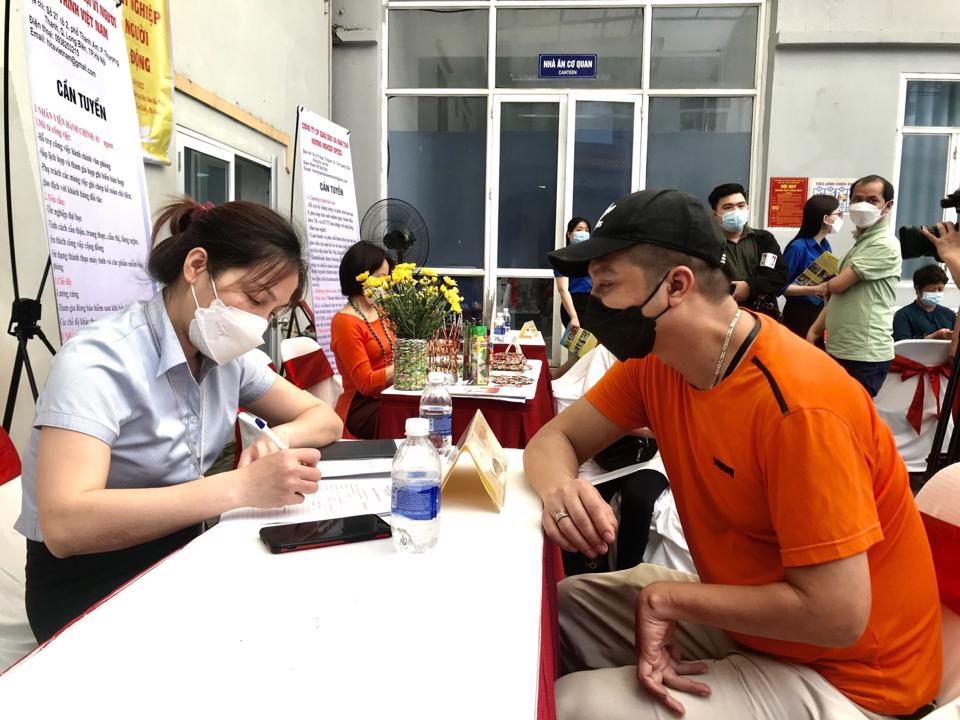
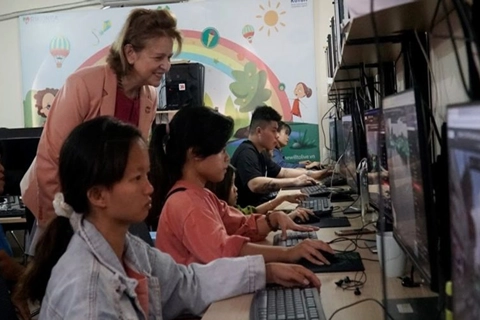
The project is part of USAID’s efforts to improve the lives of children with disabilities in Vietnam. In Hanoi, the common drive has been joined by different stakeholders, especially USAID, for the past years. According to Dinh Thi Thuy, Deputy Chief of the Office of the National Committee for Persons with Disabilities in Vietnam, since 2005, USAID has provided continuous support for people with disabilities (PwD) in Vietnam, including children with disabilities under six years old. Since 2012, the agency has launched integrated and comprehensive support programs for PwD in the country. Since 2012, USAID and its partners have piloted an information and communications technology (ICT) project to improve education for children with disabilities and provide vocational guidance and training for young people in schools. These programs help meet the health, education, employment, and broader needs of people with disabilities in society, she said, noting that Hanoi is among benefited localities. In another move, Save the Children (SCI) is implementing a project named “Increased accountability to eliminate violence and discrimination against children with disabilities (AVAC)” in Hanoi and Danang in 2022-2024. It aims to provide the interventions needed to empower children, including children with disabilities of all gender identities, for children to participate meaningfully in decision-making processes and to be protected from all forms of violence. In its plan, Hanoi strives to have 95% of children from 0 to 16 years old to be surveyed, screened, and detected early with disabilities, and at least 80% of children with disabilities will receive intervention support in care, education, and rehabilitation in the community. |