UN agencies promote disability inclusion in Vietnam
The joint project will back Vietnam in fulfilling UN rights of persons with disabilities.
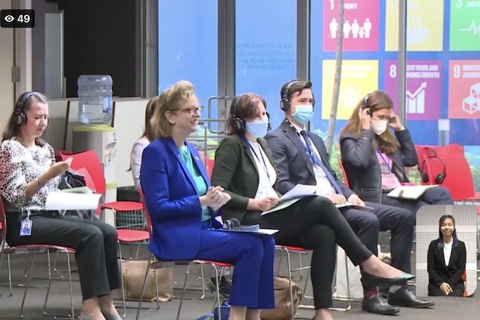
UNDP, UNFPA, and UNICEF will support the implementation of the Convention on the Rights of Persons with Disabilities (CRPD) in Vietnam through a joint project launched on February 16.
Titled “Working together for an inclusive future. Implementing the Convention on the Rights of Persons with Disabilities (CRPD) through effective collaboration”, the project brings together the expertise and experience of three agencies in supporting national and provincial authorities and organizations of persons with disabilities (OPDs).
Launched just before the World Day of Social Justice (Feb 20, 2022), the move is expected to assist multi-sectoral interventions in the CRPD fulfillment in Vietnam.
Funded by the Department of Foreign Affairs and Trade (DFAT) of Australia and the Ministry of Foreign Affairs of Norway, who are longstanding donors of the UN Partnership on the Rights of Persons with Disabilities (UNPRPD) Multi-Partner Trust Fund, the project aims to serve as a vehicle for multi-stakeholder dialogue and partnership to ensure results and impact towards a CRPD compliance environment in Vietnam.
It's fundamental to ensure the materialization of the principles of leaving no one behind and building back better a more inclusive society for all.
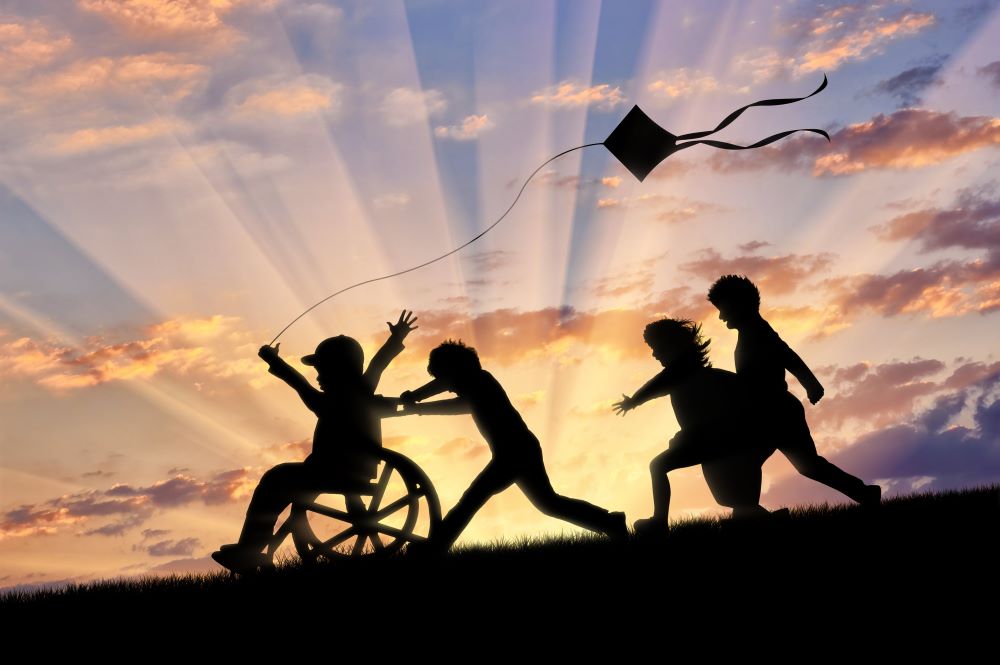
| Children are playing. Photo: Colorista/Hoang Hiep/UNICEF |
Essential for capacity building
Addressing the launch, Vu Thi Kim Hoa, Deputy Director, Department of Child Affairs, Ministry of Labor, Invalids and Social Affairs (MOLISA) said this UN joint project is great in capacity-building and considered essential ‘pre-conditions’ for addressing the needs and opportunities of people with disabilities in public policymaking and programming across all sectors. The project is significant for Vietnam which “still struggles to translate the provisions of the CRPD into concrete policies, systems, and services.”
During the formulation of this joint project, UNDP has led the UNPRPD situation analysis in Vietnam that highlighted significant challenges related to the limited participation of OPDs in the planning, implementation, monitoring, and evaluation of national programs.
In the next two years, UNDP, UNFPA, and UNICEF, as partner agencies, will therefore work towards the following three outcomes: Building the capacity of organizations of persons with disabilities and policymakers on CRPD-compliant policy making and implementation; Identifying and addressing gaps in the achievement of essential building blocks or preconditions to CRPD implementation in development and humanitarian programs; and Strengthening the disability-inclusive monitoring and accountability of Vietnam’s National Socio-Economic Development Plan 2021-2025 through the lenses of the CRPD framework.
According to UNDP Resident Representative Caitlin Wiesen, people with disabilities account for 7% of Vietnam’s population. They are recognized as key partners in efforts toward sustainable development in Vietnam, not just as beneficiaries.
“Persons with disabilities should not be only engaged in disability-focused policies, their rights and voices should be integrated into Vietnam’s programs for implementing the National Socio-Economic Development Strategy, " she said.
Wiesen went on to say that as the coordinator of the joint UN project, UNDP will work closely with all partners to empower people with disability to enable their full participation in the law-making process from the planning stages.
“Together we will act to leverage a multi-sectoral approach that addresses fundamental issues needed to drive systemic and effective changes towards disability inclusion,” she added.
For her part, UNFPA Representative in Vietnam Naomi Kitahara said: "I personally and strongly believe in the power of people with disabilities, as a solution for societal change, as a solution for policy agenda, as a solution to lead Vietnam to achieve SDGs, and as a solution to protect and promote the rights of persons with disabilities. "
Their access to sexual and reproductive health information and services, as well as comprehensive sexuality education and life skills education, would be essential, so as not to leave them behind in SDGs agenda.”
Meanwhile, UNICEF Deputy Representative in Vietnam Lesley Miller shared that UNICEF has been working for over 4 decades in Vietnam to promote the rights of children with a disability, including their rights to access quality and inclusive services and support, wherever they live, in times of stability as well as during emergencies.
He believed this project, by building capacity, will transform Vietnam’s commitment to the UN Convention into reality through inclusive policies, systems, and services that benefit all men, women, and children with disabilities.
The project is implemented in a favorable legal environment where Vietnamese Government is strongly committed to ensuring that people with disabilities can fully participate in society and equally enjoy their fundamental rights.
The Government has enacted the Law on Persons with Disabilities since 2010 and is going to revise it in upcoming years. Vietnam also ratified the CRPD in 2015, and various master plans and policies have been issued to guide the CRPD and the Law implementation.