Business
Vietnam aims to have 10 tech unicorns by 2030
The rate of enterprises applying technologies derived from the Industry 4.0 should be at least 20% by 2025 and 40% by 2030.
Vietnam is expected to have at least five tech companies valued move than US$1 billion each, and that figure would doubl by 2030, according to a draft national strategy on the Industry 4.0 until 2030 recently released by the Ministry of Planning and Investment.
The rate of enterprises applying technologies emerged from the Industry 4.0 should be at least 20% by 2025 and 40% by 2030, stated the document.
Meanwhile, total social investment for research and development is estimated to be 2% of the GDP by 2030, placing Vietnam in the top 30 countries in terms of technologies development and top 30 in the global innovation index.
According to the draft strategy, priority fields subject to technology application are public administration, electricity and water supply, education, healthcare, manufacturing, agriculture, logistics, trade, communication, finance and banking.
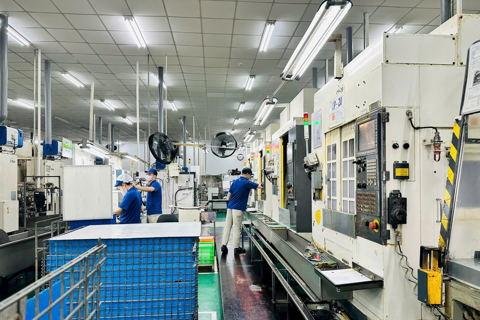
Vietnam would pursue the Fourth Industrial Revolution by applying technologies towards the establishment of e-government; upgrading and transforming the current business and production system for greater efficiency in resources allocation; promoting and investing in science and technologies activities.
The strategy also revealed two options, including the establishment of a national committee on the Industry 4.0, or to transform the National Steering Committee for Economic Restructuring and Growth Model Reform into “the National Steering Committee for Growth and the Fourth Industrial Revolution.”
Nevertheless, Vietnam is ranked low in Industry 4.0 readiness, mainly due to shortcomings in the legal framework for businesses activities in the new context. Additionally, the application of new technologies, such as artificial intelligence, Internet of Things, blockchain, big data, among others, into production and businesses has been slow and faced numerous restriction.
Before Vietnam, regional countries have drafted policies for the development of the Fourth Industrial Revolution, including China in 2015 with its “Made in China 2025”, focusing on enhancing capabilities in research and development in the manufacturing sector.
In 2017, Thailand announced the “Thailand 4.0” policy to promote high tech production in automobile, smart electronic devices, biotech, agriculture, among others. Malaysia in 2018 introduced the My-i4.0, setting out the vision for the manufacturing sector in the next 10 years towards higher contribution to the economy and more high value-added products.

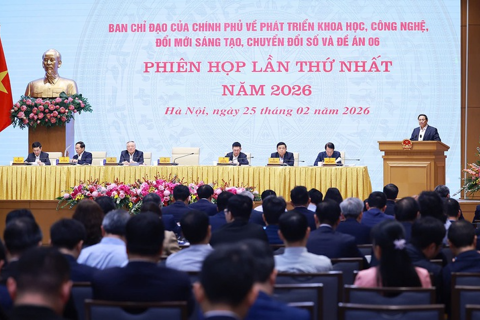
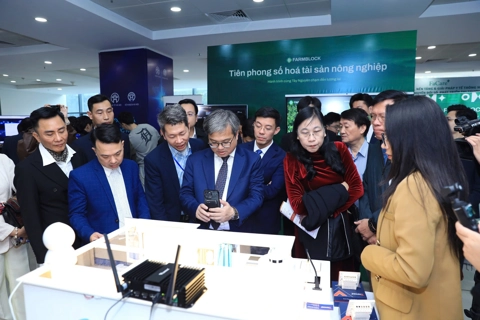
Illustrative photo.
|
Meanwhile, total social investment for research and development is estimated to be 2% of the GDP by 2030, placing Vietnam in the top 30 countries in terms of technologies development and top 30 in the global innovation index.
According to the draft strategy, priority fields subject to technology application are public administration, electricity and water supply, education, healthcare, manufacturing, agriculture, logistics, trade, communication, finance and banking.
Vietnam would pursue the Fourth Industrial Revolution by applying technologies towards the establishment of e-government; upgrading and transforming the current business and production system for greater efficiency in resources allocation; promoting and investing in science and technologies activities.
The strategy also revealed two options, including the establishment of a national committee on the Industry 4.0, or to transform the National Steering Committee for Economic Restructuring and Growth Model Reform into “the National Steering Committee for Growth and the Fourth Industrial Revolution.”
Nevertheless, Vietnam is ranked low in Industry 4.0 readiness, mainly due to shortcomings in the legal framework for businesses activities in the new context. Additionally, the application of new technologies, such as artificial intelligence, Internet of Things, blockchain, big data, among others, into production and businesses has been slow and faced numerous restriction.
Before Vietnam, regional countries have drafted policies for the development of the Fourth Industrial Revolution, including China in 2015 with its “Made in China 2025”, focusing on enhancing capabilities in research and development in the manufacturing sector.
In 2017, Thailand announced the “Thailand 4.0” policy to promote high tech production in automobile, smart electronic devices, biotech, agriculture, among others. Malaysia in 2018 introduced the My-i4.0, setting out the vision for the manufacturing sector in the next 10 years towards higher contribution to the economy and more high value-added products.