Vietnam budget revenue hits record US$100 billion in 2025
The figure was nearly 35% higher than the initial estimate and more than 30% above 2024 levels.
THE HANOI TIMES — Vietnam’s state budget revenue reached a record of VND2.65 quadrillion (US$108.2 billion) in 2025, equivalent to 20.7% of GDP, reflecting strong fiscal performance despite global uncertainties.

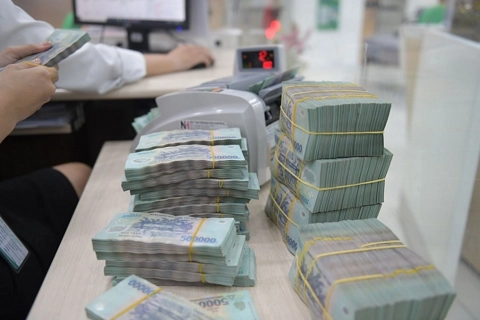
State bduget revenue reaches a record high this year. Photo: TL/The Hanoi Times
The figure, announced by Minister of Finance Nguyen Van Thang at a year-end review conference on January 6, was nearly 35% higher than the initial estimate and more than 30% above the 2024 level.
Domestic revenue remained the main pillar, accounting for about 86% of the total and reaching nearly VND2.3 quadrillion ($93.9 billion).
Crude oil revenue achieved just over 90% of the target but fell more than 18% year on year amid lower global oil prices.
Revenue from import and export activities rose by nearly 18% compared with 2024, alongside a record total trade turnover of $930 billion.
State budget expenditure in 2025 is estimated at VND2.42 quadrillion ($98.8 billion), up 31.5% year on year, while the budget deficit was kept at around 3.6% of GDP, about VND9.5 trillion lower than projected.
According to the finance minister, budget resources will be prioritized for salary reform, development investment and social welfare in the coming period.
In 2025, Vietnam allocated about VND1.15 quadrillion (US$46.9 billion) for development investment, the highest level ever recorded. Of them, 3,345 km of expressways and 1,701 km of coastal roads were completed, exceeding set targets.
Authorities also introduced tax and fee exemptions, reductions and extensions, as well as land-use fee relief, to support businesses and residents, with total support estimated at VND290 trillion (US$11.8 billion).
Explaining the revenue growth, Thang said tax and customs authorities worked closely with ministries and localities to broaden the tax base and ensure accurate and sufficient collection.
This year, Vietnam targets economic growth of 10% or higher. Thang said fiscal policy will face heavy pressure as Vietnam seeks to lift total social investment to around 40% of GDP to achieve double-digit growth while maintaining macroeconomic stability.
He said the finance sector must renew its thinking and policies and strengthen coordination with ministries and local governments.
Efforts will also focus on preventing revenue losses in high-risk areas such as land, real estate, e-commerce and cross-border transactions. Digital transformation will be accelerated through tools such as e-invoices and big data and stronger inter-agency data sharing to improve revenue management.
Speaking at the conference, Prime Minister Pham Minh Chinh said the finance sector must promote savings from the start of the year to increase spending on development investment and human capital.
“National finance must be sustainable, with sufficient revenue, disciplined spending and focused investment,” he said.
He described the double-digit growth target for this year and the coming period as “a high mountain to climb” but reaffirmed the principle that commitments must be delivered.
To achieve this goal, the prime minister called on the Ministry of Finance to advise on a suitably expanded and well-targeted fiscal policy while safeguarding national financial security. He also urged stronger support for household businesses and policies to help them transition into formal enterprises.
He said ministries and localities must disburse 100% of public investment capital under the principle that “capital waits for projects, not the other way around.”
Resources are expected to focus on major projects such as the North–South high-speed railway, three rail lines connecting with China, nuclear power projects and infrastructure to better utilize underground, maritime and space resources.
In addition, financial authorities were urged to strengthen business confidence so that residents and enterprises are more willing to invest. The prime minister also noted that before January 15, the Ministry of Finance is expected to license enterprises to participate in pilot programs for the digital asset market under a regulatory sandbox framework.