Vietnam can still thrive despite global turmoil: ADB
For Vietnam, this is both a challenge and an opportunity to accelerate domestic reforms, expand its global partnerships, and reinforce its competitive edge in a more complex world.
THE HANOI TIMES — Following US President Donald Trump's tariff policy which puts Vietnam among the hardest-hit countries, the ways that the country manage weathering challenges continue to captivate both locals and foreigners.
ADB Principal Country Economist Nguyen Ba Hung shared with The Hanoi Times his insights on how Vietnam can navigate ongoing global headwinds to sustain growth and ensure long-term prosperity.
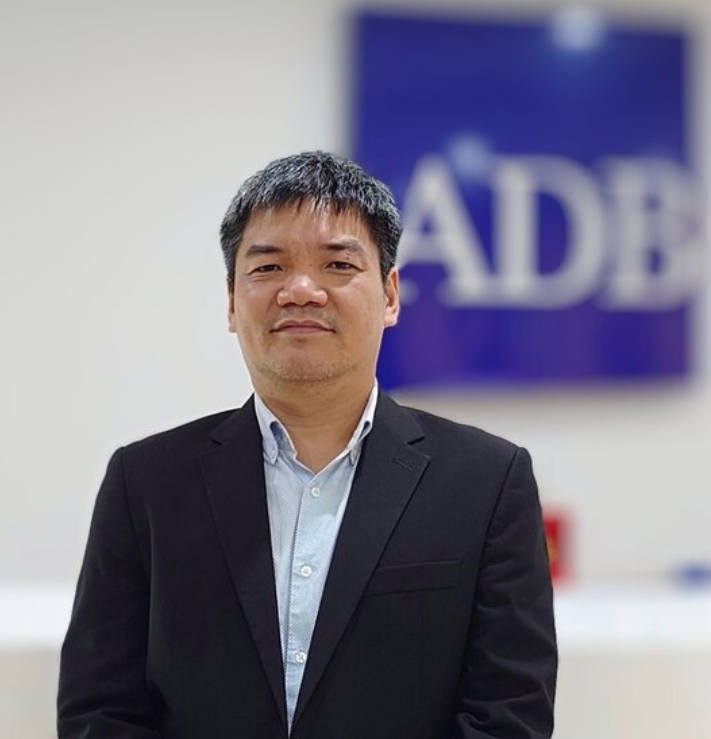
ADB Principal Country Economist Nguyen Ba Hung. Photo: ADB
How do you assess Vietnam's economic prospects in 2025, especially in light of global uncertainty and changes in US tariff policy under President Trump?
US reciprocal tariffs and retaliation by trading partners are weighing heavily on global trade and investment flows. These actions are driving up production costs, weakening demand and threatening global GDP growth. Inflationary pressures are also rising, prompting many countries to adjust their monetary policies and tighten conditions at a time when stability is crucial.
Vietnam is inevitably exposed to these risks as its economy is heavily dependent on exports, especially to the US, a major trading partner. The potential impact of US tariffs is significant. However, Vietnam has demonstrated its preparedness. The immediate diplomatic engagement following the US tariff announcement, including a phone call between General Secretary To Lam and President Donald Trump on April 4, demonstrating the country's proactive stance.
While it's too early to assess the outcome of these negotiations, Vietnam can take near-term steps to sustain growth. These include stimulating domestic demand, improving the investment and business environment, and increasing public spending in strategic sectors.
On the other hand, Vietnam has maintained strong fiscal discipline. Public debt is projected to reach only 36%-37% of GDP by end-2024, or about US$160-$165 billion, well below the 60% threshold set by the National Assembly. This creates room to expand public investment, particularly in infrastructure and human capital development, which can generate strong multiplier effects and improve long-term productivity.
In addition, Vietnam should continue diversifying export markets and products to reduce dependence on any single trading partner and increase resilience.
We are witnessing a shift in the global economic landscape from a rules-based, open market environment to one in which geopolitics plays a greater role in trade and investment decisions. For Vietnam, this is both a challenge and an opportunity, to accelerate domestic reforms, expand its global partnerships, and reinforce its competitive edge in a more complex world.

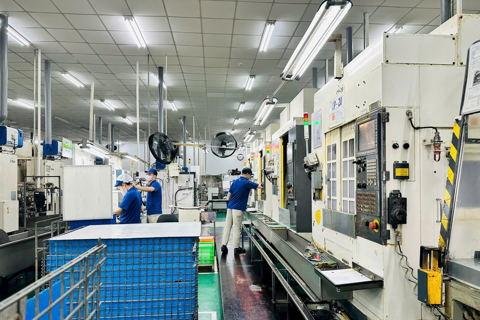
The electronic component production line of 4P Co., Ltd. located in Pho Noi A Industrial Park, Van Giang District, Hung Yen Province supplies components to LG's supply chain. Photo: Hoang Anh/The Hanoi Times
What are your thoughts on Vietnam’s current tax policies? Should the government reconsider its tax incentives in light of trade tensions and the implementation of the global minimum tax?
The temporary VAT reduction has helped support consumer purchasing power. However, it would be more impactful if combined with policies that directly boost household incomes, such as increasing public investment, improving workforce training, and supporting job transitions into sectors with high labor demand. These measures have strong spillover effects and can amplify the impact of economic stimulus policies.
When it comes to tax incentives for foreign investors, we are seeing a more cautious attitude. Investors are taking time to reassess Vietnam's investment climate, especially in light of ongoing global tax reforms such as the OECD's global minimum tax. This may have some short-term impact, but long-term investment decisions are typically based on broader strategic considerations.
In practice, foreign investors, especially in high-value manufacturing and services, tend to prioritize factors such as infrastructure quality, labor skills, and the overall business environment over short-term tax incentives. Therefore, Vietnam should focus on strengthening these fundamentals, which will both enhance FDI competitiveness and support domestic enterprises.
Rather than relying primarily on tax incentives, Vietnam can take this opportunity to align its investment strategy with international best practices, focusing on transparency, innovation, green growth, and long-term value creation.
What growth drivers should Vietnam prioritize in the coming year?
Public investment and fiscal response are two key levers Vietnam can utilize to stimulate growth in 2025. In fact, the government has already taken important steps to diversify its growth model. For instance, the National Assembly recently approved a public investment budget of around $36 billion for 2025, a 50% increase over previous years.
That said, implementation remains a concern. In the first quarter of 2025, only 9.53% of the public investment budget was disbursed, compared to 12.27% in the same period last year. This gap between planned and actual spending underscores the need to improve project management, streamline procedures, and strengthen institutional capacity.
In addition, it's necessary to boost domestic demand while increasing budget spending on infrastructure, science and technology, and innovation to improve competitiveness and attract more foreign investors. One example is the government's proposed $20 billion concessional credit package to support strategic sectors, science, innovation, and infrastructure, which signals a strong commitment to future-proofing the economy.
These are promising directions, but success will ultimately depend on how well the policies are executed. A coordinated, transparent, and accountable approach will be essential to ensure that these investments have their intended impact.
Thank you for your time!