Log in
Social Affairs

Vietnam: Ethnic minority children are disproportionately undernourished

The next phase of efforts on undernutrition should be more targeted, concentrating on the provinces with the highest burdens, to create a breakthrough.

Malnutrition is particularly widespread among ethnic minority children in Vietnam, with stunting ratesamong the highest in the world, according to a new report launched on December 10 by the World Bank (WB) and Vietnam’s National Institute of Nutrition.

The report finds that one in three children of ethnic minorities in Vietnam suffers from stunting, while one in five is underweight. To address this, the report calls for a tailored and innovative approach that takes into account the unique geographical and cultural challenges facing this group.

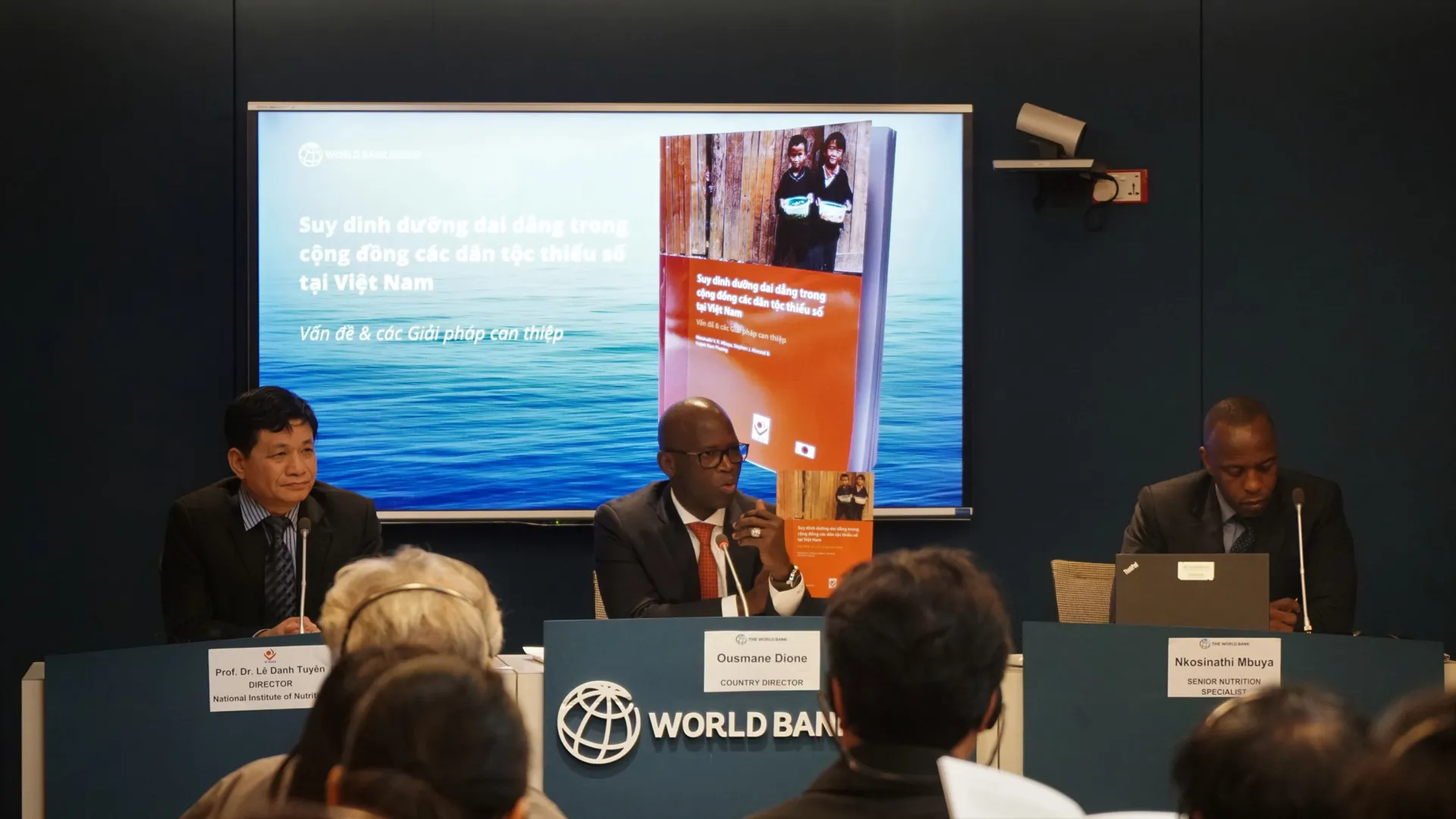
  The launching event of the book. Photo: WB


“Despite Vietnam’s impressive progress in reducingthe overall rate of undernutrition over the past two decades, ethnic minority children still lag behind, and the disparity is widening,” WB Country Director for Vietnam Ousmane Dione said. “The next phase of efforts on undernutrition should be more targeted, concentrating on the provinces with the highest burdens, to create a breakthrough.”


Because the window of opportunity for adequate nutrition for optimal health and physical and cognitive development is short, spanning the first 1,000 days of life, any undernutrition occurring during this period can lead to extensive and largely irreversible damage to physical growth and brain development.


The report stressed that interventions to improve nutritional outcomes must focus on this age group and women of child bearing age.


The report noted that among ethnic minorities, only 39% of children aged 6-23 months received a nutritionally adequate diet. Meanwhile, just 32.7% of mothers aged 15-49 made prenatal care visits whereby they were provided with essential vitamins and minerals, and nutrition counseling.


The report also emphasized that cultural norms play a significant role. Early marriage and adolescent pregnancy are still common among ethnic minority women, with 23.9% starting child-bearing between the age of 15 and 19. Equally important is the reluctanceofmany members of communities toparticipate in preventive and curative health services.


Ultimately, child undernutrition is rooted in poverty. Ethnic minority groups in Vietnam made up 14% of the country’s population but accounted for 73% of the poor in 2016.


The report proposed key steps that Vietnam could take to improve nutritional outcomes for ethnic minority children, as follows:


* Build a strong and more coordinated partnership for nutrition with high-level government leadership and a well-functioning coordination among stakeholders.


* Secure adequate financing for nutrition.


* Implement at scale well-proven direct nutrition interventions.


* Address the underlying determinants of undernutrition through multisectoral approaches.

Reactions:
Share:
Trending
Most Viewed
Related news
Hanoi focuses on maternal and child nutrition

Hanoi focuses on maternal and child nutrition

02 Feb, 13:14

Hanoi’s health sector plans to roll out specific measures to improve maternal and child nutrition in 2015, as part of its efforts to better overall maternal and child healthcare.

Child malnutrition treatment named top priority

Child malnutrition treatment named top priority

17 Apr, 16:23

Vietnam should give top priority to dealing with malnutrition among children – the country’s future, experts advised at a seminar in the central city of Da Nang on April 16.

PM requests emergency in house rebuilding for flood-hit residents 

PM requests emergency in house rebuilding for flood-hit residents 

The Government leader has called the mission a mandate from the heart, urging all authorities to act as a moral commitment to the people.

Two-tier local government model strengthens Hanoi’s efforts to end urban flooding

Two-tier local government model strengthens Hanoi’s efforts to end urban flooding

Associate Professor Nguyen Hong Tien analyzes why Hanoi still faces chronic flooding, explains weaknesses in drainage planning and implementation and outlines how the two-tier local government model can support long-term solutions.

PetroVietnam advances nationwide STEM classrooms to drive innovation and future talent

PetroVietnam advances nationwide STEM classrooms to drive innovation and future talent

PetroVietnam expands its STEM Innovation program to develop high-quality classrooms and strengthen Vietnam’s future workforce in science, technology and innovation.

Vietnam Happy Fest 2025 spreads joy through simple things

Vietnam Happy Fest 2025 spreads joy through simple things

The Vietnam Happy Fest 2025 honors the idea that joy comes from everyday moments and Vietnamese smiles, sharing a spirit of happiness with the world.

Flood-hit people to have houses by Lunar New Year as committed by Vietnamese Government

Flood-hit people to have houses by Lunar New Year as committed by Vietnamese Government

Rebuilding houses for disaster-affected residents must be linked with rural and regional plans to ensure immediate recovery and long-term safety.

Investments in infrastructures, teaching staff to drive English to become second language

Investments in infrastructures, teaching staff to drive English to become second language

Vietnam’s ambition to make English a second language in all schools has gained strong support, yet teachers, experts and lawmakers warn that the plan requires major upgrades in infrastructure, staffing and policy to succeed nationwide.

Four American scientists win 2025 VinFuture Grand Prize for HPV vaccine breakthroughs

Four American scientists win 2025 VinFuture Grand Prize for HPV vaccine breakthroughs

Four American scientists received the 2025 VinFuture Grand Prize in Hanoi for pioneering discoveries that led to the HPV vaccine, recognized as a major breakthrough in preventing HPV-related tumors and advancing global public health.

Vietnam's health sector pushes zero-fee hospital treatment for all

Vietnam's health sector pushes zero-fee hospital treatment for all

The policy is a financial measure to carry profound social significance, promote fairness in access to health services so that no one is left behind.