Vietnam, EU push for ratification of investment pact
The EU reaffirmed Vietnam’s importance as a key partner in the Asia Pacific region and praised the country’s economic progress and international integration.
THE HANOI TIMES — Vietnam and the EU agreed to intensify cooperation to effectively implement the EU-Vietnam Free Trade Agreement (EVFTA) and accelerate the ratification of the EU-Vietnam Investment Protection Agreement (EVIPA) by the remaining six EU member states.
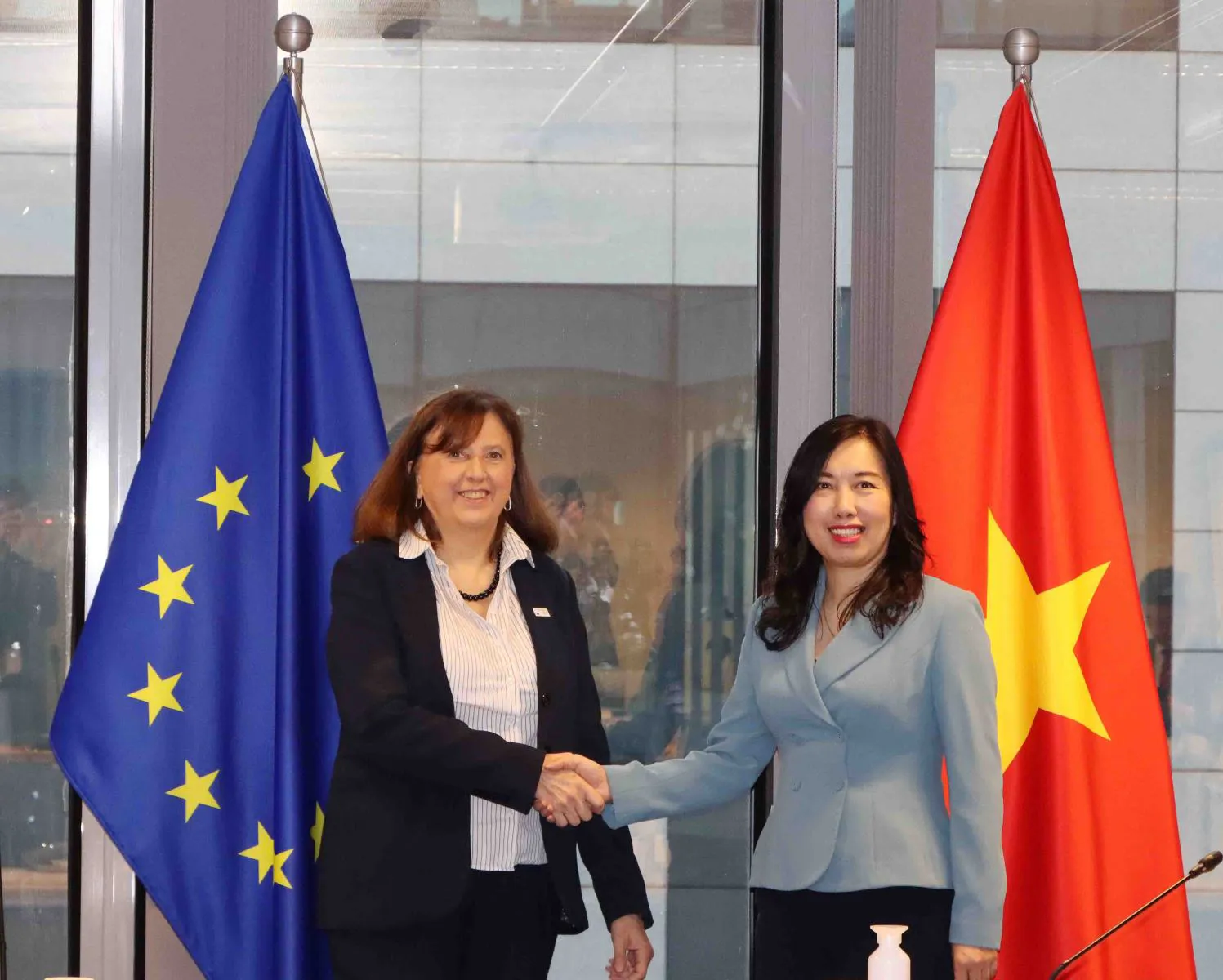
Deputy Minister of Foreign Affairs Le Thi Thu Hang and Acting Managing Director for Asia and the Pacific at the European External Asction Service (EEAS). Photos: VNA
The view was shared during the 6th meeting of the Vietnam EU Joint Committee on the implementation of the EU-Vietnam Partnership and Cooperation Agreement (PCA) on November 24 in Brussels, Belgium, jointly chaired by Deputy Minister of Foreign Affairs Le Thi Thu Hang and Paola Pampaloni, Acting Managing Director for Asia and the Pacific at the European External Action Service (EEAS).
At the start of the session, Pampaloni expressed sympathy for Vietnam over the losses caused by recent storms and floods.
She said the EU had allocated EUR850,000 (US$980,000) to support recovery efforts and continued to call on member states to contribute, noting that Luxembourg, Germany and the Czech Republic had already responded and that the first relief shipment from Luxembourg had arrived in Vietnam.
During the meeting, both sides updated each other on their socioeconomic situations and foreign policy priorities.
They also reviewed Vietnam-EU cooperation across existing mechanisms, including the Defense and Security Dialogue, the Trade Committee responsible for implementing the EVFTA and specialized subcommittees.
The two sides noted that Vietnam-EU relations have continued to develop positively after 35 years of diplomatic ties.
Political trust has strengthened, high-level exchanges have been maintained, and Vietnam now has a comprehensive strategic partnership with France, strategic partnerships with Spain, Germany, Italy, the Czech Republic, Finland and Bulgaria, and comprehensive partnerships with Denmark, Hungary and the Netherlands.
These ties form an important foundation for efforts to elevate Vietnam-EU relations in the coming period.
Cooperation in trade and investment, development, defense and security, education and training, and climate response has produced important results.
EU programs that support public finance modernization, economic governance and energy transition have been implemented effectively.
Both sides agreed to enhance high-level exchanges, work together to ensure the effective implementation of the EVFTA and encourage the remaining six EU member states to ratify the EVIPA soon.
They also agreed to maximize the role of existing cooperation and dialogue mechanisms.
Vietnam and the EU reaffirmed their intention to expand cooperation in key areas, including trade and investment, the green economy, digital transformation, circular economy, sustainable fisheries, clean energy transition, science and technology, innovation, infrastructure and climate adaptation.
They highlighted science, technology and innovation as a new pillar of cooperation.
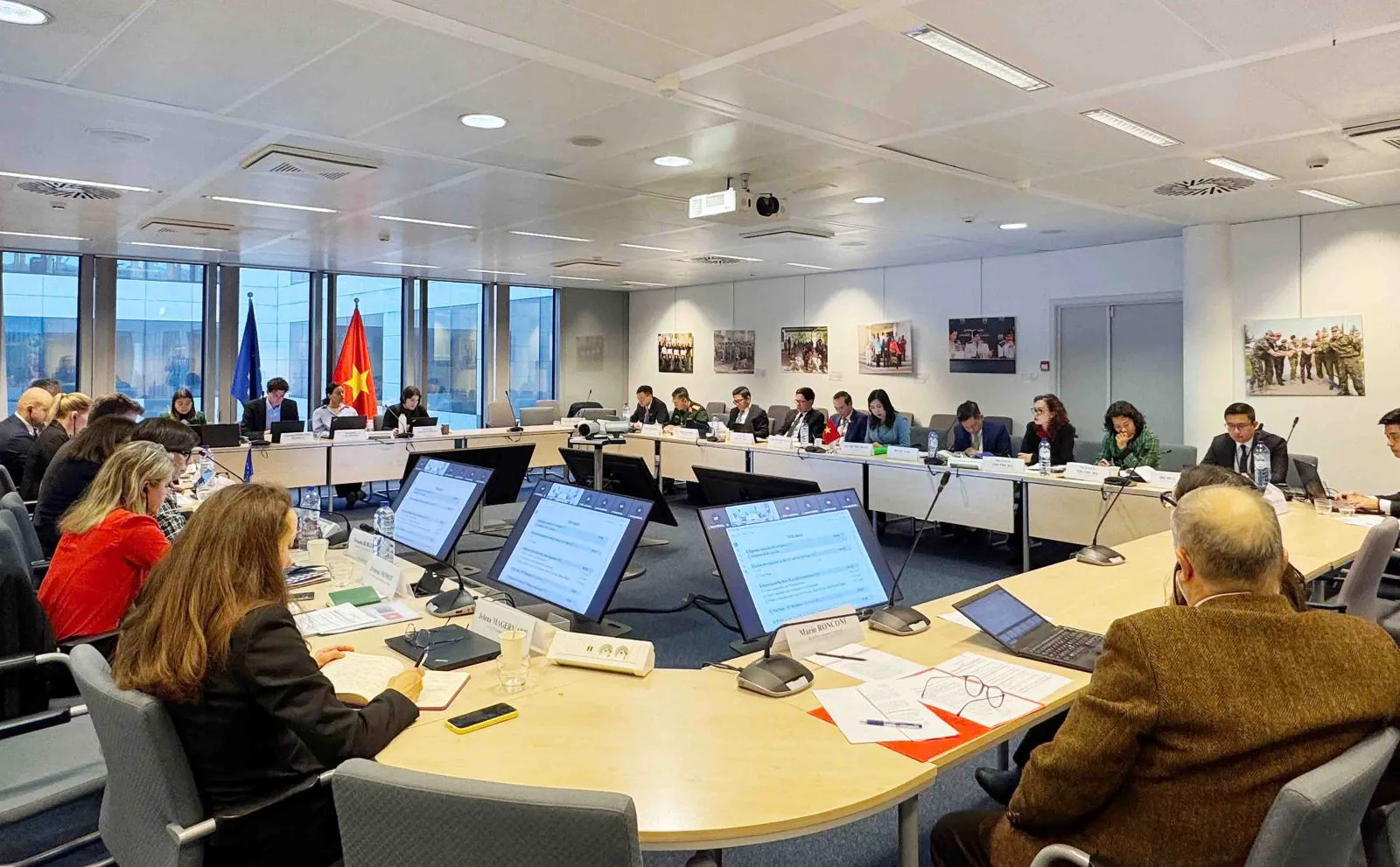
Overview of the meeting.
Deputy Minister Le Thi Thu Hang asked the EU to help Vietnam make full use of initiatives such as Erasmus Plus, Horizon Europe, and the Just Energy Transition Partnership. She also briefed the EU on Vietnam’s strong measures to combat illegal, unreported, and unregulated fishing and asked the EU and its member states to soon consider removing the yellow card. The EU acknowledged Vietnam’s efforts and agreed to continue technical discussions.
Representatives from both sides proposed concrete measures to strengthen cooperation in trade and investment, finance, agriculture, development, climate response and defense and security.
The EU reaffirmed that it considers Vietnam an important partner in the Asia Pacific region and praised Vietnam’s economic and international integration achievements.
The EU hoped Vietnam would take an active role in projects under the Indo-Pacific Strategy and the Global Gateway Initiative.
Both sides agreed to promote multilateralism and the role of the United Nations and reaffirmed that maritime disputes must be settled peacefully in accordance with international law, particularly the 1982 UNCLOS. They voiced support for ensuring security, safety and freedom of navigation and overflight in the South China Sea.
Vietnam and the EU also stressed the importance of strengthening the ASEAN-EU Strategic Partnership. They pledged to promote cooperation in trade and investment and address global challenges related to climate, natural disasters, the environment and public health, while contributing to green and sustainable development in subregions such as the Mekong.
The session underscored the determination of Vietnam and the EU to deepen comprehensive cooperation, strengthen the effectiveness of dialogue mechanisms and expand coordination in areas with strong potential, creating a solid basis for a more substantive and sustainable partnership in the coming years.