

Vietnam explores low-altitude economy as drones reshape agriculture and urban services
From farmlands and delivery routes to traffic monitoring and emergency response, unmanned aerial vehicles (UAVs) are rapidly entering Vietnam’s economic life, opening new growth space as cities and provinces accelerate plans for the low-altitude economy.
THE HANOI TIMES — Unmanned aerial vehicles (UAVs) and other low-altitude devices now appear across a broad range of socio-economic activities, spanning agriculture, logistics, e-commerce, disaster response and urban management.
In agriculture, provinces in the Central Highlands and the Mekong Delta adopted drones early for spraying, fertilizing and seeding. These applications shorten production cycles, reduce labor costs and limit direct exposure to chemicals.
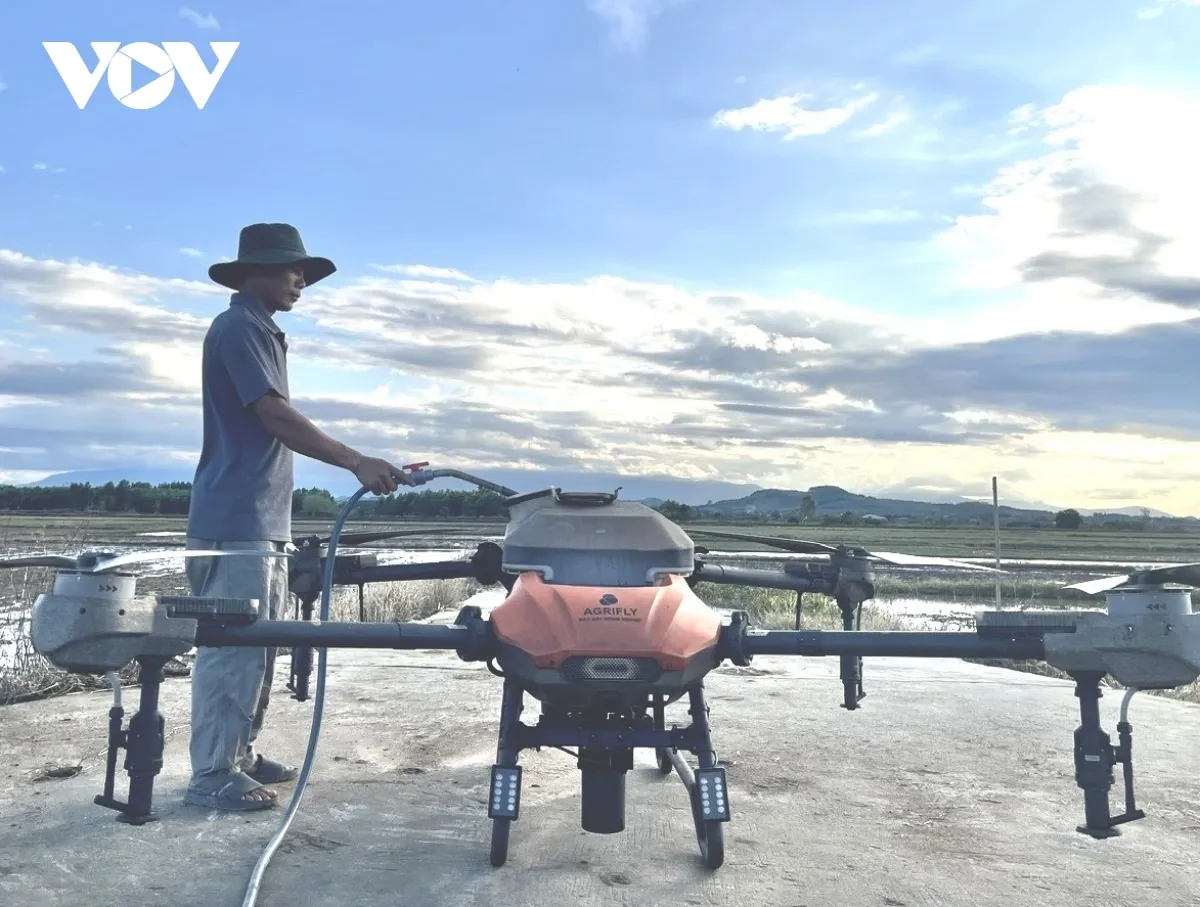
The drone used by farmer Hoang Van Thien in the Central province of Dak Lak. Photo: VOV
Hoang Van Thien, a farmer in Dak Lak Province, said his drone, valued at more than VND360 million (US$13,670), helps him quickly fulfill contracts to spray recovery agents for durian and passion fruit orchards after major floods.
With about 10 hectares under cultivation, Thien said the drone delivers clear efficiency gains.
“I can spray dozens of hectares a day and earn around VND3 million ($114) to VND4 million ($152),” he said. “It simplifies orchard care and allows me to take on extra work to increase income.”
Dinh Van Nguyen from Bo Y Commune in Quang Ngai Province shared a similar experience. His family manages three hectares of durian orchards.
Although he initially hesitated because of high upfront costs, tight farming schedules and labor shortages pushed him to invest in a drone.
“Manual spraying for three hectares takes about 12 man-days, while a drone finishes the work in two to three hours,” Nguyen said. “It saves labor and protects our health.”
Authorities have also tested drones for delivery services in areas with difficult terrain, especially those hit hard by flashfloods. These trials shorten transport times and provide alternative access when conventional routes prove unreliable.
In urban areas, UAVs support traffic monitoring, infrastructure inspection, power line surveillance and construction oversight, supplying data that enables faster management decisions and rapid incident response.
Across Vietnam, many localities now view the low-altitude economy as a promising growth frontier that can expand development space and create new momentum.
Ho Chi Minh City plans to actively develop low-altitude economic activities and establish controlled testing environments for UAV technologies and management systems.
The city aims to create designated trial zones while simplifying flight management procedures and licensing requirements. It will also promote research, design and manufacturing of UAVs to gain control over core technologies, including hardware, software, facilities and management infrastructure.
In the near future, Ho Chi Minh City will pilot UAV-based services in smart agriculture, urban security monitoring, transport and delivery, search and rescue operations and even passenger transport, including flying cars and flying motorcycles.
Potential with low-altitude economy
In recent years, rapid advances in UAVs and related technologies have opened new technical pathways for the low-altitude economy.
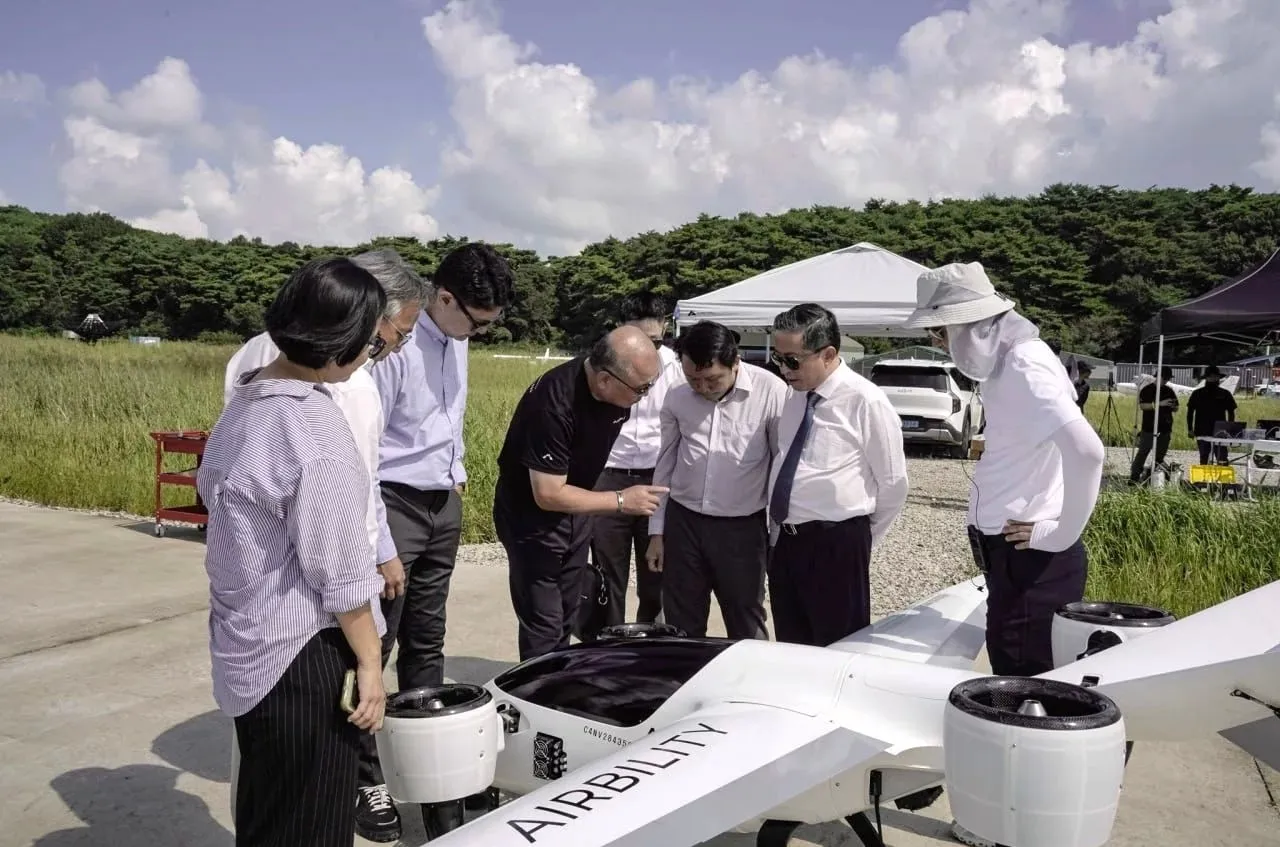
Vietnam-based tech firm CT Group works with its Korean partner Airbility to run an UAV test in September 2025. Photo: Hanoimoi Newspaper
Market research shows the global UAV sector and related services already reach hundreds of billions of US dollars, with annual growth exceeding 30%.
In agriculture, a single UAV can spray pesticides or monitor up to 67 hectares of crops per day, while a skilled worker can cover only about one hectare. In the power sector, one hour of UAV inspection can equal three days of manual transmission line checks.
Countries such as Israel, China, the United States and South Korea already treat the low-altitude economy as a strategic sector, applying it in drone delivery, urban air taxis, precision farming, infrastructure monitoring and rescue operations.
In Vietnam, the concept remains relatively new, yet development activity has accelerated rapidly.
Experts estimate Vietnam’s low-altitude economy could reach $2 billion - $3 billion by 2030 and aim for $10 billion in revenue and one million jobs by 2035, positioning the country as a regional hub for production and services.
UAVs now rank among three key products in the aviation and aerospace technology group, one of 11 strategic technology groups Vietnam aims to master under Decision No. 1131/QD-TTg issued on June 12, 2025.
In late November 2024, the Ho Chi Minh City People’s Council approved pilot UAV operations with a maximum speed of 100 kilometers per hour to encourage innovation and gather data before broader deployment.
CT UAV, a subsidiary of CT Group, signed a memorandum of understanding in August 2025 to export 5,000 heavy-duty UAVs to a South Korean partner.
On October 10, 2025, Vietnam established the Vietnam Low Altitude Economy Partnership (LAEP), followed by the launch of the Vietnam Aviation, Space and Unmanned Aerial Vehicle Network.
To advance technological applications, LAEP signed a strategic cooperation agreement on December 15 with the Japan UAS Industrial Development Association.
The agreement focuses on sharing experience in building institutions, legal frameworks and international standards for UAVs and smart transport.
LAEP plans to study Japanese management models while strengthening links that allow enterprises from both countries to exchange ideas, pursue cooperation, develop products and expand markets.
The partnership also covers training and workforce development in UAV operations, coordination, new technologies and management aligned with global standards.
Tran Kim Chung, Chairman of CT Group, said low-altitude economic development could deliver four strategic benefits for Vietnam.
These include creating high added value through new business models, addressing national challenges such as food security, traffic congestion, environmental pollution, climate change and defense, and strengthening technological self-reliance, he said.
Chung viewed the low-altitude economy as a comprehensive ecosystem that integrates green and digital development while exploiting airspace resources with productivity far beyond traditional models.
Immediate challenges
Associate Professor Nguyen Thien Tong, former Head of the Aeronautical Engineering Department at Ho Chi Minh City University of Technology, said authorities should prioritize building legal regulations to guide investment and deployment.
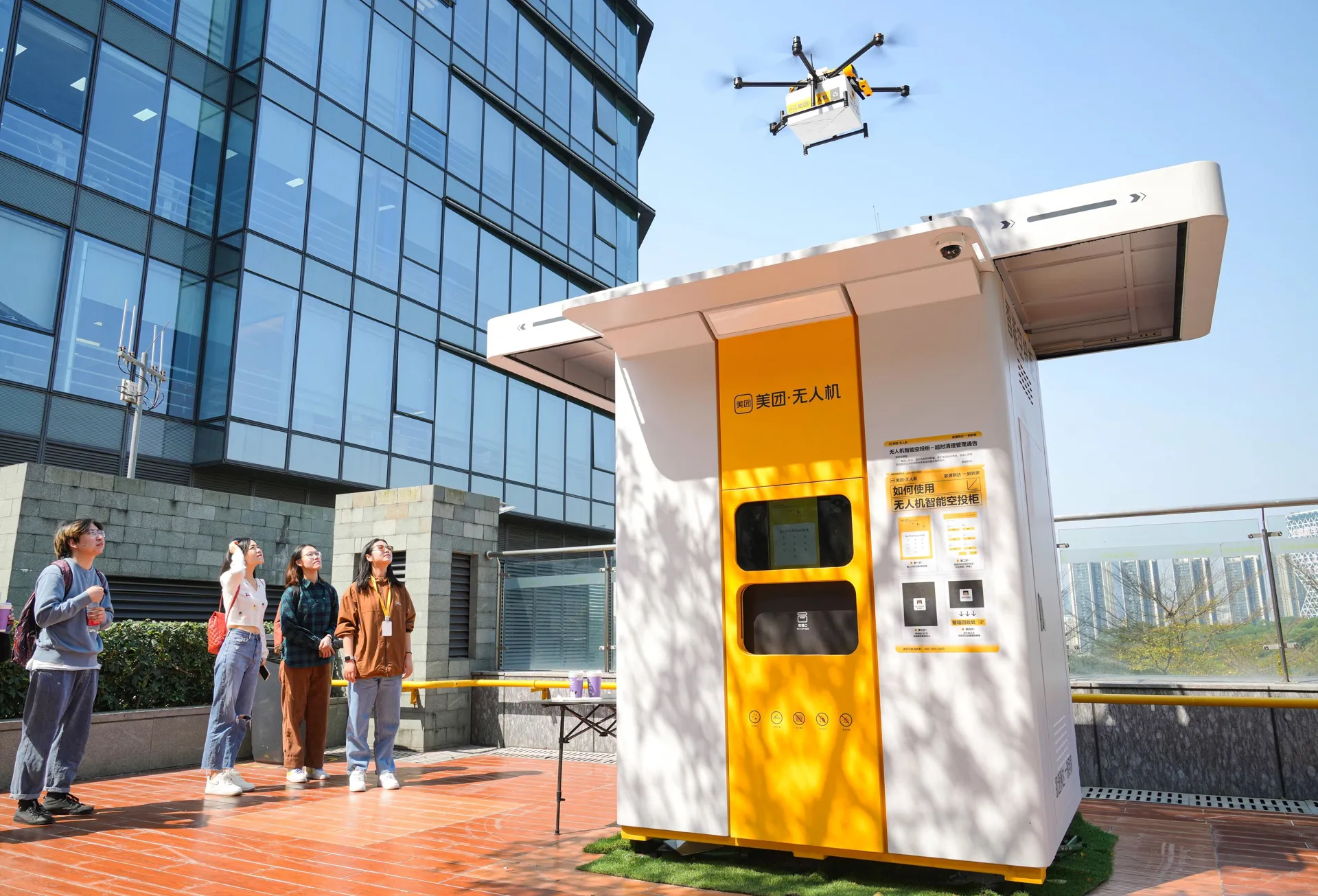
A drone used for delivery in Shenzhen, China. Photo: China Daily
He noted that many countries prepare legal frameworks before introducing aerial technologies, while Vietnam still needs dedicated units to study the sector, issue pilot guidelines and scale implementation.
As applications expand, challenges will extend beyond aircraft to include airspace safety and urban infrastructure.
“This is urban air mobility, similar to an aerial metro,” Tong said, stressing the need for clear flight routes, takeoff and landing points and links with buses and metro systems.
Le Trung Tinh, Chairman of the Ho Chi Minh City Passenger Transport Automobile Association, said air-based transport services should undergo about three years of testing before authorities consider incorporating them into laws or decrees, alongside updates to aviation regulations.
If developed as public transport, he said operators must secure full licensing, define flight zones clearly, avoid restricted and densely populated areas and meet the highest safety standards.
Tran Anh Tuan, CEO of the Vietnam Aviation, Space and Unmanned Aerial Vehicle Network, said Vietnam holds strong advantages for developing the low-altitude economy.
He cited favorable geography, political stability and the ability to master core technologies such as software, artificial intelligence, flight management systems and hardware manufacturing, supported by a growing industrial ecosystem.
“UAVs have grown rapidly over the past decade. Vietnam can master this field and emerge as a pioneer,” Tuan said.
To accelerate progress, he proposed building a clear legal corridor, investing in research centers and specialized industrial parks, developing high-quality human resources, strengthening ecosystem links and expanding international cooperation.







