Vietnam eyes World Bank’s global logistics top 40 by 2035
Efforts should be made to increase the competitiveness of domestic enterprises to capture a larger market share and elevate the position of Vietnam's logistics sector.
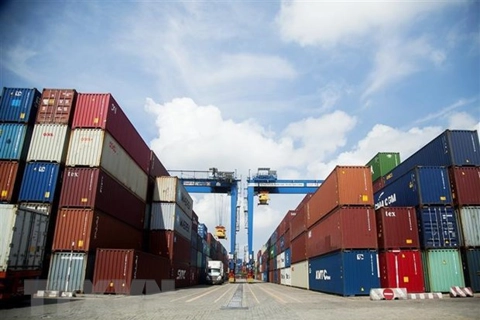
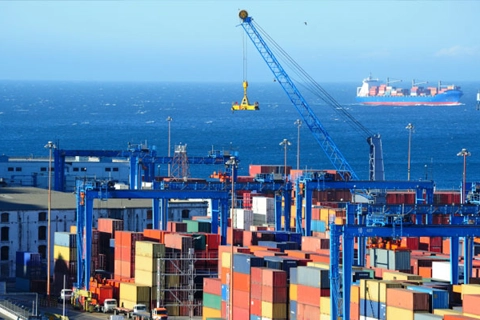
Vietnam expects to break into the top 40 of the World Bank’s Logistics Performance Index (LPI) for the 2025-2035 period, up from its current ranking of 43rd.
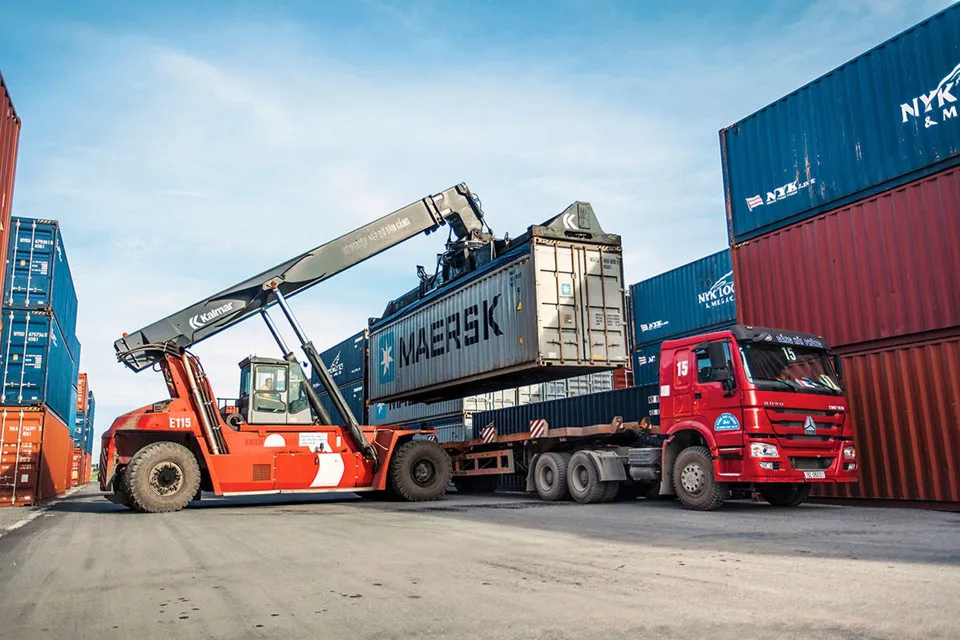
| Cargo handling at Haiphong Port. Photo: Hoai Nam/The Hanoi Times |
This is one of the key objectives of Vietnam’s draft logistics development strategy for the 2025-2035 period, with a vision for 2045.
At the meeting to announce the draft strategy on May 20, Deputy Director of the Import-Export Department under the Ministry of Industry and Trade Tran Thanh Hai stated that the move aims to “comprehensively and synchronously develop the logistics services sector in line with Vietnam's economic potential.”
For the period 2025-2035, the draft strategy sets ambitious goals to increase the logistics sector's contribution to GDP to 5%-7% and to achieve an average annual growth rate of 12%-15%. The strategy also targets increasing the outsourcing rate of logistics services to 70%-80% and reducing logistics costs to 12%-15% of GDP.
Other targets for this period include 80% of logistics companies adopting digital transformation solutions and 50% of transport vehicles used by logistics companies being powered by green energy. The strategy also seeks to have 70% of the logistics workforce trained to technical standards, with 30% holding a university degree or higher.
Looking ahead to the period up to 2045, the draft strategy aims to further increase the logistics sector's contribution to GDP to 6%-8%, with an average annual growth rate of 10%-12%. The outsourcing rate of logistics services is expected to rise to 80%-90%, while logistics costs are expected to decrease to 10%-12% of GDP. Additionally, Vietnam aims to rank 30th or higher in the World Bank’s LPI by this time.
In terms of specific targets, the strategy envisages that 100% of logistics companies will adopt digital transformation solutions and that all transport vehicles used by logistics companies will be powered by green energy. It also aims for 90% of the logistics workforce to be trained to technical standards, with 50% holding a university degree or higher.
Hai emphasized that the global economic and trade recovery, the fourth industrial revolution, digital transformation, and the rapid growth of e-commerce as well as Vietnam's deep integration into the global economy, offer significant opportunities for the development of logistics services. However, challenges such as economic recession, inflation, integration challenges, and increasing demands for green and sustainable development also pose considerable challenges for the logistics sector.
“In response to these challenges, the draft strategy focuses on making breakthroughs in the regulatory framework, improving the investment and business environment, and encouraging all economic sectors to participate in the development of logistics services,” Hai noted.
He also emphasized the need to invest in modern and synchronized infrastructure, develop the logistics market, enhance the competitiveness of enterprises, and promote regional and international economic linkages to ensure sustainable growth.
Additionally, the strategy aims to improve the quality and environmental sustainability of logistics services through digital platforms, he continued.
At the meeting, Deputy Minister of Industry and Trade Nguyen Sinh Nhat Tan expressed his support for the draft strategy. He highlighted the need for further discussion on integrating logistics into national, regional, local, and specialized planning.
Tan pointed out that while foreign enterprises currently dominate the market, efforts should be made to increase the competitiveness of domestic enterprises to capture a larger market share and elevate the position of Vietnam's logistics sector.
Furthermore, the role of associations in connecting businesses, promoting green and sustainable logistics, training quality human resources, developing freight sources, and establishing logistics centers should be emphasized as crucial for creating synergies and driving growth in the sector, he said.
On December 28, 2023, the Ministry of Industry and Trade issued Official Letter No.9270/BCT-XNK to various ministries, provincial People's Committees, associations, and relevant agencies, requesting feedback on the draft strategy and reports on the implementation of the Action Plan to enhance competitiveness and develop Vietnam's logistics services until 2025, as approved by the Prime Minister in Decision No.200/QD-TTg on February 14, 2017.
In general, the feedback supports the necessity of developing and issuing the draft strategy and agrees with the proposed perspectives and development orientations for the logistics services sector outlined in the draft strategy.