Vietnam faces fierce competition to attract capital flight from China
With its early success in containing the Covid-19 pandemic, Vietnam is having a jump-start among potential investment destinations in attracting a new wave of FDI.
Vietnam is under fierce competition from other countries to attract companies that are looking to shift production out of China.
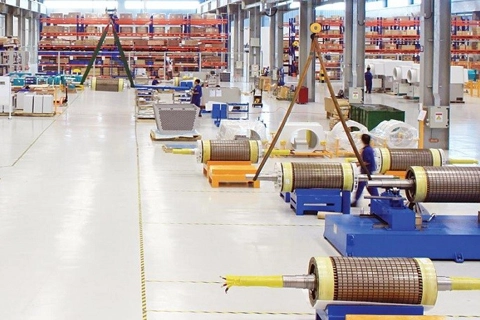
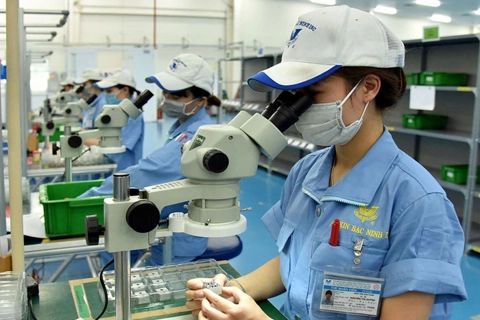
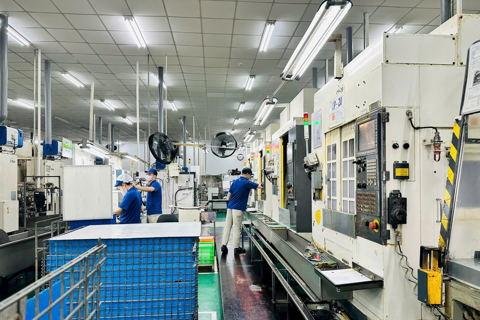
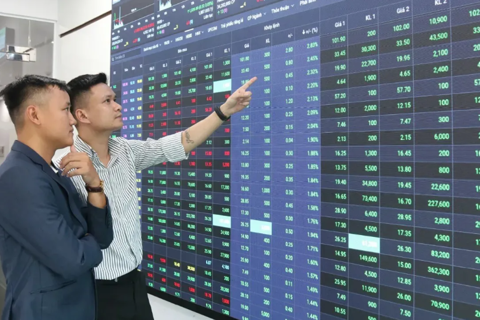
| Illustrative photo. |
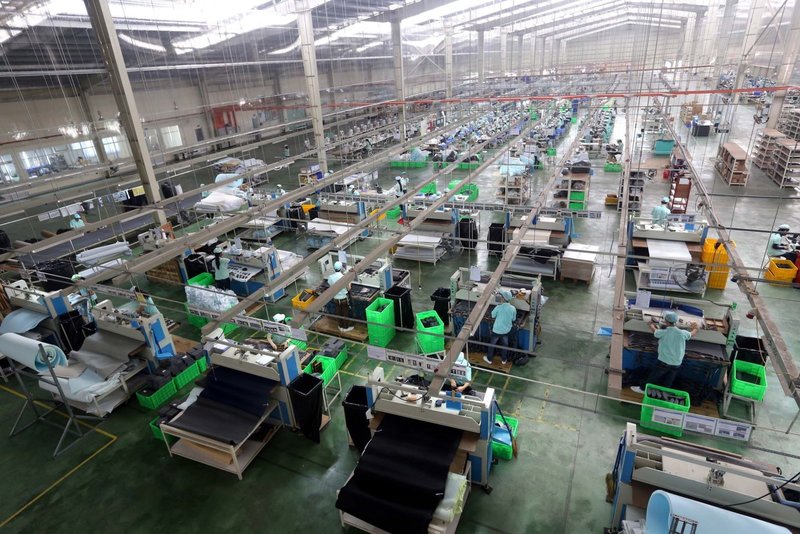
Last year, the escalation of the US – China trade war was considered one of the key factors behind a shift in investment from China to other countries. And now, as the Covid-19 pandemic came into the picture, companies are accelerating their efforts to relocate production out of China.
Vietnam, with its early success in containing the Covid-19 pandemic, is having a jump-start among potential investment destinations in attracting a new wave of foreign direct investment (FDI).
Since the end of last year, Apple has been recruiting a series of senior positions in Hanoi and Ho Chi Minh City, fueling rumors that the US-based tech giant is moving to build a plant here. The firm is expected to produce millions of its popular AirPods wireless earphones in Vietnam for the first time in this quarter, a sign the company is accelerating its diversification of production out of China, Nikkei Asian Review reported.
Samsung, another tech giant, is also mulling over a shift of production chains for some high-end smartphones to Vietnam.
A race for investment inflow
However, Nguyen Mai, chairman of the Association of Foreign Invested Enterprises (VAFIE), told VnExpress that Vietnam is not the only country in Asia eyeing capital outflows from China.
Vietnam’s neighboring countries in Southeast Asia and India are quickly adjusting their FDI policies to grasp this new opportunity.
According to Bloomberg, in April, the Indian government reached out to more than 1,000 companies in the US and through overseas missions to offer incentives for manufacturers seeking to move out of China.
India is prioritizing medical equipment suppliers, food processing units, textiles, leather and auto part makers among more than 550 products covered in the discussions.
Bloomberg said Indian officials told companies that India is more economical in terms of securing land and affordable skilled labor than if they moved back to the US or Japan, even if overall costs are still higher than China. They have also offered an assurance that India will consider specific requests on changes to labor laws, which have proved a major stumbling block for companies, and said the government is considering a request from e-commerce companies to postpone a tax on digital transactions introduced in this year’s budget.
In a similar move, Thailand has been encouraging foreign investors coming to the country with a series of tax incentives and a revision of the Business Law.
Malaysia last year announced a supporting program for foreign investors worth US$240 million in tax incentives for those choosing the country as the destination for their businesses.
Legal reforms continue to be key factor
JLL in its latest report suggested among countries that are providing incentives for investors in “a new normal” that Vietnam is not the most attractive destination.
Moreover, not all economic sectors in Vietnam are prepared to absorb new capital inflows, and supporting industries are an example.
Truong Thi Chi Binh, vice chairwoman of the Vietnam Association for Supporting Industries (VASI), said the sector in Vietnam lacks the necessary conditions for technology transfer, while other countries such as Thailand, Indonesia and Malaysia are considered more favorable destinations.
Binh said the majority of enterprises operating in supporting industries in Vietnam are of small and micro scale with less than 200 employees, therefore, they could only receive small orders with low sophistication.
Meanwhile, companies moving out of China are looking for orders at large quantity and highly sophisticated products.
Binh also pointed out that Vietnam does not have a complete ecosystem for manufacturin. For some products, companies must send them to Thailand or China for undergoing certain processing before being finished in Vietnam.
VAFIE Chairman Mai said Vietnam must act faster to overcome other competitors in attracting new FDI flows.
Chairman of the Vietnam Chamber of Commerce and Industry (VCCI) Vu Tien Loc said the country must be proactive in joining new supply chains, instead of waiting for investors to come and form a new value chain.
Mai urged Vietnam to pay more attention to improving the infrastructure and technological systems, as well as the quality of human resources.
Moreover, the investment procedures should be simplified, together with other initiatives for investors along the implementation process.
VCCI’s representative said the legal reform is the key factor for Vietnam to attract the new investment capital and eventually help the country break into ASEAN’s top 4 countries in terms of business-friendliness