Vietnam Gov’t eyes 15-year guarantee for LNG electricity output
This proposal represents an increase of 10 percentage points in the guaranteed offtake rate and extends the period by five years compared with the current regulations.
THE HANOI TIMES — The government has proposed increasing the guaranteed offtake for imported LNG power projects to at least 75% of their annual output for a maximum of 15 years.
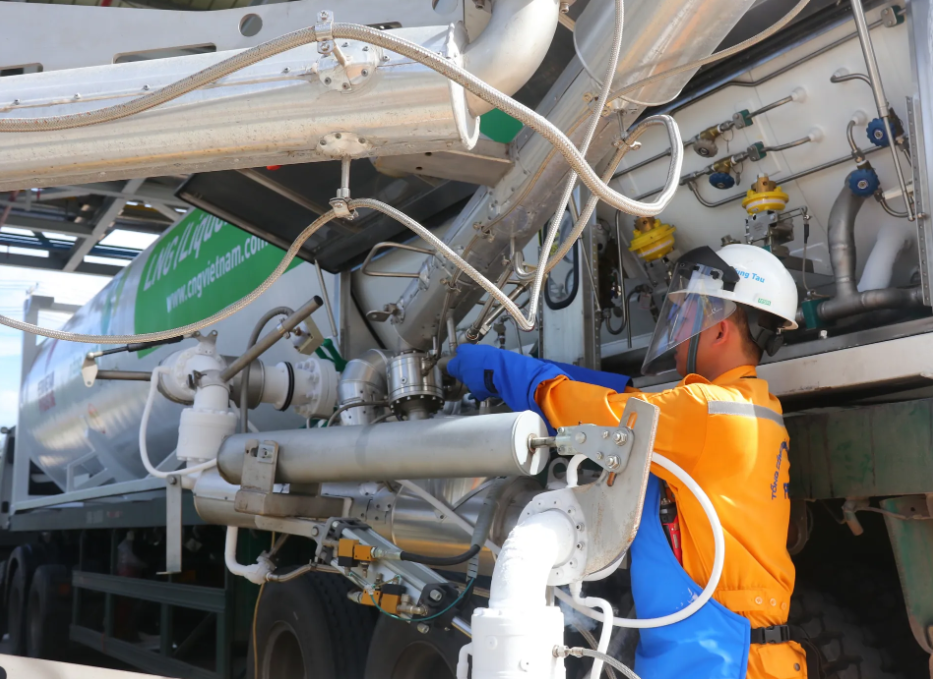
Technical inspection and LNG loading into ISO tanks at Thi Vai LNG Terminal. Photo: Khac Kien/The Hanoi Times
The proposal was included in a report submitted to the National Assembly Standing Committee regarding a draft resolution on addressing challenges and promoting renewable energy development for the 2026–2030 period.
According to the submission, LNG-to-power projects using imported gas would continue to receive guaranteed electricity offtake commitments.
The rate would be determined through agreements between the seller (LNG power plant) and the buyer (Vietnam Electricity Group – EVN), but must not fall below 75% of the project’s average annual electricity output over several years.
The guarantee would apply for the duration of debt repayment, including both principal and interest, for up to 15 years from the start of commercial operation.
This proposal represents an increase of 10 percentage points in the guaranteed offtake rate and extends the period by five years compared with the current provisions.
Under the revised Power Development Plan VIII to 2030, Vietnam is expected to develop nearly 37,500 MW of new gas-fired capacity, of which 60% or about 22,524 MW will come from imported LNG.
This marks an increase of around 7,000 MW compared with the previous plan. The government views imported LNG power as a key baseload source to ensure a stable electricity supply, support renewable energy development and contribute to national economic growth.
During project development, regulators have received requests from investors to raise the offtake rate beyond the current 65% and extend the commitment period to 20–25 years instead of the existing 10 years.
In response, the Ministry of Industry and Trade said it is necessary to review and propose that the National Assembly consider adopting special long-term mechanisms for contracted offtake to ease project bottlenecks.
However, any such adjustment must remain consistent with existing laws and the guidelines set out in Resolution No. 70 of the Politburo on energy development.
In practice, guaranteed offtake levels help ensure stable cash flow for investors to service project debt. Gas suppliers and transporters also require such guarantees to maintain long-term stability in volume and pricing.
In a 2024 report, EVN noted that LNG power investors had requested offtake guarantees ranging from 72% to 90% for the entire contract duration.
However, higher offtake commitments may lead to increased electricity prices as the production cost of LNG-fired power per kilowatt-hour remains higher than that of other sources due to the reliance on imported fuel.