Vietnam Gov’t expects greater efficiency in global economic integration
Vietnamese economy should be able to translate the benefits gained from international economic integration into tangible outcomes, such as increased growth in the import and export of goods and services.
The government aims to enhance the effectiveness of global economic integration and fostering rapid and sustained economic growth, while prioritizing the goal of making the economy more resilient to adverse influences.
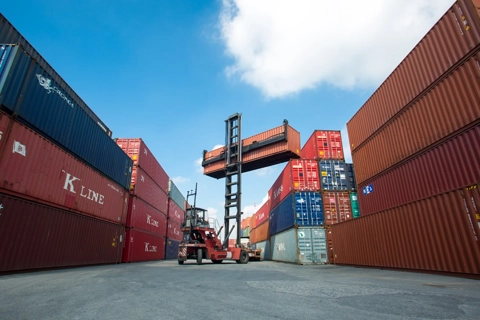
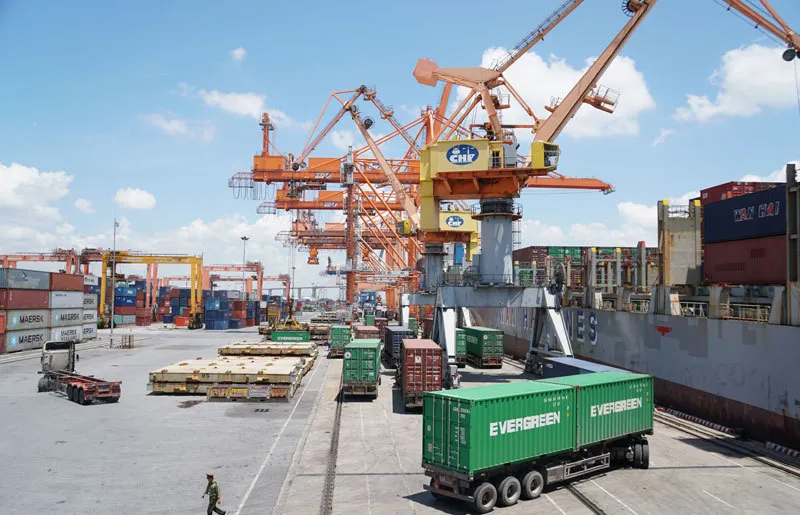
| Cargo handling at Haiphong Port. Photo: Cong Hung/The Hanoi Times |
The move was part of the government's Resolution No.93, issued on July 5, on enhancing the efficiency of global economic integration for sustainable development in 2023-2030.
The resolution emphasizes several key goals to strengthen the economy, including building an independent and self-reliant economy, enhancing the efficiency of international economic integration, and ensuring rapid and sustainable economic growth through macroeconomic stability, scientific and technological development, and innovation.
In addition, it prioritizes the rapid recovery of the economy from the negative impact of the Covid-19 pandemic, actively engaging in comprehensive and effective international integration to attract external resources for development, strengthening partnerships, and enhancing Vietnam's position and reputation in the global economy.
The specific objective is to translate the benefits of international economic integration into tangible results, such as increased growth in the import and export of goods and services by improving the economy's ability to absorb scientific and technological advances and increasing the efficiency of capital utilization.
In addition, the resolution expects to strengthen the development of domestic economic sectors, increase their position in the global value chain, and improve and refine the institutional quality and legal framework to be more comprehensive, modern and integrated.
The resolution also sets the goal of increasing the level and quality of international integration, which is seen as a positive contribution to the transition to a sustainable growth model, the restructuring of the economy, and the advancement of the country's industrialization and modernization.
Throughout this process, it would help the economy bridge the development gap with more advanced countries in the region and the world.
To achieve these goals, the resolution emphasizes the importance of strengthening cooperation between the public and private sectors, mobilizing social resources, and leveraging support from multilateral mechanisms, NGOs, and the business community.
This cooperation is critical to fulfilling commitments under international agreements, particularly those related to free trade agreements (FTAs) that Vietnam has signed, the resolution said.
In particular, it stresses the need to strengthen the ability to respond and adapt flexibly to global developments that may pose significant threats to import and export activities, trade transactions, and international economic integration.
The resolution also underlines the importance of strengthening the trade remedy system to protect the economy, businesses and the domestic market while complying with international commitments.
It emphasizes the need to enhance the competitiveness of the Vietnamese economy, enterprises and products while creating a stable and conducive environment for enterprise development.
The resolution calls for a comprehensive understanding of the role and place of international law in Vietnam's international economic integration process, focusing on active participation in the formulation of international legal rules and the use of international law to protect Vietnam's legitimate rights and interests in international economic relations, especially in resolving emerging legal issues.
It also calls for the promotion of cooperation, training, and development of high-quality human resources to improve the quality of education in response to the demands of the Fourth Industrial Revolution and comprehensive international integration.
Of particular note, the Resolution sets the goal of actively and proactively participating in the integration of the digital economy in order to successfully implement Vietnam's goals in developing a digital economy and digital society as outlined in the National Development Strategy.
Vietnam has actively participated in 19 FTAs, including 16 signed and implemented agreements, while three more are currently under negotiation. In particular, Vietnam stands out as the only country to have signed FTAs with major global economic partners, including the United States, Japan, China, the European Union (EU), the United Kingdom (UK), and Russia. At a time of significant changes affecting global trade patterns, FTAs are of particular importance and serve as crucial tools that must be effectively utilized to achieve the country's export target of US$394 billion by the end of the year. |