Vietnam gov't pushes for wider use of cashless payment
Cash has constituted 11.3% of total means of payment as of December 31, 2019.
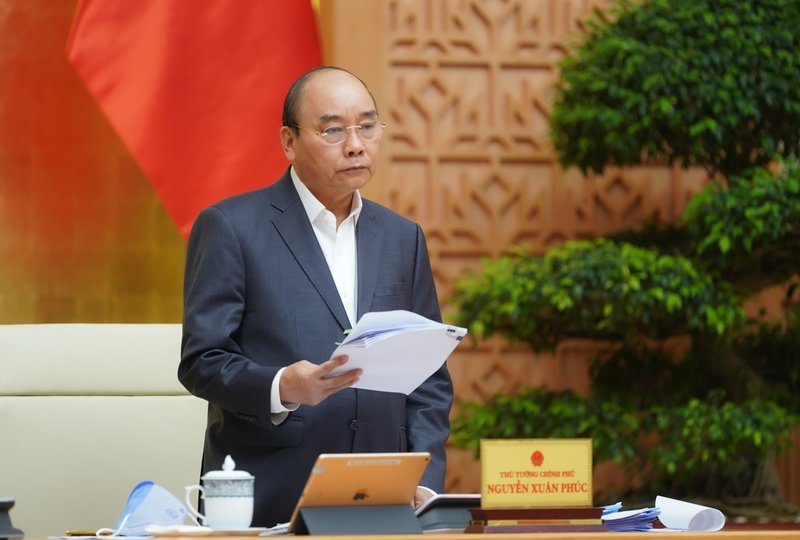
Prime Minister Nguyen Xuan Phuc has issued a directive No.22 urging stronger measures in adopting cashless payment in Vietnam.
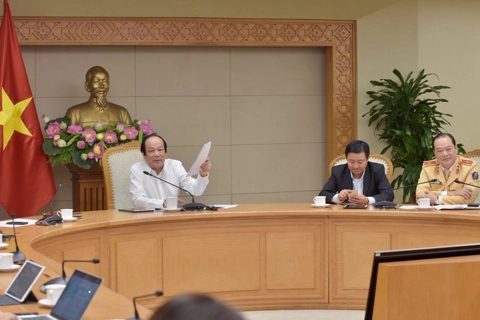
| Vietnam Prime Minister Nguyen Xuan Phuc requests a wider use of cashless payment. Photo: VGP. |
Under the directive, after nearly four years since the implementation of a national plan on cashless payment development in the 2016 – 2020 period, the ratio of cash to total means of payment as of December 31, 2019 remained at 11.3%.
The use of cash continues to be common for civil transactions, especially in rural and remote areas; the rate of e-payment in e-commerce activities and sectors such as health, education is lower than expected; hi-tech crimes on electronic transaction are becoming complicated.
To promote the use of cashless payment in the economy, PM Phuc requested the State Bank of Vietnam, the country’s central bank, to soon finalize the legal framework for cashless and e-payment in tandem with new payment methods.
The SBV is also tasked with developing the Automated Clearing House (ACH), an e-payment method that pulls funds directly from the user’s checking account, and putting the system into use before December 15, 2020; and cooperating with other relevant agencies in drafting new payment methods.
Phuc expected the SBV to adopt the Know Your Customer (KYC) process to support greater access and use of e-payment methods, and continue pushing for tighter control and prevention of money laundering and acts of terrorism sponsoring, among others.
Meanwhile, the Ministry of Industry and Trade should complete a legal framework promoting retailers and service providers to accept e-payment and greater use of this method in e-commerce.
The Ministry of Finance is tasked with providing specific guidelines for administrative units in adopting cashless payments.
The Ministry of Health is requested to instruct hospitals to cooperate with credit institutions and intermediary payment service providers to accept cashless payment.
Similarly, the Ministry of Education and Training should support schools and universities setting up mechanisms for e-payment.
The Ministry of Labor, War Invalids and Social Affairs and the Vietnam Social Security would have to be prepared for payment of pension, social benefits and insurance via the banking system.
The Ministry of Public Security will be in charge of timely identifying and preventing e-payment offenses, as well as accepting cashless payment for administrative fines.
According to GlobalData’s 2019 Banking and Payments Survey, cash is still the most preferred payment mode for e-commerce purchases in Vietnam, accounting for 35.6% in 2019. Alternative payment solutions are gradually gaining ground and accounting for a 15.5% share. MoMo is the most preferred payment solution in Vietnam, followed by PayPal.
A plan on non-cash payment in Vietnam in the 2016 - 2020 period approved by the prime minister envisioned that by the end of 2020, the ratio of cash transactions will be reduced from 90% in 2016 to below 10%.