Vietnam home to nearly 17,000 OCOP products
OCOP production brings governments, enterprises, cooperatives, and communities together to foster capacity building, quality control, brand development, and market connectivity.
THE HANOI TIMES — "Vietnam has nearly 17,000 OCOP products rated three stars or above," said Deputy Minister of Agriculture and Rural Development Tran Thanh Nam.
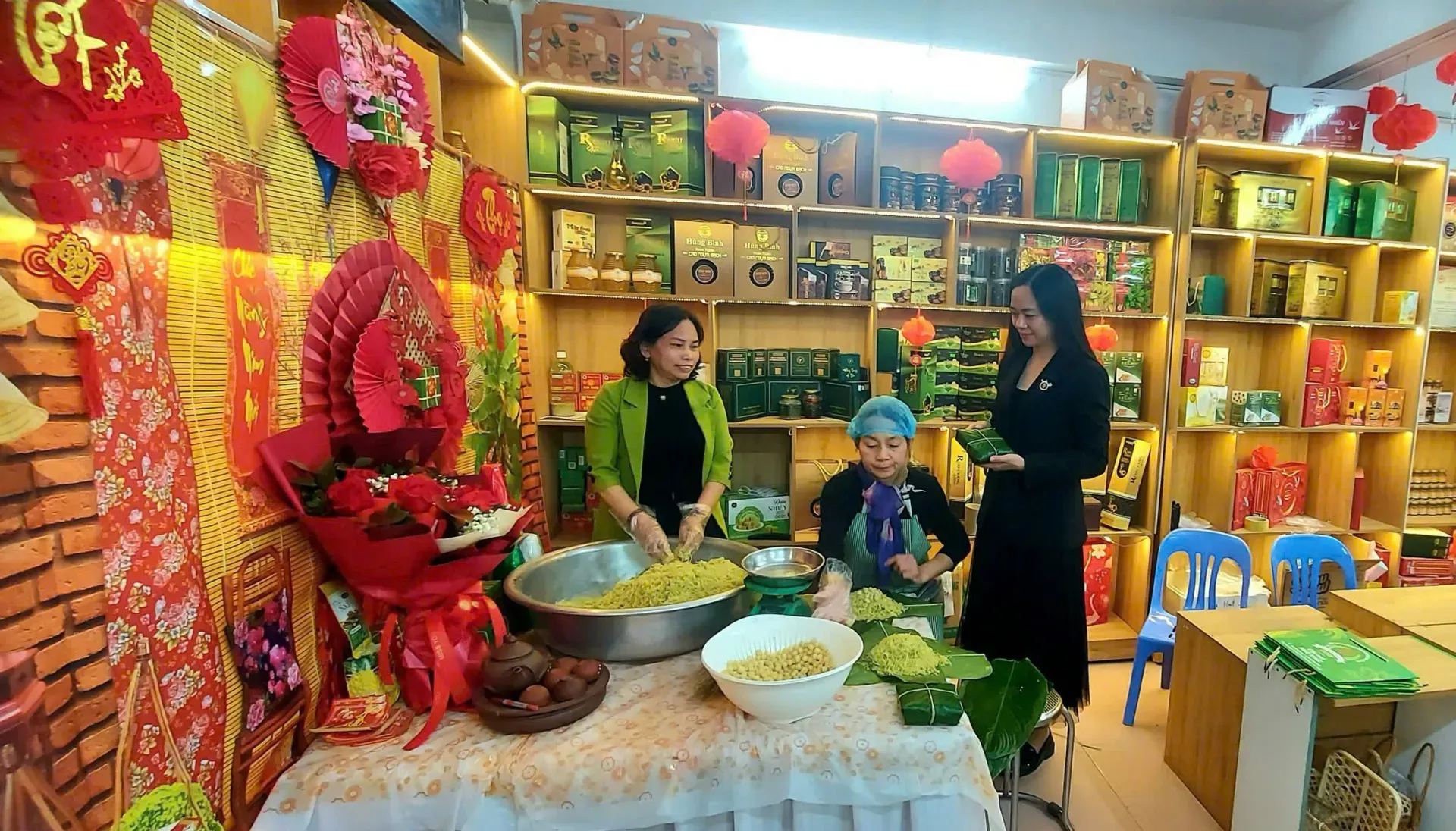
OCOP products displayed at a store in Hanoi. Photo: Kinh Te & Do Thi Newspaper
Speaking at the Interregional High-Level Forum on the OCOP model, which was organized by the ministry and the Food and Agriculture Organization (FAO) on July 15, Nam stated that 73% of the products are rated three stars, 27% are rated four stars, and 126 products are top-rated with five stars.
According to Nam, Vietnam’s OCOP products meet quality and food safety standards, feature diverse and eco-friendly designs and packaging, and align with market demand.
Vietnam aims to develop a sustainable, competitive, and inclusive value chain that increases incomes and improves people’s quality of life.
"The One Commune – One Product (OCOP) model brings together the government, enterprises, cooperatives, and communities in a creative ecosystem that fosters capacity building, quality control, brand development, and market connectivity."
He added that creating networks and mechanisms to share policies, technology, and market information among Global South countries would sustain the development of OCOP products.
He recommended enhancing collaboration in training and capacity building for rural managers, cooperatives, and small and medium-sized enterprises and focusing on vulnerable groups, including women, the elderly, people with disabilities, and ethnic minorities.
“I encourage piloting public-private partnership models to mobilize financial, technical, and local knowledge resources for rural development and to increase the value of OCOP products,” he said.
Beth Bechdol, the FAO's Deputy Director-General, praised Vietnam’s OCOP program, calling it a driver of local economic growth and a foundation for sustainable agricultural development.
She said that product diversification, stronger resilience, and greater knowledge-sharing among countries are key for Asia and Africa to take joint action and move forward together.
Across the Asia-Pacific region, the OCOP program is gradually becoming a strategic pillar of rural economic development.
Through the international version of the OCOP initiative, One Country, One Priority Product, the FAO is promoting 56 signature agricultural products. This initiative contributes to improved livelihoods while tapping into the potential, advantages, and cultural values of each locality.