Vietnam more attractive in foreign investors’ eyes: AHK expert
Among Vietnam cities, Hanoi is considered one of the most important destinations for investors, with a great talent pool and developed infrastructure.
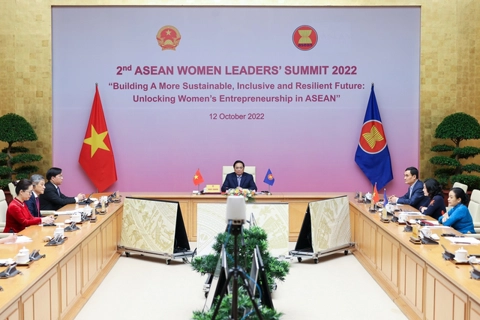
“Extensive participation in ASEAN economic integration assists Vietnam to attract more investment and technical capital from outside the Association,” Marko Walde - Chief Representative of AHK Vietnam, told The Hanoi Times in a recent interview.
| Mr. Marko Walde - Chief Representative of AHK Vietnam |

What are the advantages of Vietnam's business environment as a member of ASEAN?
Joining ASEAN is considered a launching pad to help Vietnam integrate deeply into the regional and global playing field and be able to make remarkable changes in all aspects. According to PwC, if in 1995, Vietnam's GDP per capita reached $289, by 2020, this figure was $3,520, an increase of more than 12 times compared to 1995. The size of the economy increased nearly 17 times from $20.8 billion in 1995 to about $343 billion in 2020, ranking fourth in ASEAN (after Indonesia, Thailand and the Philippines).
Vietnam is projected to reach $327 billion in GDP this year, recording a growth of 6.2% annually between 2016 and 2022.
In addition, extensive participation in ASEAN economic integration assists Vietnam in attracting more investment and technical capital from outside the Association, especially from multinational companies, meanwhile expanding the market for goods and services. The advantages Vietnam has achieved since the ASEAN Economic Community (AEC) founding are faster economic growth, stronger foreign direct investment (FDI) attraction and tourism, more job creation and better resource allocation. This also increases production capacity and creates opportunities for enterprises to improve their competitiveness. Vietnam also has the chance to access scientific and technological support, learn advanced management experiences, and contribute to improving the qualifications and capacity of staff. In addition, Vietnam takes advantage of practical benefits from cooperation programs to narrow the development gap.
The positive impact of the AEC will contribute to creating changes in the development and improvement of domestic policies, laws and procedures, promoting Vietnam's economic and institutional reform, and completing shortcomings to ensure qualifying with the requirements of international integration. AEC integration also forces Vietnam to meet the legal corridor to build trust with investors and increase competitiveness.
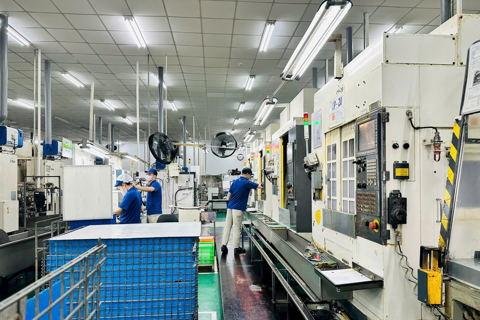
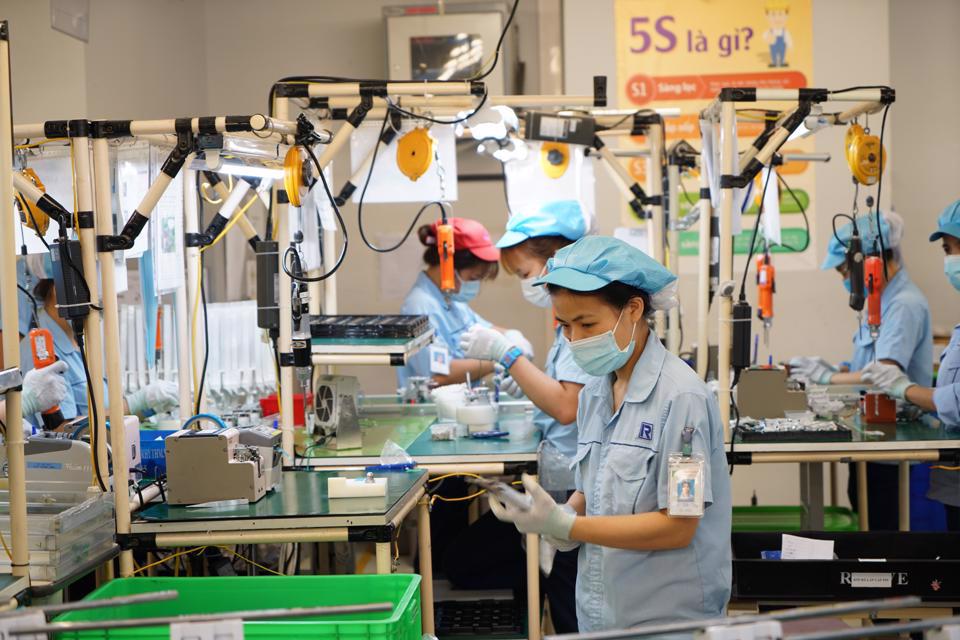
| Electronic equipment manufacturing at Noi Bai industrial area. Photo: Pham Hung |
How does Vietnam’s accession to ASEAN contribute to its trade with other countries, including Germany?
Regarding TPP11, from the effective date with 11 countries participating, it is one of the most comprehensive trade agreements in the world. When fully implemented, it covers a market of nearly 500 million consumers and accounts for about 13.5% of the global GDP. Exports with solid points of Vietnam, such as agriculture, fishery, electricity and electronics, will all be tax-exempt. According to an official Ministry of Planning and Investment study, Vietnam's total export value could increase by 4.04% and import by 3.8% by 2035; the total number of jobs could increase annually from 20,000 to 26,000.
Last but not least, ASEAN membership accelerated the German-Vietnamese strategic partnership when in 2021, Germany became Vietnam's first trading partner in the European Union (EU), with over 4,000 German companies already exporting to Vietnam. The primary export goods are automobiles and machinery, which account for 60% of Germany’s total export volume to Vietnam. Meanwhile, Vietnam is Germany’s second-largest trading partner in Southeast Asia, with bilateral trade volume which has quadrupled in the past ten years, reaching 14.4 billion euros in 2021. Thanks to the free trade agreement with the EU, the German-Vietnamese trade volume is expected to increase to around EUR20 billion over the next two to three years.
During the pandemic of Covid-19, how did Vietnam use these advantages?
It can be said that Vietnam's economy is on the way to a rapid recovery, with many positive signs after a “freezing period” caused by Covid-19.
Regarding the advantages of the German–Vietnamese strategic partnership, after two years of EVFTA implementation, despite being significantly impacted by the Covid-19 pandemic, the import and export rate of Vietnam–Germany has recovered and grown enormously compared to the previous years. According to the General Department of Customs, in the first 11 months of 2021, Germany was Vietnam's largest agricultural product export market in the EU, with a turnover of US$641.15 million, a sharp increase of 24.4% compared to the same period of 2020. In the first five months of 2022, Vietnam's export turnover to Germany hit $3,604 billion.
German companies in Asia are now considering shifting operations from other Asian countries to Vietnam. Kurz, a manufacturer of pressed coating products, based in Fürth (Bayern state), has just broken ground on a new production facility in Quy Nhon (Binh Dinh). Meanwhile, tape manufacturer Tesa, a Beiersdorf subsidiary, announced an investment of 55 million euros in May 2020 to build a new factory in Hai Phong, which is expected to open next year. According to Stefan Schmidt, Tesa's Head of Supply Chain and Operations, Vietnam has ideal conditions for the company's growth.
What is the strength of Hanoi city and its enterprises when Vietnam is an active member of ASEAN? How can the city take advantage of these potentials in the time ahead?
Hanoi is considered one of the most important destinations in Vietnam, with a great talent pool and developed infrastructure. Thanks to the right and timely solutions of the Government, Hanoi has effectively controlled the Covid-19 epidemic, maintained growth and restored economic sectors, especially trade, tourism, and hospitality services; recovered supply chains, raw material areas, and distribution channels; sped up the construction progress and disbursed investment capital right from the beginning of 2022.
With a competitive advantage in terms of an open investment environment, stable politics, sustainable socio-economic development, and high-quality human resources, and the fact that Vietnam is an active member of ASEAN, Hanoi is attractive to foreign investors. Thanks to these advantages, foreign direct investment (FDI) flow into Hanoi in recent years has increased.
A Hanoi Department of Planning and Investment statistic shows that in the first seven months of 2022, FDI attraction reached $979.7 million, ranking third in the country.
In the coming time, Hanoi will attract in-depth foreign investment associated with sustainable development goals, prioritize quality projects, develop a suitably skilled workforce, and empower local manufacturers and suppliers in the supporting industry.
At the same time, Hanoi received investment from companies and corporations in the field of high technology, enhanced innovation and received knowledge transfer from FDI enterprises, and improved management capacity and efficiency in the city's processing and manufacturing technology.
Thank you for your time!