Vietnam mulls 10,000 CEOs training program to boost private sector
Vietnam’s private sector pledged to lead a nationwide initiative to train 10,000 CEOs, aiming to nurture visionary corporate leaders and accelerate the country’s sustainable economic transformation.
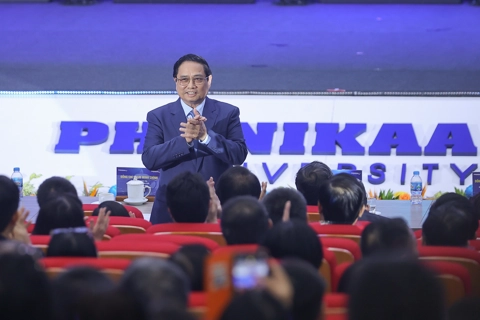
THE HANOI TIMES — A national program to train 10,000 CEOs will soon be launched to nurture a new generation of corporate leaders with vision, integrity and capacity, heard the Vietnam Private Sector Forum 2025 on September 16.
The program is part of efforts to implement the Politburo’s Resolution 68 on private sector development and Vietnam’s future growth.
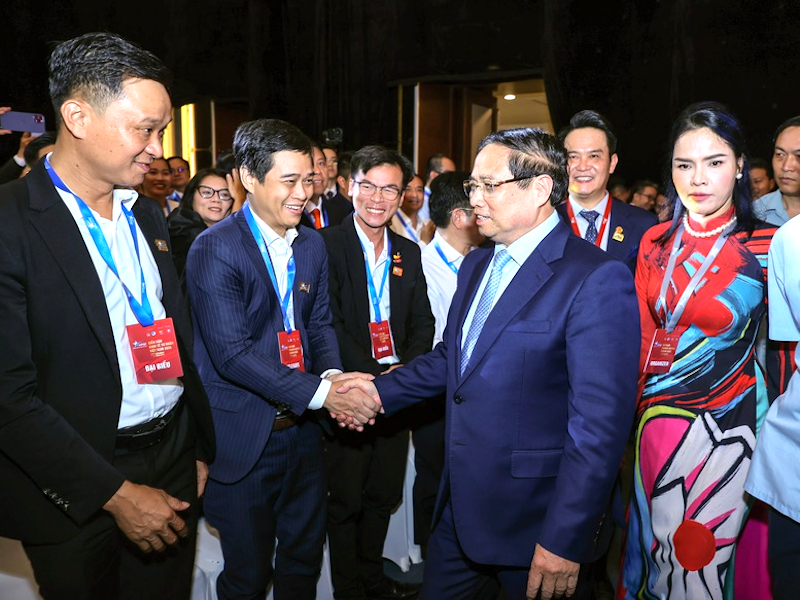
Prime Minister Pham Minh Chinh with business leaders at the VPSF 2025. Photos: VGP
Other measures include the “Each Young Entrepreneur Mentors Two New Entrepreneurs” program, which aims to transform five million household businesses into enterprises, along with a competency index to help Vietnamese companies assess themselves and strengthen competitiveness.
At the forum, participants also called for making the event annual so that entrepreneurs can raise issues directly with the National Assembly and government.
Under Resolution 68, Vietnam aims to have two million enterprises by 2030, or 20 companies per 1,000 people, with about 20 major corporations joining global value chains.
The country has over 940,000 enterprises and more than five million household businesses. The private sector contributes over 30% of state budget revenues, provides 82% of jobs, and accounts for about half of national GDP. The largest 500 private firms, though only 0.075% of the total, generate 12% of employment, 28% of assets, and 18.4% of revenue.
Dang Hong Anh, Chairman of the Vietnam Young Entrepreneurs Association, pledged to roll out these programs starting in 2025, calling on the government to issue incentive policies, ease access to capital, and simplify administrative procedures.
He also emphasized the need for closer public-private cooperation to encourage household businesses to formalize. “Vietnamese companies are well aware of the challenges and opportunities ahead. We are confident and determined under the leadership of the Party and the government,” he said.
Business recommendations
At the forum, business leaders proposed policies to develop strategic sectors with global reach.
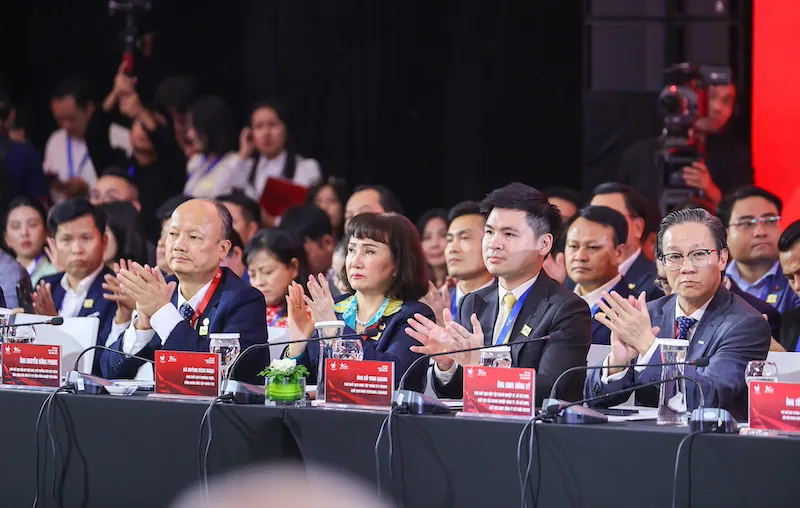
Business leaders attend the VPSF 2025.
Nguyen Quoc Khanh, Chairman of interior design firm AA Corporation, highlighted the potential of Vietnam’s wood and furniture industry, which is projected to earn US$20 billion in export revenue in 2025.
He urged the government to support technology upgrades through tax incentives, affordable credit and policies that would strengthen competitiveness against foreign-invested firms.
Khanh also suggested establishing industrial clusters to create ecosystems that can reduce logistics costs and improve efficiency.
Mai Huu Tin, former Chairman of the association, called for national-level public-private initiatives to scale up Vietnamese businesses.
Drawing on his experience, he proposed simplifying procedures for certificates of origin and VAT refunds, shifting to targeted post-audits to cut compliance costs, and improving logistics to reduce transport expenses.
Do Vinh Quang, Vice Chairman of T&T Group and Chairman of Vietravel Airlines, pointed to the importance of stronger capital markets, safer corporate bonds, and international financing through innovation and infrastructure funds.
Pham Thi Bich Hue, Chairwoman of Western Pacific, said that internal strength, including capital and talent, is backed by transparent laws, innovation sandboxes and real R&D incentives.
Other proposals included easing investment in high-tech agriculture, focusing trade promotion on high value-added products and expanding access to green finance.
Le Truong Son, Rector of Ho Chi Minh City University of Law, noted that despite Resolution 68’s vision, private firms still face legal barriers that limit growth. He called for stronger laws to protect rights, reduce risks, and build investor confidence.
Luu Thi Thanh Mau, Vice Chairwoman of the association, agreed. She said institutional reform must be the “breakthrough of breakthroughs.” According to her, businesses need not only to be “untied” from red tape but also “empowered” with accessible laws and a truly service-oriented administration, Mau said.
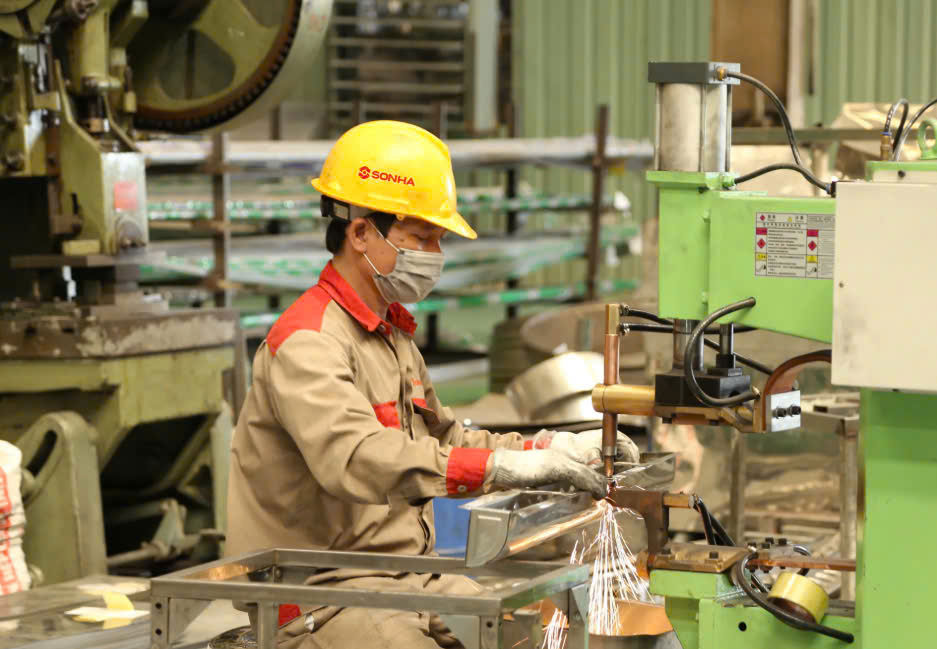
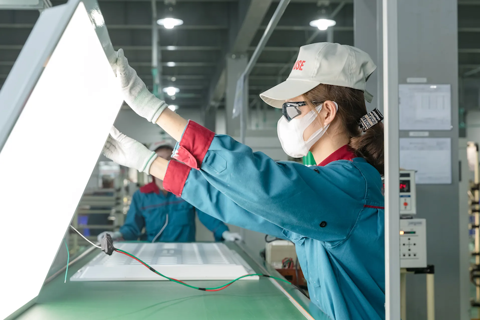
Industrial production at Son Ha Group. Photo: Khac Kien/The Hanoi Times
She recommended codifying key resolutions to ensure stability and consistent enforcement.
Government stands with business
Prime Minister Pham Minh Chinh urged private entrepreneurs to unite, showcase the strength of Vietnam’s business community, and inspire national pride while pursuing sustainable development.
He called on companies to innovate, act decisively, and balance national interests with their own. “Think far, see wide, act boldly, grow fast and sustainably,” he said.
Addressing business proposals, the prime minister instructed ministries to review their responsibilities, cut red tape, and create a more open environment for production and trade.
“Government stands alongside business, officials must innovate, infrastructure must be seamless, institutions must be enabling and enterprises must pioneer,” Chinh stressed.
He also urged the private sector to embrace technology, foster innovation, and support young entrepreneurs to build new growth engines and a skilled workforce for the digital age.