14TH NATIONAL CONGRESS OF THE COMMUNIST PARTY OF VIETNAM
Log in
Business

Vietnam no longer labeled as currency manipulator: US Treasury

The US Treasury of Department would continue its enhanced engagement with Vietnam.

There is insufficient evidence to make a finding that Vietnam manipulates its exchange rate for purposes of preventing effective balance of payments adjustments or gaining unfair competitive advantage in international trade.

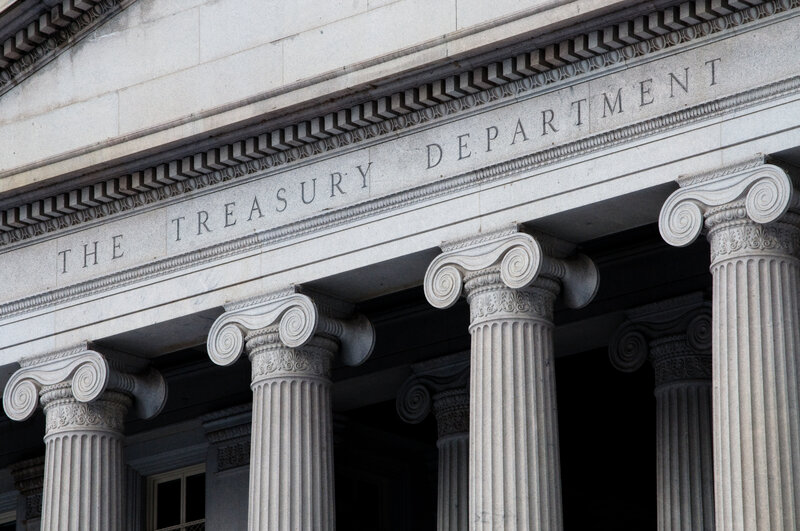
 US Department of Treasury. Source: Svitlana Kravchenko/US Embassy in Ukraine

US Department of Treasury made the statement in its latest report on foreign exchange policies of major trading partners of the US, announcing a contradict view to its previous report released on December 16, 2020.

In addition to Vietnam, Switzerland and Taiwan (China) have also been dropped from the list of currency manipulators.

The US Treasury Department also noted that it has been working with the Vietnamese authorities since early 2021 to develop “a plan with specific actions to address the underlying causes of Vietnam’s currency undervaluation.”, saying enhanced engagement with Vietnam will continue in the coming time.

Promptly after Vietnam being labeled as currency manipulator last December, the State Bank of Vietnam (SBV), the country’s central bank, released a statement rejecting the claim, saying the country’s main objective of its foreign-exchange policy is to control inflation and stabilize the macro-economy.

The SBV stressed Vietnam continues to give priority to a stable and sustainable trade-economic relation with the US and will strive to ensure a harmonized and fair-trade relations with the US.

Under the Trade Facilitation and Trade Enforcement Act of 2015, the US uses three criteria to determine if a country is a currency manipulator, including (1) a significant bilateral trade surplus with the United States is one that is at least US$20 billion over a 12-month period; (2) a material current account surplus is one that is at least 2% of gross domestic product (GDP) over a 12-month period; and (3) persistent, one-sided intervention occurs when net purchases of foreign currency are conducted repeatedly, in at least six out of 12 months, and these net purchases total at least 2% of an economy’s GDP over a 12-month period.

While removing a number of countries from the manipulation list, the US announced a Monitoring List of major trading partners that merit close attention to their currency practices and macroeconomic policies, comprising China, Japan, South Korea, Germany, Ireland, Italy, India, Malaysia, Singapore, Thailand, and Mexico.
Reactions:
Share:
Trending
Most Viewed
Related news
Vietnamese goods reach rural areas through Tet fairs

Vietnamese goods reach rural areas through Tet fairs

Hanoi is intensifying communication and outreach for the “Vietnamese people prioritize using Vietnamese goods” campaign to boost consumption ahead of Tet, the country’s most important holiday.

Vietnamese goods dominate Tet market 2026 in Hanoi

Vietnamese goods dominate Tet market 2026 in Hanoi

Vietnamese-made goods, including agricultural products and Tet gift items, are dominating the domestic retail market ahead of the 2026 Lunar New Year.

Ho Chi Minh City launches Vietnam International Financial Center

Ho Chi Minh City launches Vietnam International Financial Center

Ho Chi Minh City launched the Vietnam International Financial Center in a major push to become a regional hub for capital markets, fintech and strategic investment.

Suburban Hanoi Tet Fair drives domestic consumption and OCOP promotion

Suburban Hanoi Tet Fair drives domestic consumption and OCOP promotion

As Lunar New Year shopping accelerates, a suburban Hanoi commune is using a consumer goods exhibition to connect local producers with residents and strengthen demand for high-quality Vietnamese products.

Quoc Oai launches creative OCOP Center boosting craft production and tourism

Quoc Oai launches creative OCOP Center boosting craft production and tourism

The launch of a Creative Design and One Commune One Product (OCOP) Promotion Center in Quoc Oai Commune marks a step toward sustainable rural economic development, connecting traditional craft village products with tourism while enhancing market access and promoting local cultural identity.

Vietnam tech groups back state push on innovation, digital and green transition

Vietnam tech groups back state push on innovation, digital and green transition

Vietnam is counting on its technology sector to power the next phase of economic growth, with business leaders committing to innovation, digitalization and green transition under newly launched emulation movements.

Hanoi brings "Made in Vietnam" for Tet shopping 

Hanoi brings "Made in Vietnam" for Tet shopping 

The programs aim to stimulate local trade and meet Tet (the Lunar New Year) shopping demand, while supporting the growth of Hanoi’s cultural industries and tourism.

From clay toys to tea: culture shapes shopping at Spring Fair 2026

From clay toys to tea: culture shapes shopping at Spring Fair 2026

Beyond its record-breaking scale, the first Spring Fair 2026 feels less like a marketplace than a cultural crossroads, where regional identities, handcrafted goods and digital ambition converge, hinting at how Vietnamese products may find new value ahead of the Lunar New Year 2026.