Vietnam promotes low-emission rice to access high-value markets
As part of its strategy to develop sustainable agriculture and reach premium international markets, Vietnam is advancing the production and export of low-emission rice.
THE HANOI TIMES — More than bringing commercial benefits, the production and sale of low-emission rice proves Vietnam has changed its mindset toward sustainable agriculture development.
Referred to as “Green and Low-emission Rice,” this variety is certified by the Vietnam Rice Industry Association (VIETRISA) as meeting the technical process requirements of the One Million Hectare Project. The origin, crop season, and strain of the rice must be verified by local authorities or specialized international bodies.
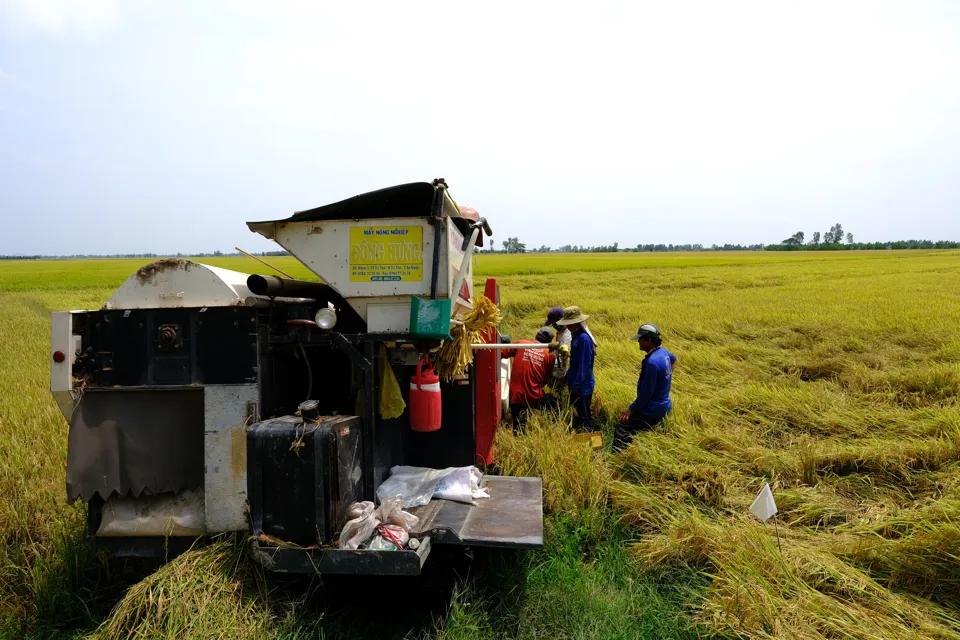
Rice harvesting in the Mekong Delta. Photo: Lam Giang/The Hanoi Times
Former Minister of Agriculture and Rural Development Cao Duc Phat said that the product enhances farmers’ earnings and supports environmental conservation. He referred to today’s growers as “green warriors” in the battle against climate change.
On November 27, 2023, the prime minister approved the sustainable development project of one million hectares of high-quality, low-emission rice linked to green growth in the Mekong Delta. The pilot phase was conducted over three consecutive crops in 12 provinces of the region.
From 2024 to 2025, the Ministry of Agriculture and Environment plans to train thousands of technical staff and over 200,000 farmers to expand the program.
Last week, Vietnam’s rice sector reached a milestone when it exported 500 tons of Japonica rice branded “Green and Low-emission Rice” to Japan for the first time.
Priced at US$820 per ton, the Japonica rice shipment was about $100-$150 higher than usual, reflecting the added value of the new cultivation method.
Deputy Minister of Agriculture and Environment Tran Thanh Nam stated that this shipment signifies a significant shift towards a sustainable agricultural economy model in Vietnam's rice sector.
"This shows that Vietnamese rice offers good taste and quality and meets high international environmental and sustainability standards," Nam stressed.
Currently, Japan is facing a sharp increase in domestic rice prices, averaging 4,260 yen (about $29.60) per 5 kg by the end of May, double the price from the same period last year. This creates significant opportunities for imported rice, especially certified low-emission products.
Pham Thai Binh, Director of Trung An Company – the exporter of the first shipment to Japan – said that demand for low-emission rice in Japan is substantial. He believes that if the production linkage model under the “One Million Hectare Project” is carried out effectively, Vietnamese rice will likely attract significant interest from high-end markets.
Seven pilot models have been put into practice in Kien Giang, Soc Trang, Tra Vinh, Dong Thap, and Can Tho, yielding positive results. According to the Ministry of Agriculture and Environment, the model reduced production costs by 8.2%-24.2%, seeds by 30%-50%, water by 30%-40%, and fertilizer by 30-70 kg/ha while increasing yields by 2.4%-7%.
Farmers' income rose by 12%-50%, equivalent to additional profits of VND4-7.6 million ($157-$298) per hectare.
However, in the first five months of 2025, rice exports increased by 12.2% in volume (4.5 million tons), yet fell by 8.9% in value ($2.34 billion). This highlights the need to promote high-value products, such as low-emission rice.
Bui Ba Bong, Chairman of VIETRISA, stated that the "Green and Low-Emission Rice" label was developed in cooperation with international organizations, including the International Rice Research Institute (IRRI), the World Bank (WB), and the Netherlands Development Organization (SNV).
This label is a crucial step in raising the global recognition and credibility of Vietnamese rice, making it more accessible to markets with high sustainability standards, such as Japan, EU, and the US.
In another move, the Transforming the Rice Value Chain for Climate Resilient and Sustainable Development in the Mekong Delta project (TRVC), funded by SNV and the Australian government, is currently being implemented in the southern provinces of An Giang, Kien Giang, and Dong Thap.
The project develops low-carbon rice production models linked to performance-based rewards, enabling future participation in the carbon credit market.
Christie Getman, SNV Country Director, affirmed that SNV is dedicated to supporting Vietnam’s climate sustainability goals, particularly in the rice sector. Getman noted that, through TRVC, SNV is helping to expand low-emission rice farming and support farmers in adopting climate-resilient practices.
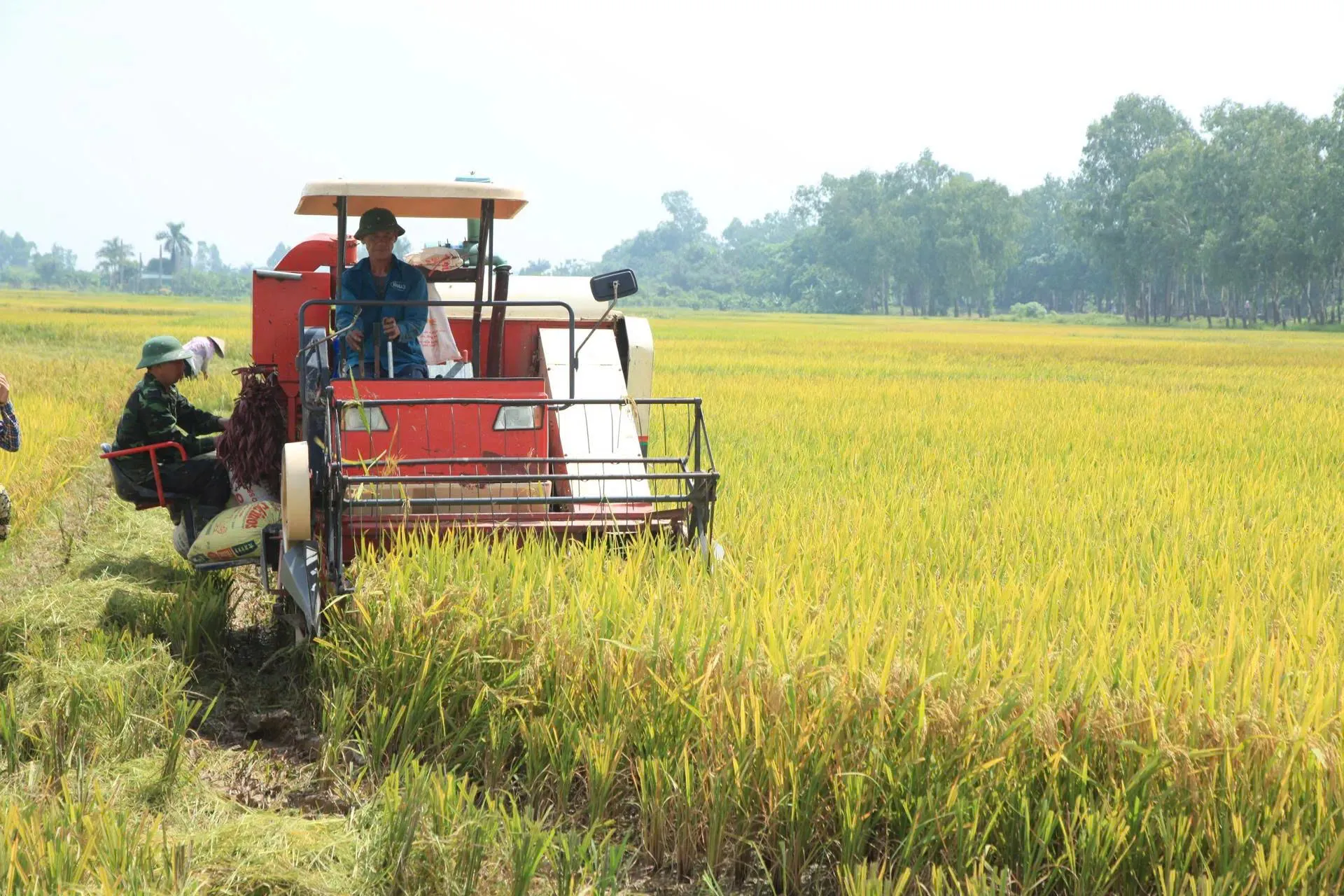
A rice field in the harvesting season. Photo: Pham Hung/The Hanoi Times
Many businesses have joined the project. For example, ThaiBinh Seed has implemented over 661 hectares across three aforementioned provinces, involving 165 farming households. Results show that more than 2,700 tons of CO₂ emissions were reduced, averaging four tons per hectare, with a profit margin of 45%, exceeding project targets.
Dr. Tran Minh Hai, Vice Rector of the School of Public Policy and Rural Development, said that the model should be expanded throughout the region, with significant investment in irrigation infrastructure and participation from enterprises and banks in the value chain.
Challenges and solutions
However, Le Thanh Tung, Standing Vice Chairman of VIETRISA, warned that the current major challenge is the lack of unified tools to measure greenhouse gas emissions.
"There's an urgent need to develop transparent mechanisms that quantify emissions and enable Vietnamese rice to enter the global carbon credit market," he stressed.
At a workshop held in Can Tho last month, several experts proposed solutions for the effective and sustainable development of the “Green and Low-Emission Rice” brand.
Bui Ba Bong emphasized that the label carries commercial and environmental value, positioning it for premium markets such as Japan and the EU.
Dr. Nguyen Van Hung, representing IRRI, introduced RiceMoRe, an automated emission monitoring and recording system that enhances transparency across the low-emission rice value chain.
Meanwhile, Le Thanh Tung proposed completing the MRV (measurement, reporting, and verification) system to accurately track emissions, develop a "green rice" identity system, and achieve national certification and carbon credit recognition by 2028.