14TH NATIONAL CONGRESS OF THE COMMUNIST PARTY OF VIETNAM
Log in
Business

Vietnam puts national foreign debt under control

Efficient debt management will be a major factor helping Vietnam get out of the group of highly indebted countries, a representative of the Ministry of Finance stated.

The efficient management of national foreign debt takes Vietnam from a poor country with high amount of debt to one lauded by international organizations with external debt sustainability.

 Deputy Director General of the Department of Public Debt Management and External Finance Vo Huu Hien. Source: MoF 

Deputy Director General of the Department of Public Debt Management and External Finance under the Ministry of Finance (MoF) Vo Huu Hien gave the remarks at a workshop discussing national foreign debt management on January 26.

The MoF representative said over the past three decades, Vietnam has attained significant result in debt management, especially of national foreign debt.

The ratio of foreign debt in the public sector to total national foreign debt has been on the declining trend from 73.6% in 2010 to 63.4% in 2015 and 43.7% in 2020, lower than the rate set by the National Assembly of 50% and ensure national financial security.

Total outstanding loans of the public sector has also been tightened with an average growth rate of 13% in 2011-15 to nearly 3% in 2016-20.

“This help Vietnam to move out of the group of highly indebted countries,” stated Mr. Hien.

At present, official development assistance (ODA) and preferential loans make up 98% of the government’s foreign debts, he noted, adding Vietnam has signed financing agreements with international partners worth US$85 billion for an average maturity period of 13.8 years and an average interest rate of 1.35%.

Mr. Hien said while the country’s financial capabilities remain limited, foreign debts from different economic sectors are essential for Vietnam to fund infrastructure development and support socio-economic development goals.

As Vietnam has reached the low-middle income country status, government agencies need to finalize legislation and laws to better manage debt in mid- and long-term in a new circumstance, stated Mr. Hien.

On this issue, Mr. Nguyen Minh Cuong, the principal country economist of the Asian Development Bank (ADB) in Vietnam, said the bank gives priority to supporting the country in finalizing legal framework in foreign debt management.

“The ADB is willing to assist government agencies in reforming the process of foreign debt management,” he added.

Reactions:
Share:
Trending
Most Viewed
Related news
Hanoi poised to lead low-altitude space economy

Hanoi poised to lead low-altitude space economy

The low-altitude economy is not a distant vision but a reality already taking shape, bringing a rare opportunity for Hanoi to lead the next phase of urban technological transformation.

Vietnam, US to continue reciprocal tariff talks next week

Vietnam, US to continue reciprocal tariff talks next week

Vietnam has reaffirmed its willingness to facilitate greater access for US goods and companies as Hanoi and Washington prepare to hold the sixth round of negotiations on reciprocal tariffs.

Viettel Money added to national public service portal, expanding cashless government payments

Viettel Money added to national public service portal, expanding cashless government payments

Vietnam is expanding cashless public services as Viettel Money joins the National Public Service Portal, helping streamline administrative processing for both citizens and government agencies nationwide.

Vietnam’s online food delivery market jumps 19% in 2025 as duopoly tightens grip

Vietnam’s online food delivery market jumps 19% in 2025 as duopoly tightens grip

Rapid urbanization and app-based lifestyles are reshaping how Vietnamese consumers order meals, with food delivery platforms expanding quickly in 2025 amid rising competition, service innovation and growing reliance on digital channels for everyday dining across major cities.

Four competitive pillars shape HCMC-based international financial center vision

Four competitive pillars shape HCMC-based international financial center vision

Currently ranked 95th out of 120 cities in the Global Financial Centres Index, Ho Chi Minh City aims to reach the top 75 by 2035 and the top 50 by 2045.

FPT opens advanced chip testing plant, deepening Vietnam’s role in global semiconductor chains

FPT opens advanced chip testing plant, deepening Vietnam’s role in global semiconductor chains

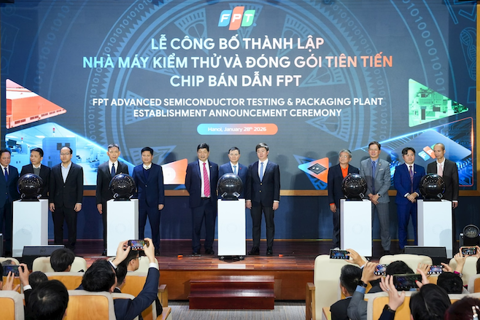
FPT has announced the establishment of an advanced semiconductor testing and packaging plant in the northern province of Bac Ninh, expected to begin operations this year, marking a significant step toward completing Vietnam’s semiconductor value chain.

Japanese food companies step up focus on Vietnam market

Japanese food companies step up focus on Vietnam market

As Vietnam’s income levels rise, consumer demand has gradually shifted toward higher-quality and more diverse food products.

Vietnam targets national gold exchange launch in February to improve market transparency

Vietnam targets national gold exchange launch in February to improve market transparency

Vietnam is accelerating financial market reforms as the government pushes forward plans for a national gold exchange platform and experiments with digital asset trading, aiming to improve transparency, stabilize markets and strengthen macroeconomic management.