Vietnam revamps trade promotion, shifts focus to brands and digital reach
Vietnam is reshaping its trade promotion strategy to focus on global brand building, emerging markets and digital tools as exports expand amid rising international competition.
THE HANOI TIMES — Vietnam must move its trade promotion strategy beyond basic market participation toward establishing a sustained international presence and building global brands, according to Le Hoang Tai, Deputy Director of the Vietnam Trade Promotion Agency.
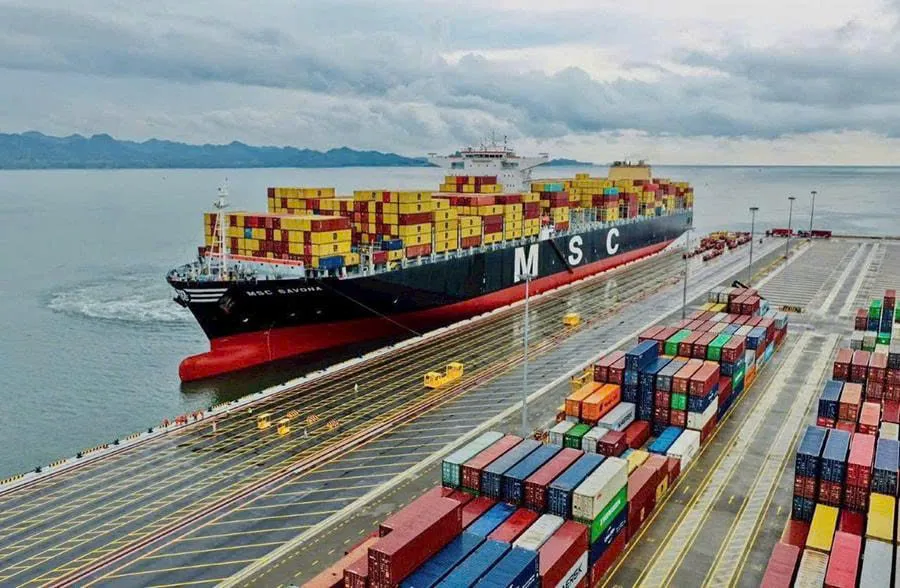
Cargo handling for exports at Lach Huyen Port, Haiphong. Photo: Hanoimoi Newspaper
Tai said global trade has entered a new phase defined by larger scale, faster transactions and tougher competition. Key markets continue to tighten requirements on technical standards, sustainability and traceability, forcing trade promotion efforts to evolve in both approach and execution.
He said Vietnam should focus on six priority product groups: electronics and components, textiles and garments, leather and footwear, transport equipment, processed agricultural and seafood products and wood products and handicrafts.
“These sectors have strong production capacity, deep supply-chain potential and clear opportunities to raise value through brand development,” Tai said at a conference on December 29.
He added that trade promotion should expand into emerging sectors such as information technology, logistics and environmental technology, where demand continues to grow.
Tai also urged stronger engagement with emerging markets, particularly the Middle East-Africa region and Latin America, to reduce reliance on traditional export destinations including the United States, the European Union, China, Japan, South Korea and ASEAN.
To support this shift, he called for the creation of a national trade promotion ecosystem that closely links policy design, market signals and business needs.
He said this ecosystem requires coordinated backing from the Ministry of Industry and Trade, trade promotion agencies, local authorities and industry associations.
Tai identified a comprehensive overhaul of the National Trade Promotion Program as a key breakthrough. Planned reforms include upgraded content, simplified procedures, market-oriented support and a stronger focus on two-way trade promotion.
“The aim is to help Vietnamese enterprises expand overseas while drawing partners, goods flows and trading activities back to Vietnam,” he said.
Digital transformation remains a central pillar of this effort, according to the Vietnam Trade Promotion Agency. From 2026, wider deployment of tools such as the Vietrade AI virtual assistant and centralized data platforms will improve access to market intelligence, technical standards and potential partners.
Deputy Minister of Industry and Trade Nguyen Sinh Nhat Tan said trade promotion agencies must streamline operations and align support more closely with real market conditions.
He said the key task for 2026 includes organizing national-level trade fairs that meet international standards, stimulating domestic demand and strengthening the standing of Vietnamese products.
Tan stressed that closer coordination among agencies will prove critical as global GDP growth is forecast to slow to 2.8%, while tariff pressures and inflation risks persist.
Despite global volatility, Vietnam’s General Department of Customs projects total import-export turnover in 2025 to rise 17% year-on-year to US$920 billion. Exports are expected to grow 16% to $470.6 billion, while imports may reach $449.4 billion, up 18%.
According to the World Trade Organization, Vietnam ranks 21st globally in exports and 20th in imports, a marked improvement over the past decade.
Reviewing the 2021-2025 period, Vu Ba Phu, Director of the Vietnam Trade Promotion Agency, said the Ministry of Industry and Trade approved 630 trade promotion projects with total funding exceeding VND650 billion ($24.8 million). These programs supported more than 41,000 enterprise participations at trade events at home and abroad.
Their impact translated into tangible results. Contracts signed at overseas promotion events reached about $425 million, while direct domestic transactions exceeded $19 million.
The year 2025 also marked a highlight with the first Autumn Trade Fair organized by the Ministry of Industry and Trade. The event attracted more than 2,500 enterprises, 3,000 booths from 34 provinces and cities and an average of about 100,000 visitors per day, generating nearly $38 million in revenue, including $1.9 million from local specialty products.