Vietnam sees OCOP as pathway to inclusive, sustainable rural value chains
The forum recognizes Vietnam’s OCOP model as a catalyst for inclusive and sustainable rural development.
THE HANOI TIMES — Vietnam envisions the One Commune One Product (OCOP) program as a model for developing inclusive, sustainable, and competitive rural value chains that boost incomes and improve quality of life.
At the High-Level Inter-regional Knowledge Forum on OCOP models on July 15 in Hanoi, Deputy Minister of Agriculture and Environment Tran Thanh Nam affirmed this vision.
The forum was co-hosted by the ministry and the Food and Agriculture Organization of the United Nations (FAO).

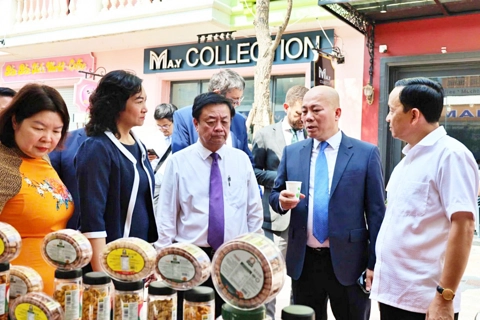
Deputy Minister Tran Thanh Nam and agricultural leaders from Africa and Asia visit the OCOP exhibition booth at the High-Level Inter-regional Knowledge Forum on OCOP models. Photos: MAE
The forum connected global and regional efforts to enhance the effectiveness of Vietnam’s OCOP program and align it with the “Four Betters” agenda of the FAO, including better production, better nutrition, a better environment, and a better life.
Nam said that OCOP is an ecosystem involving the government, businesses, cooperatives, and communities that enhances capacity, ensures quality, builds branding, and connects markets.
As of June 2025, Vietnam had certified more than 16,800 OCOP products rated three stars or higher, with 126 earning five stars. These products meet quality standards, use eco-friendly packaging, and support market-driven growth.
The deputy minister emphasized the importance of creating a South-South cooperation network to share policies, technologies, and market information in order to support the sustainable development of OCOP.
He also called for increased training and capacity building for rural cooperatives and SMEs, especially those led by or serving women, the elderly, people with disabilities, and ethnic minorities.
In addition, he encouraged piloting public-private-community partnership models to leverage financial, technical, and indigenous knowledge resources for rural development and OCOP value creation.
OCOP - a strategic pillar of rural development

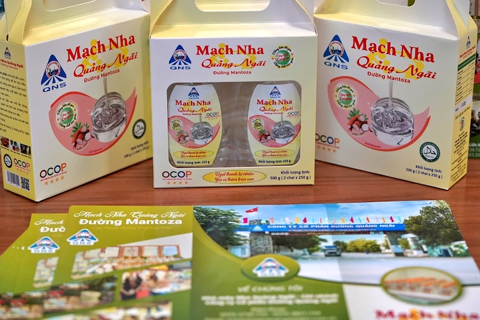
Hanoi’s OCOP products are on display at the forum.
FAO Deputy Director General Beth Bechdol praised Vietnam’s OCOP program as a local economic engine and a foundation for sustainable agricultural growth. She identified product diversification, resilience building, and cross-country knowledge exchange as essential for the advancement of both Asia and Africa.
FAO offices in the Asia-Pacific region are actively promoting OCOP branding, strengthening local capacities, and helping distinctive rural products reach global markets. “OCOP is becoming a strategic pillar of rural economic development in the region,” said Bechdol.
Through the international One Country One Priority Product (OCOP) initiative, the FAO supports 56 priority products worldwide to enhance livelihoods and highlight the cultural and economic potential of rural communities.
"We remain committed to supporting African nations in the fight against hunger and malnutrition," said QU Dongyu, Assistant Director-General and Regional Representative for Asia and the Pacific. "Through trilateral cooperation, we can turn Africa’s challenges into opportunities and build greener, fairer, and more resilient food systems together," he added.
Since its launch in Vietnam in 2018, the OCOP program has boosted rural economies by promoting local strengths, grassroots innovation, and culturally distinctive, high-value products.