Vietnam sees record startup surge after private sector resolution
Policies encouraging private sector development are meaningfully contributing to socioeconomic progress.
THE HANOI TIMES — A strong "startup wave" has emerged in Vietnam, with June seeing an all-time high in newly established businesses following the adoption of the Politburo’s Resolution 68 on private sector development.
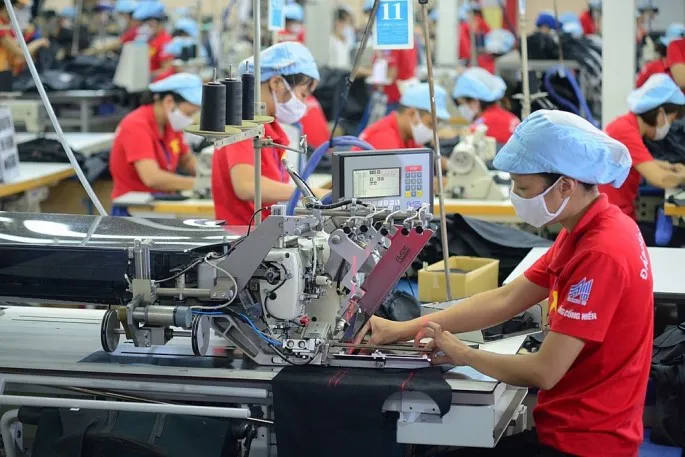
Workers at Garment 10 Company. Photo: Khac Kien/The Hanoi Times
Speaking at the Ministry of Finance's regular press conference on July 2, Trinh Thi Huong, Deputy Director of the Department for Private Sector and Collective Economy Development, attributed the strong momentum to the resolution’s early impact.
“There have been clear improvements in business registration and enterprise activities in the nearly two months since Resolution 68 took effect,” said Huong.
Specifically, the number of new businesses formed in June rose 1.5 times to 24,000 and doubled the monthly average during the 2021–2024 period.
"In the first half of this year, over 91,000 new businesses were established, reflecting a strong entrepreneurial wave," Huong stated. Additionally, over 61,000 firms resumed operations during the same period, marking a 57% year-over-year increase.
Huong noted that, for the first time, market entries and re-entries in a single month exceeded exits by 1.2 times, while operating businesses injected over 170% more capital year-on-year, and newly registered household businesses in June surged by over 118% year-on-year, which is equal to 24 times the two-year monthly average.
Vietnam currently has over 940,000 registered enterprises and more than five million household businesses. The private sector accounts for around 50% of GDP, over 30% of total state budget revenue, and 82% of total employment.
Resolution 68, issued by the Politburo last month, reaffirms the private sector as a key economic driver and sets a 2030 goal of two million registered businesses, including at least 20 large firms in global value chains, contributing 55–58% of GDP and 84–85% of national employment.