Vietnam targets GDP per capita at US$32,000 by 2050
The country by 2030 will become a developing country with modern industrial sectors and reach the upper-middle income status.
Vietnam aims to sustain an annual average growth rate of 6.5-7.5% during the 2031-2050 period, resulting in a GDP per capita of $27,000-$32,000 by 2050.
| Minister of Planning and Investment Nguyen Chi Dung. Source: quochoi.vn |
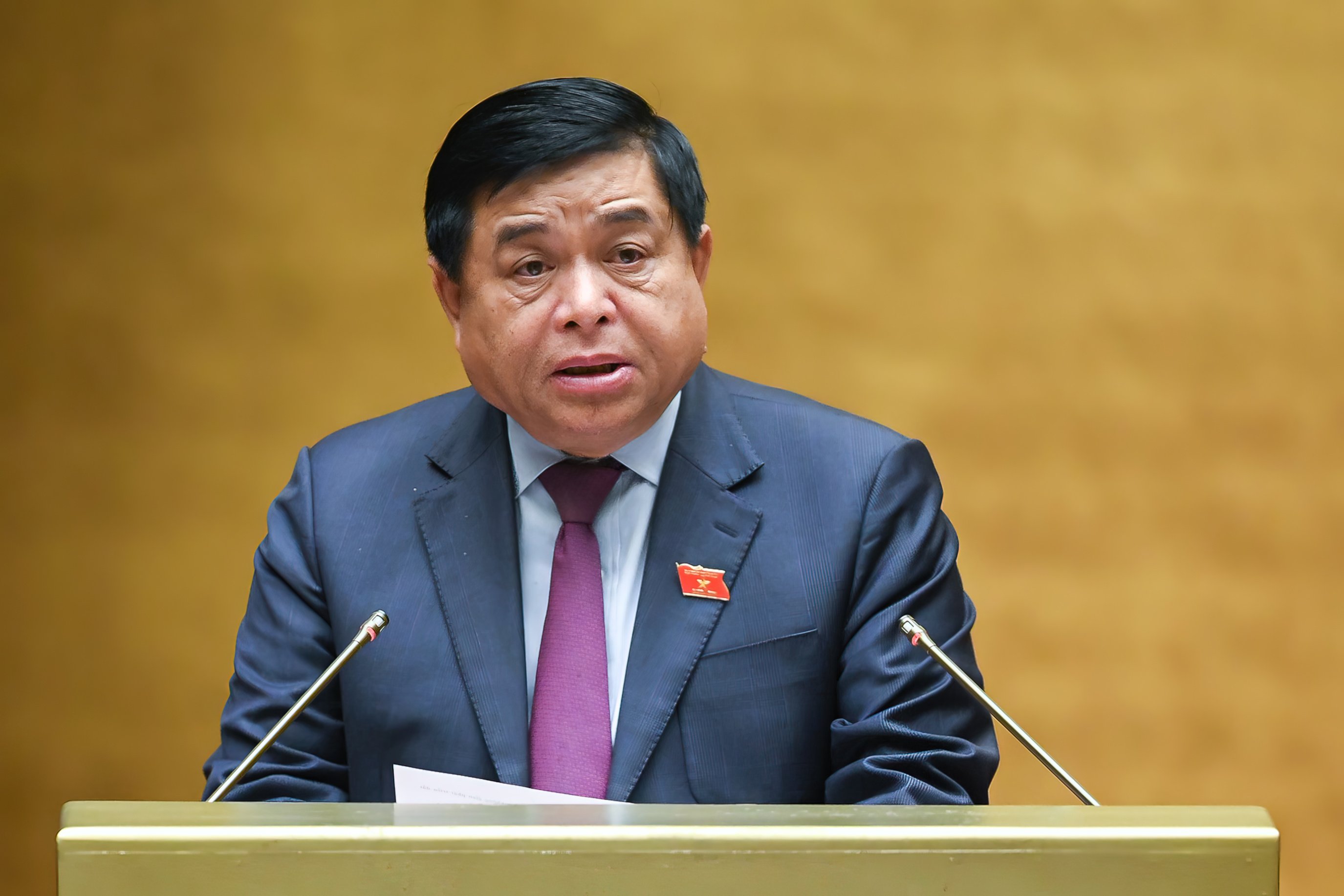
Minister of Planning and Investment Nguyen Chi Dung on January 5 revealed the target as part of the draft national master plan for the 2021-2030 period, with a vision to 2050, during the second extraordinary session of the National Assembly.
According to Dung, the previous master plans have exposed shortcomings as development spaces were divided according to administrative boundaries, along with weak inter-provincial connectivity and a lack of focus on state investment activities.
“There was no consistent planning and an effective investment policy to form a national infrastructure framework,” Dung said.
The upcoming planning, therefore, is set to address these issues by creating an effective and focused development space to better utilize state resources.
Dung added the Government anticipates Vietnam to reach an average GDP growth of 7% in the 2021-2030 period and a GDP per capita of $7,500.
For the 2031-2050 period, Vietnam should sustain an average growth rate of 6.5-7.5% until 2050, ensuring a GDP per capita of $27,000-32,000, nearly an 8-fold increase against the current level of $4,100 in 2022.
Vietnam, by 2030, would become a developing country with a modern industrial sector of upper-middle-income status, Dung said, noting the economic growth model is expected to be based on science-technology, innovation, and digitalization.
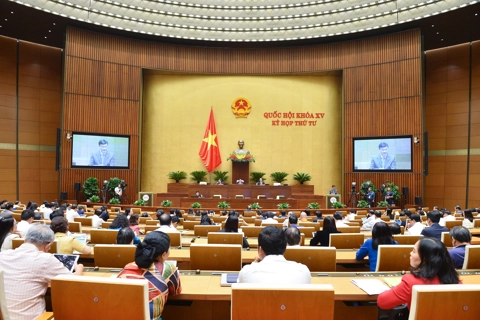
| Overview of the session. |
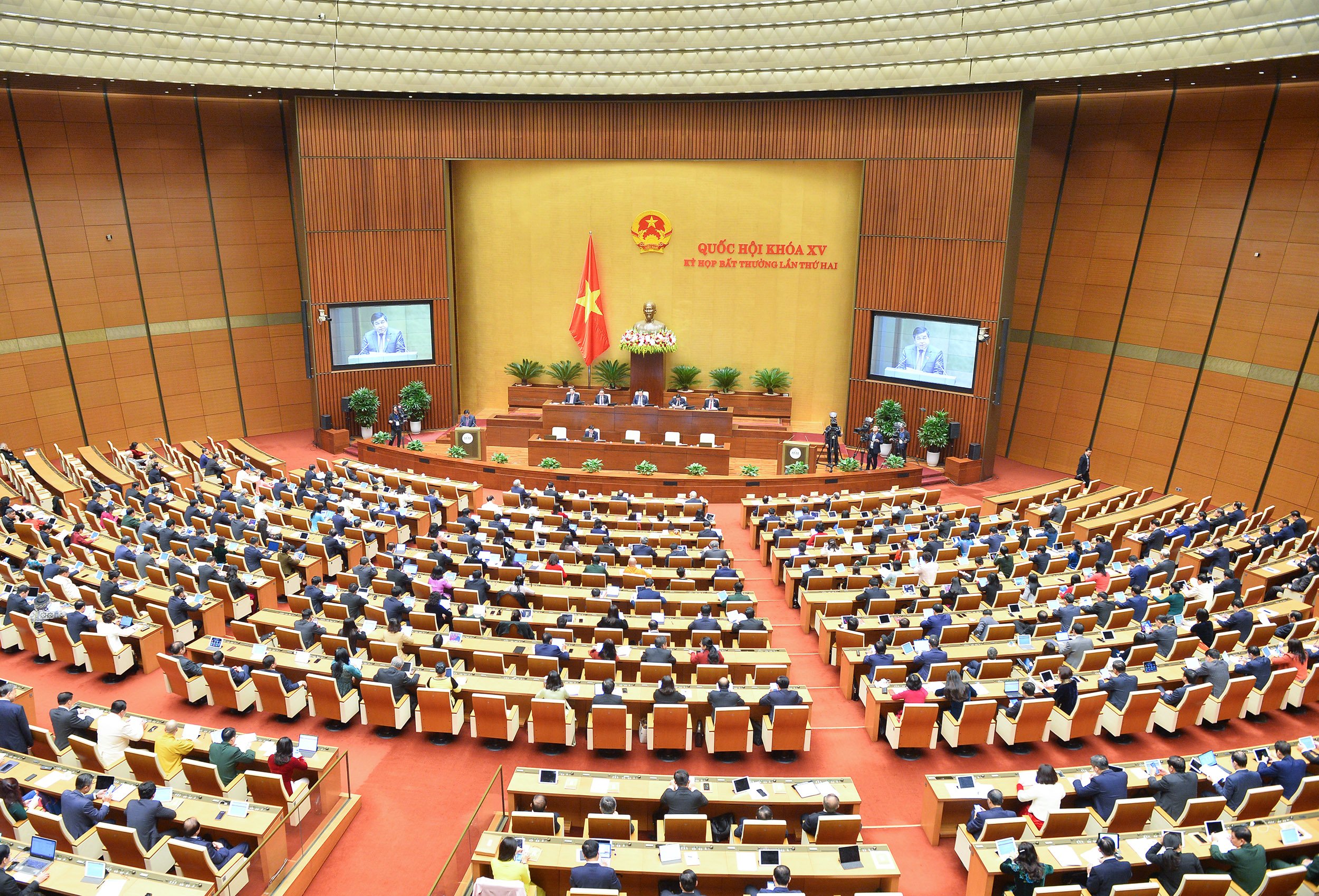
Reviewing the Government’s proposal, the Chairman of the National Assembly’s Economic Committee, Vu Hong Thanh, stressed the necessity for the Government to ensure sufficient resources to carry out the master plan.
To realize the GDP growth of 7% during the 2021-2030 period, the planning would require VND48,300 trillion ($200.58 billion) in investment capital, tripling the amount of the 2011-2020 period.
He referred to a report from the Government that VND9,700 trillion ($41.3 billion), or 20% of the total capital required, would be sourced from the State budget.
Given the huge amount of capital needed for infrastructure development, Thanh requested the Government to assess the country’s state resources for socioeconomic development and ensure national financial security.
The master plan also revealed the necessity to promote key zones serving as the growth engines for the country, including the Hanoi-Haiphong-Quang Ninh in the North, Ho Chi Minh City-Binh Duong-Dong Nai-Ba Ria Vung Tau in the South, Thua Thien Hue-Danang-Quang Nam-Quang Ngai in the Central region, and the Mekong Delta.
Until 2030, Vietnam would prioritize the development of economic corridors such as the North-South, and two in the East-West direction of Lao Cai – Hanoi – Haiphong – Quang Ninh and Moc Bai – Ho Chi Minh City – Vung Tau. Hanoi, Ho Chi Minh City, Danang, and Cantho would serve as the cores in each corridor.
In the coming time, Dung expected Vietnam to prioritize fundamental industries, or those using hi-tech, or under circular economy.
The services sector would form trade and financial centers at regional and international levels and establish agricultural production zones in line with processing hubs.
A network of infrastructure is expected to consist of expressways connecting major economic hubs and corridors so speeding up the construction of the North-South express railway, or those connecting to seaports and airports, would be the primary task.
Delegates of the National Assembly are set to discuss the master plan in the next two days and approve the plan on January 9.
HSBC in its latest report on Vietnam, pointed out that the country ended 2022 on a strong footing. Vietnam delivered firm growth of 5.9% year on year in the fourth quarter, bringing its yearly GDP growth to a 25-year high of 8.0%. This will again make Vietnam one of Asia’s top performers. Indeed, Vietnam has benefited from a full re-opening since mid-March. Consumer-oriented and tourism-related services, including retail sales, F&B, travel, and accommodation, have been booming significantly and lifting growth, stated HSBC. However, despite a rosy 2022, it said 2023 would nonetheless be a challenging year. The biggest downside risk to growth is intensifying trade headwinds. Vietnam’s external engine has moderated sharply in the past few months, and the outlook is uncertain for the new year, as its major trading partners’ growth is set to slow. Meanwhile, high inflation is worth a close watch, as Vietnam continues to see stronger inflation pressures, particularly on core prices. HSBC's report expected growth to slow to 5.8% and average inflation to accelerate to 4.0% in 2023. |