Log in
Business

Vietnam to open e-payment for 80% of population by 2025

Mobile money services will be promoted in Vietnam, with priority given to regions where the prevalence of banking services is still low.

Vietnam strives to gain 80% of its population having an e-payment account and attain the rate of e-commerce payments of 50% by 2025.

These are the targets set out in the Prime Minister's Draft Decision on the National Strategy for Digital Economy and Society Development to 2025, with a vision to 2030 which is under public consultation. 

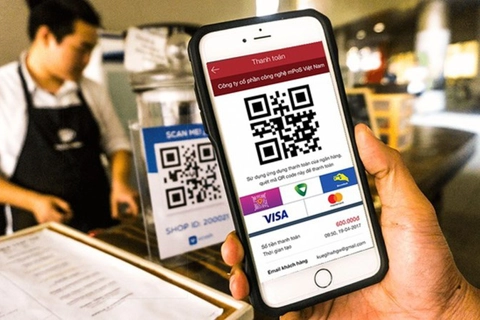
 QR Code is one of the popular cashless payment methods to be used among Vietnamese people. Photo: Napas

This draft decision is aimed at developing digital infrastructure, digital data, digital identity, digital payment, digital skills, digital human resources, creating the foundation for the development of the digital economy and digital society.

According to the draft, 75% of electricity and water payment will be cashless and 90% of the points of sale will apply non-cash payment methods.  

The draft also targets 90% of Vietnam’s population who will buy goods on e-commerce platforms. Those who are capable of using basic digital skills will make up about 70%. At least 50% of farmers are trained in basic digital skills. Meanwhile, 100% of high-school students and students are equipped with digital skills. 

By 2025, 70% of the population will have a digital identity for use in all digital services.  Each digital identity will be used on average 100 times per year.

The draft sets out the development of 5G and next-generation mobile network infrastructure, commercialize 5G mobile networks, and universalize smartphones by 100%. The rate of universalization of 4G/5G mobile broadband network services will reach 100% and fiber optic broadband network infrastructure will cover 100% of households.

To achieve the goals, the Ministry of Information and Communications proposed to review and amend financial regulations and policies, fees, and charges in the direction of eliminating cashless payment barriers in order to encourage people to make cashless transactions.

The ministry will submit to the Prime Minister for approval and carry out the Cashless Payment Development Program in Vietnam in the 2021-2025 period.

A program to promote mobile money services will be implemented, with priority given to regions where the prevalence of banking services is still low. 

According to the State Bank of Vietnam, in the first quarter of 2021, the country recorded 156.2 million internet transactions with VND8.1 trillion (US$355.3 million), rising 28.4% in value. 

In the same period, 395 million transactions were carried out via mobile phone with a total value of more than VND4.6 trillion ($201.8 million), an increase of 103% and 5.3 million transactions through QR code with nearly VND4.5 trillion ($197.5 million), up 146% in value.

Reactions:
Share:
Trending
Most Viewed
Related news
Vietnam to tighten biometric authentication for new bank cards next year

Vietnam to tighten biometric authentication for new bank cards next year

Bank card issuers must conduct a face-to-face meeting and match the biometric data of individual customers or the legal representative of organizational customers with their identity documents.

Make in Vietnam forum spotlights breakthroughs shaping digital future in the country

Make in Vietnam forum spotlights breakthroughs shaping digital future in the country

Vietnam will host the seventh National Forum on Vietnamese Digital Technology Enterprises on December 25 in Hanoi, highlighting policy directions, strategic technologies and progress under the “Make in Vietnam” initiative as the country pushes toward a stronger digital economy.

Hanoi and Moscow seek new economic momentum as partnership marks 75 years

Hanoi and Moscow seek new economic momentum as partnership marks 75 years

At the Moscow–Hanoi Business Forum, leaders from both capitals said 75 years of Vietnam–Russia ties provide a strong foundation to deepen economic and investment cooperation, especially in technology, trade and urban development.

Vietnam manufacturing maintains strong momentum despite storms disrupting supply chains

Vietnam manufacturing maintains strong momentum despite storms disrupting supply chains

Vietnam’s manufacturing sector continued to expand in November, marking the fifth straight month of improvement, even as severe storms caused supply-chain delays and slowed production, according to S&P Global.

Techfest 2025 returns to Hanoi, spotlighting Vietnam’s vibrant startup community

Techfest 2025 returns to Hanoi, spotlighting Vietnam’s vibrant startup community

Hanoi’s Hoan Kiem pedestrian street will host Techfest Vietnam 2025 from December 12 to December 14, welcoming entrepreneurs, investors and the public to explore emerging technologies and celebrate the country’s growing culture of innovation.

Vietnam expands major entrepreneurship program to unlock opportunities for women nationwide

Vietnam expands major entrepreneurship program to unlock opportunities for women nationwide

The Vietnam Women’s Entrepreneurship Support Program has surpassed nearly every target set for 2017–2025, empowering more than 118,000 women to launch new ventures and laying the groundwork for a stronger, more inclusive entrepreneurial ecosystem in the next decade.

HHTIP accompanies businesses in efficient energy use for sustainability

HHTIP accompanies businesses in efficient energy use for sustainability

As green transition becomes a decisive factor shaping future growth, Hanoi is intensifying efforts to push energy efficiency across its industrial zones. The city’s management board is building a development model centered on clean energy, responsible production and sustainable operations.

Vietnam launches Semiconductor Alliance to build skilled workforce, strengthen global industry ties

Vietnam launches Semiconductor Alliance to build skilled workforce, strengthen global industry ties

The newly launched Semiconductor Alliance in Vietnam seeks to develop skilled professionals, foster collaboration between universities and businesses while preparing the country to play a more active role in the global semiconductor industry.