Vietnam to pilot carbon trading floor by late 2025
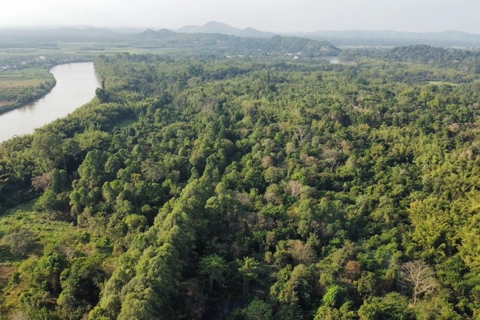
Vietnam currently has 150 projects generating 40.2 million carbon credits, many of which have been traded on international markets.
THE HANOI TIMES — Vietnam is expediting the legal and technical preparations for a domestic carbon market, which is scheduled for a trial launch by the end of 2025.
This information was shared by Nguyen Tuan Quang, Deputy Director of the Ministry of Agriculture and Environment's Department of Climate Change, at the Vietnam Net Zero Forum 2025 held in Hanoi this week. The forum's theme was "Carbon Market in a New Era."

The domestic carbon trading floor is set to officially get underway in 2029. Photo: VGP
To get more international financial and technological support for Vietnam's net-zero emissions target by 2050, the Ministry of Finance has submitted a draft decree on the domestic carbon credit exchange to the prime minister for approval to align with global standards.
Quang stated that all carbon credits must be generated using standardized, transparent methodologies, also known as carbon credit generation methods, and that the state must retain centralized oversight of all transactions.
"If not well regulated, Vietnam risks failing to meet its national emission reduction targets due to the uncontrolled outflow of credits, which could also lead to a domestic supply shortage," Quang said.
The ministry is also drafting a decree on international carbon credit and emission reduction result exchange.
There are currently 150 projects in Vietnam that have generated 40.2 million carbon credits traded on international markets. The country also ranks among the world’s top four in terms of registered Clean Development Mechanism (CDM) projects, behind China, Brazil, and India.
On January 24, 2025, the prime minister approved the National Carbon Market Development Plan, which outlines a pilot phase through 2028 and an official launch in 2029, including international market linkages.
Regarding regulations, on January 7, 2022, the government's Decree No. 06 was issued to regulate greenhouse gas emission reduction and ozone layer protection. On June 9, 2025, Decree No. 119 amended several provisions of Decree No. 06 to reinforce Vietnam’s legal foundation for a functional carbon market.
Nguyen Dinh Tho, Deputy Director of the Institute of Strategy and Policy on Natural Resources and Environment, noted that Vietnam’s carbon market is still in its foundational phase with initial legal frameworks and limited engagement of key stakeholders.
For that reason, more technical support should be provided to strengthen the capacity of local authorities and firms.
He also called for the integration of digital tools into carbon market operations to ensure the monitoring of accurate, timely, and verifiable data.
Once fully operational, the carbon market will rely on state regulation, proactive private-sector engagement, and effective international cooperation as core pillars for long-term sustainability.
According to the government's plan on developing the domestic carbon market signed in January 2025, Vietnam would have launched a pilot carbon trading floor in June 2025, with official operations beginning in 2029.