Vietnam to produce semiconductor chips by 2027: Prime Minister
Vietnam aims to build a comprehensive, synchronized, and effective semiconductor ecosystem by improving policies, removing barriers in infrastructure, institutions, and human resources.
THE HANOI TIMES — Vietnam sets 2027 as its target to master chip design and manufacturing, driven by a clear roadmap, coordinated efforts and strong government leadership, said Prime Minister Pham Minh Chinh.
Chinh was speaking at the second meeting of the National Steering Committee on the Development of the Semiconductor Industry held in Hanoi on August 4.
"Semiconductors, along with artificial intelligence (Al), cloud computing, and the Internet of Things (IoT), are vital to national development," said Chinh, who also chairs the committee.
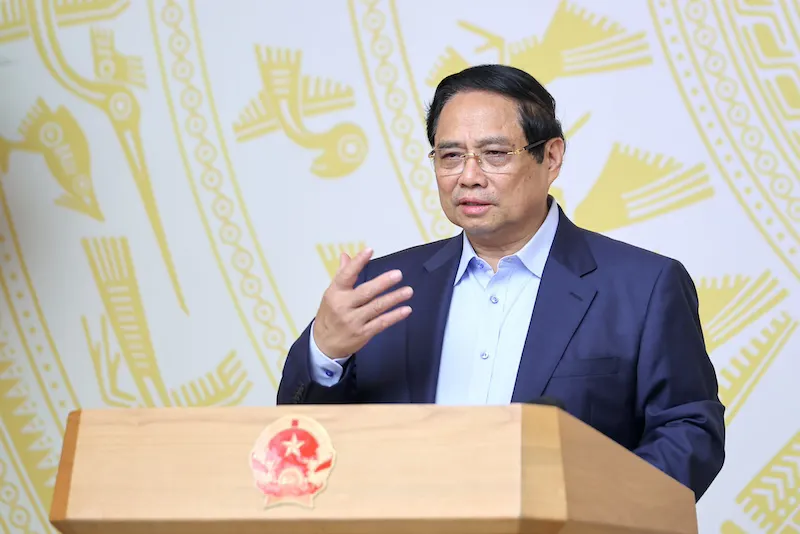
Prime Minister Pham Minh Chinh speaks at the second meeting of the National Steering Committee on the Development of the Semiconductor Industry, held on August 4. Photos: VGP
Chinh highlighted Vietnam’s semiconductor progress, from growing public awareness and institutional reforms to better infrastructure, broader stakeholder involvement and initial results in workforce training.
However, he noted ongoing challenges such as limited capital, slow key projects, weak tech breakthroughs, poor academia-industry ties and a shortage of technology transfer.
Comprehensive implementation required
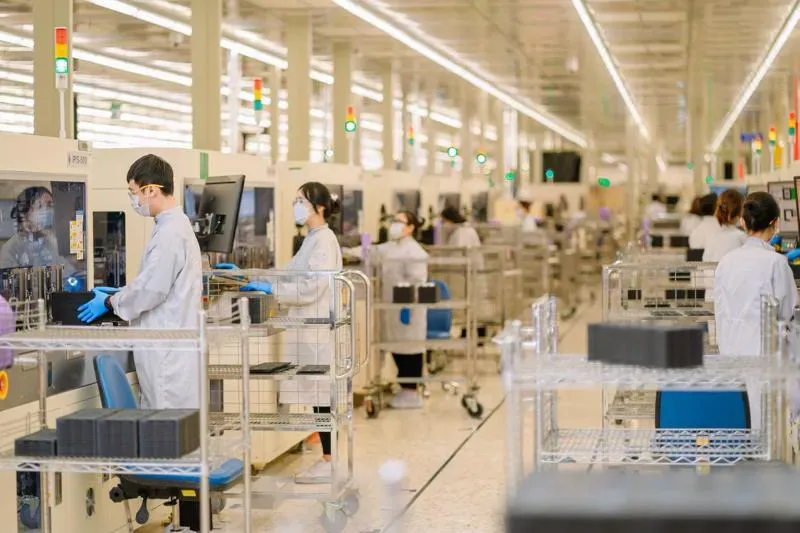
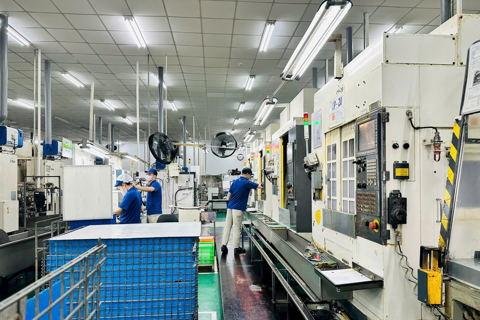
The electronic semiconductor assembly and testing plant of Intel Products Vietnam Co., Ltd. Photo: IPV
To overcome these challenges, Chinh outlined a set of core tasks and strategies guided by the principle “start simple and small, but advance quickly with breakthroughs.”
He urged all ministries, sectors, localities, and enterprises to act for semiconductor development and human resource training, making a competitive, fair, and market-driven semiconductor industry in Vietnam.
“We need a clear shift in approach, from offering incentives for foreign direct investment to facilitating comprehensive technology transfers and domestic capacity building,” said Chinh.
To make the semiconductor industry's goals attainable, the Ministry of Science and Technology is tasked with coordinating with other ministries to ensure the timely implementation of the National Semiconductor Industry Development Strategy to 2030 with a vision to 2050.
Meanwhile, the Ministry of Education and Training is responsible for effective semiconductor workforce training that includes collaboration between the state, schools, and businesses.
The Ministry of Agriculture and Environment is responsible for securing essential minerals for the semiconductor sector by advancing scientific research and proposing special permits for mining and processing.
The Ministry of Justice is assigned to improve legal frameworks that support the industry's long-term growth.
Encouraging results
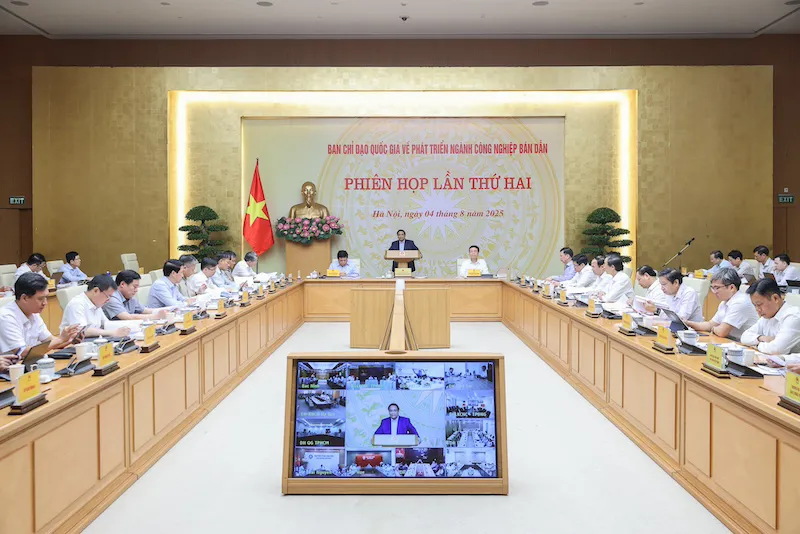
An overview of the second meeting of the National Steering Committee on the Development of the Semiconductor Industry.
Reports at the meeting show steady progress as Vietnam now has 7,000 chip design engineers, 16,000 personnel in packaging, testing, and materials manufacturing, and over 100 overseas Vietnamese experts support the National Innovation Network.
As many as 166 universities offer semiconductor majors, with 6,300 core and 12,000 related undergraduates. Nearly 20 institutions follow the state-school-enterprise training model.
In infrastructure development, Vietnamese-owned CT Group has begun expanding its chip manufacturing facility with a capacity of producing 100 million chips annually by 2027.
R&D ecosystems and international-standard cleanroom labs are also being developed in major cities. Notable examples include the VND300 billion (US$11.4 million) SHTP Labs at the Saigon Hi-Tech Park and a $5 million lab at Vietnam National University – Hanoi.
Vietnam hosts around 170 foreign direct investment projects with a total registered capital of nearly $11.6 billion in semiconductors and high-tech sectors. Major investors include Intel ($4.1 billion), Amkor ($1.6 billion), and Hana Micron ($673 million).
In chip design, nearly 50 foreign firms and over 10 Vietnamese companies (Viettel, FPT, and CMC) are active. Packaging and testing involve 14 foreign and one domestic firm, while 15 foreign companies support the semiconductor industry.
Vietnam is among 10 countries partnering with the Global Semiconductor Alliance to host an annual exhibition on semiconductors SEMICON. Local institutions are also expanding international cooperation to boost training and research.