Vietnam, UK bolster economic ties through market principles
With its strong political will, market reforms, and adherence to global standards, Vietnam offers UK firms a compelling environment for innovation and growth.
THE HANOI TIMES — Vietnam’s Prime Minister Pham Minh Chinh stressed the importance of connecting the two economies through market-driven collaboration and mutual benefits.
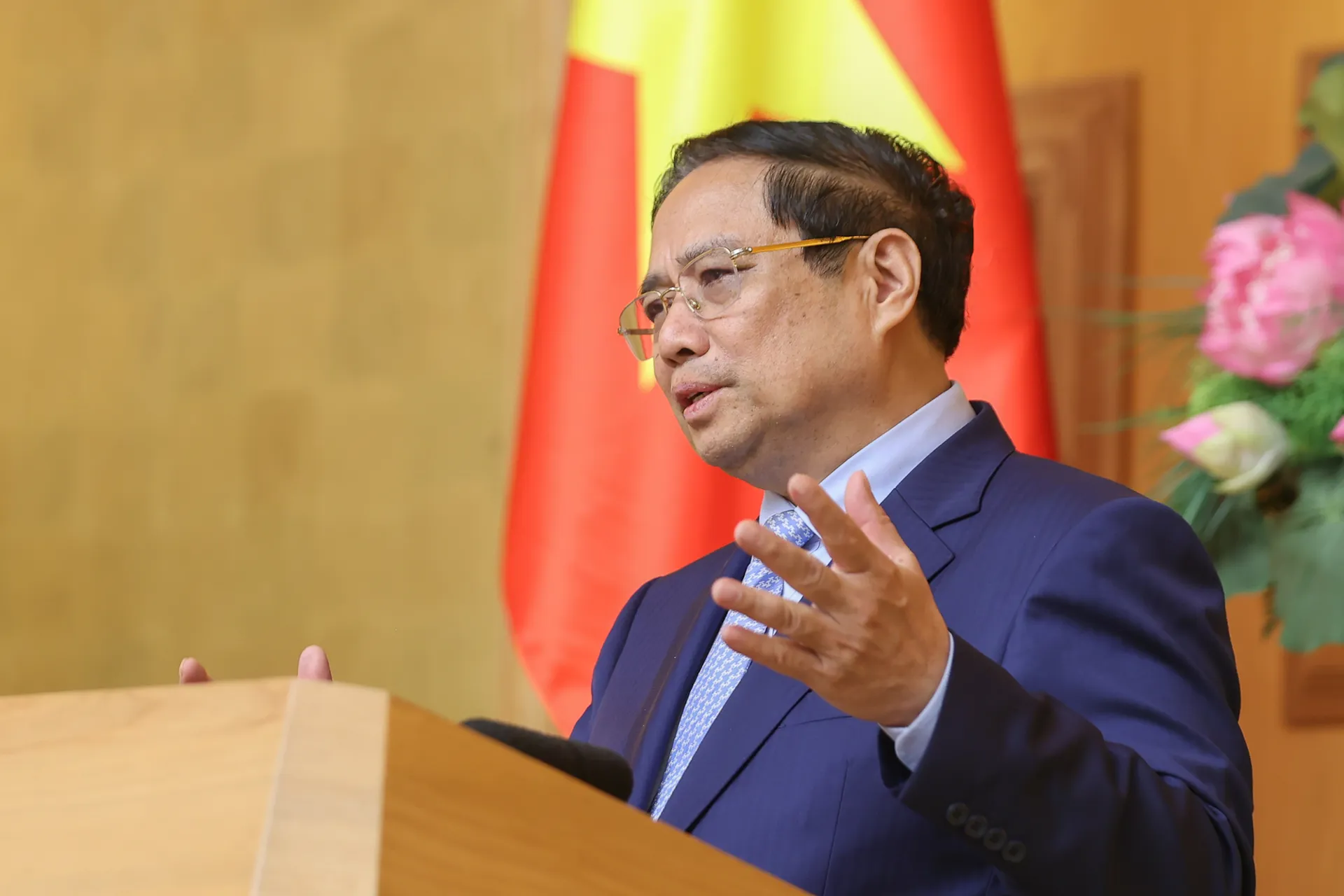
Vietnam’s Prime Minister Pham Minh Chinh at the high-level dialogue with UK firms in Hanoi on June 28. Photos: VGP
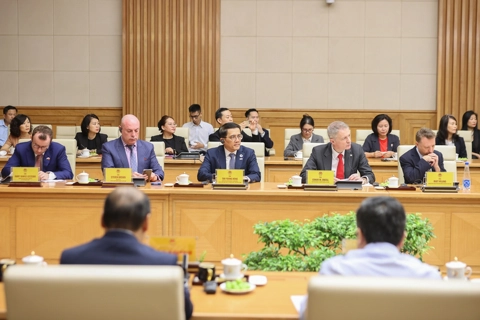
Chinh highlighted the idea at the high‑level dialogue with leaders of 25 UK firms at the Government Headquarters in Hanoi today [June 28].
He reiterated Vietnam’s ambition to strengthen bilateral trade and investment to exceed US$10 billion, amid robust discussions on policy, sustainability, innovation, and long-term collaboration.
“Vietnam continues building a market‑based business environment that respects the legitimate rights and interests of foreign investors,” said Prime Minister Chinh, inviting UK firms to tap into Vietnam’s evolving economy, particularly in green finance and digital transformation.
Chinh also emphasized the importance of the UK-Vietnam Free Trade Agreement (UKVFTA) and the Comprehensive and Progressive Agreement for Trans-Pacific Partnership (CPTPP) as the foundation for future cooperation.
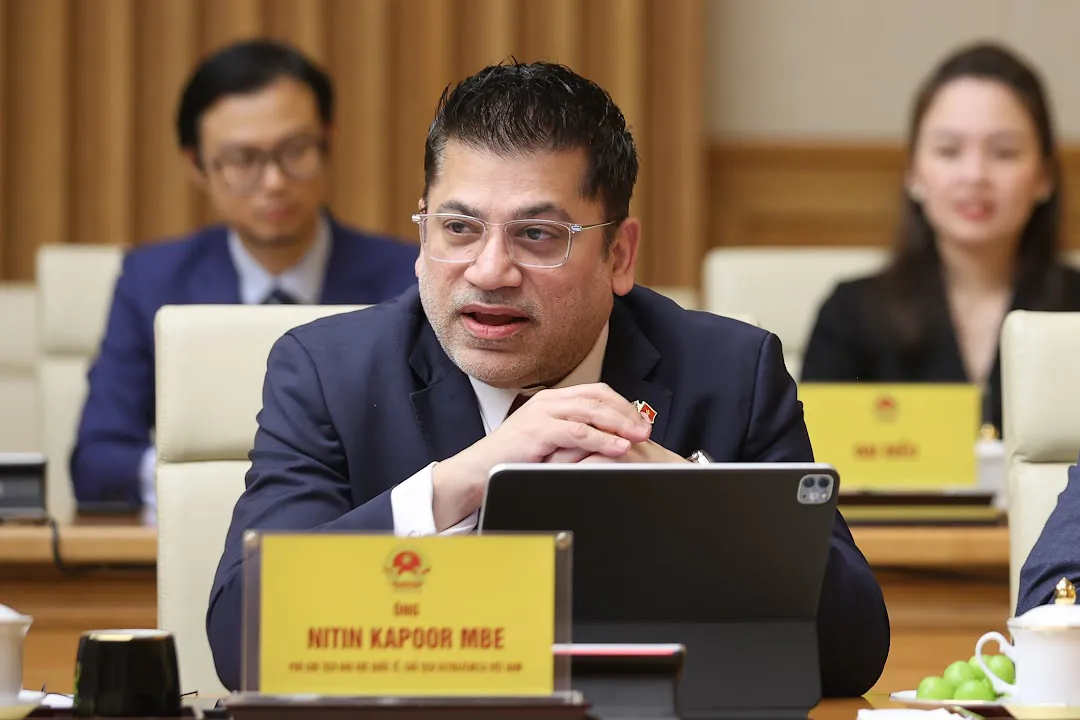
Nitin Kapoor, Vice President, International & Vaccine Immunology and Chairman of AstraZeneca Vietnam.
UK firms reaffirm long‑term commitment
At the meeting, Nitin Kapoor, AstraZeneca Vietnam’s Vice President of International and Vaccine Immunology, opened by saying: "We are deeply grateful to Prime Minister Pham Minh Chinh, as this exchange has strengthened our belief in Vietnam’s vision and partnership potential."
He reaffirmed AstraZeneca’s long‑term pledge to Vietnam’s healthcare sector, including vaccine development and R&D initiatives.
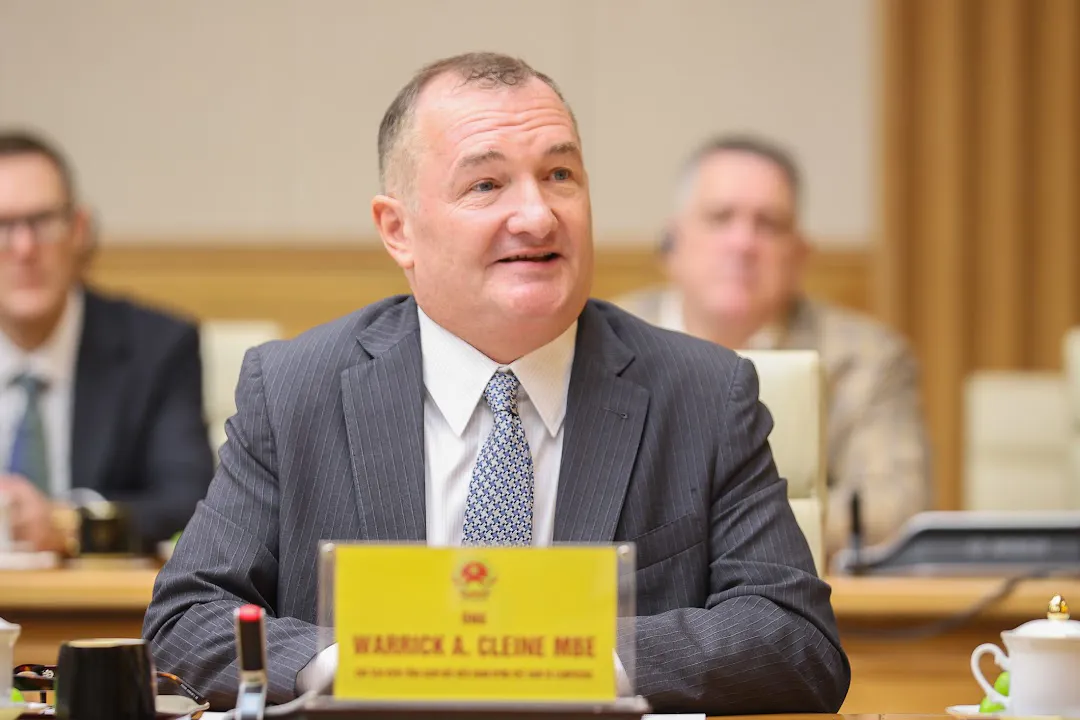
Warrick A. Cleine, Chairman of the British Chamber of Business in Vietnam and CEO of KPMG Vietnam.
Warrick A. Cleine, Chairman of the British Chamber of Business in Vietnam and CEO of KPMG Vietnam, underlined Vietnam’s potential to become a financial hub: “The international financial center will strategically elevate Vietnam’s green finance and capital markets.” He urged Vietnam to adopt international standards such as international financial reporting standards (IFRS) and environmental, social, and governance (ESG) to strengthen íts global competitiveness.
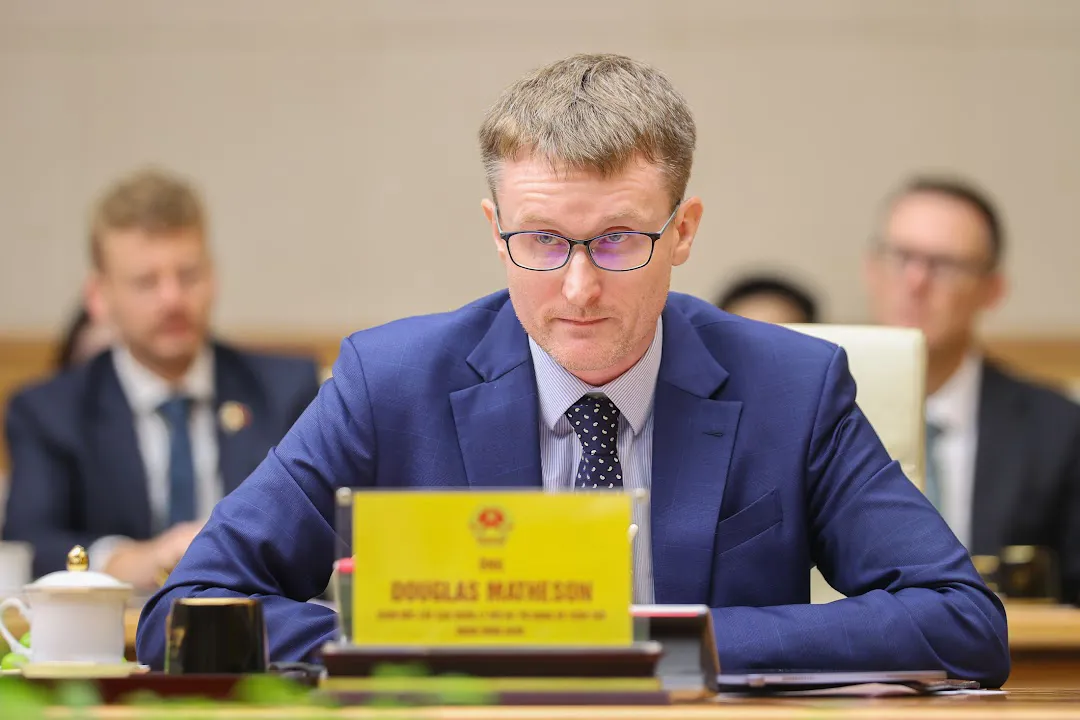
Douglas Matheson, HSBC Vietnam’s Director of Risk and Compliance.
Douglas Matheson, HSBC Vietnam’s Director of Risk and Compliance, backed this agenda: “Vietnam’s stable macroeconomic environment makes it a prime destination for investment.”
Matheson announced that HSBC plans to allocate $12 billion to sustainable projects by 2030, with $2.2 billion secured in 2024.
Six breakthroughs agenda
The highlight of the meeting was the prime minister’s call for UK firms to join six "breakthroughs, "including stronger economic ties, advanced technologies such as AI and blockchain, green energy mobilization, health sector collaboration, digital transformation, and talent development.
The prime minister emphasized a harmonious, risk-sharing partnership model and committed to expediting administrative procedures for the mutual recognition of qualifications and licensing. He reiterated that Vietnam will keep refining legal frameworks and easing procedures to support foreign investment.
Regarding Vietnam's strategic priorities in green finance and energy, UK businesses expressed strong interest in scalable, climate-aligned investments using blended finance and supportive policy frameworks.
Fintech, digital infrastructure, and AI-driven platforms were identified as priority areas for cooperation between UK innovators and Vietnamese partners.
Another field of strategic partnership is healthcare and human capital. Investments will be made in vaccine production, medical training, and capacity building to reinforce Vietnam’s ambition to become a regional healthcare hub.
Meanwhile, both sides acknowledged the importance of trade facilitation. UK executives recommended reducing regulatory inconsistencies and harmonizing cross-border processes to enhance supply chain efficiency and streamline trade flows.
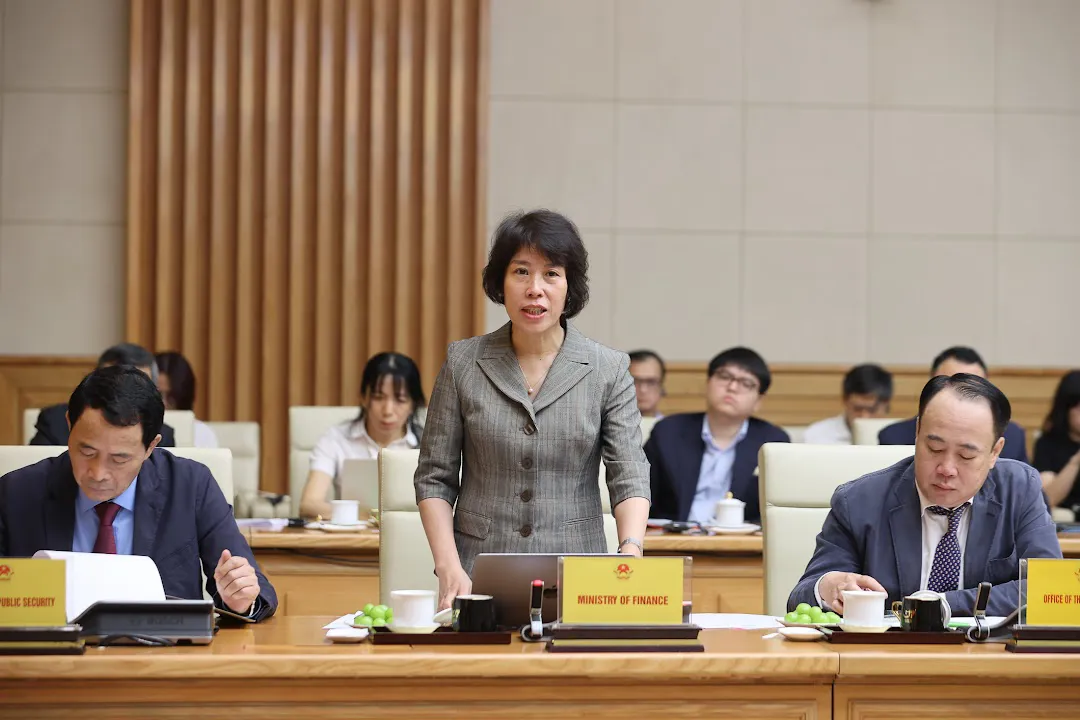
Deputy Minister of Finance Nguyen Thi Bich Ngoc speaks at the event.
Representing the Vietnamese government, Deputy Minister of Finance Nguyen Thi Bich Ngoc reiterated the country’s determination to develop international financial centers in Ho Chi Minh City and Danang, emphasizing the integration of green finance and ESG-oriented products.
“We are developing financial centers in Ho Chi Minh City and Danang, with a focus on incorporating green and ESG products,” she said.
She expressed openness to UK expertise in drafting eight forthcoming decrees to guide these centers while firmly cautioning against establishing a “tax haven.”
Deputy Minister of Industry and Trade Nguyen Hoang Long discussed the prospect of bilateral trade reaching US$10.9 billion in 2024, offering insight into securing additional capital sources through financial centers.
Douglas Matheson from HSBC said that sustainability is central to Vietnam’s development trajectory. He added, “Sustainable development is key to a prosperous, equitable Vietnam, linking economic growth with environmental health.”
He hailed Vietnam’s National Green Growth Strategy and Power Development Plan VIII, which aims for 6,000 MW of offshore wind capacity by 2030.
Le Thi Hong Nhi, Deputy CEO of Unilever Vietnam, highlighted corporate initiatives supporting circular economy efforts. “We’ve recycled 30,000 tons of plastic since 2020, supporting Vietnam’s circular economy.”
Hoang Trung, the Minister of Agriculture and Environment, said that a decree on Extended Producer Responsibility (EPR) and carbon market frameworks will be drafted for implementation in 2029.
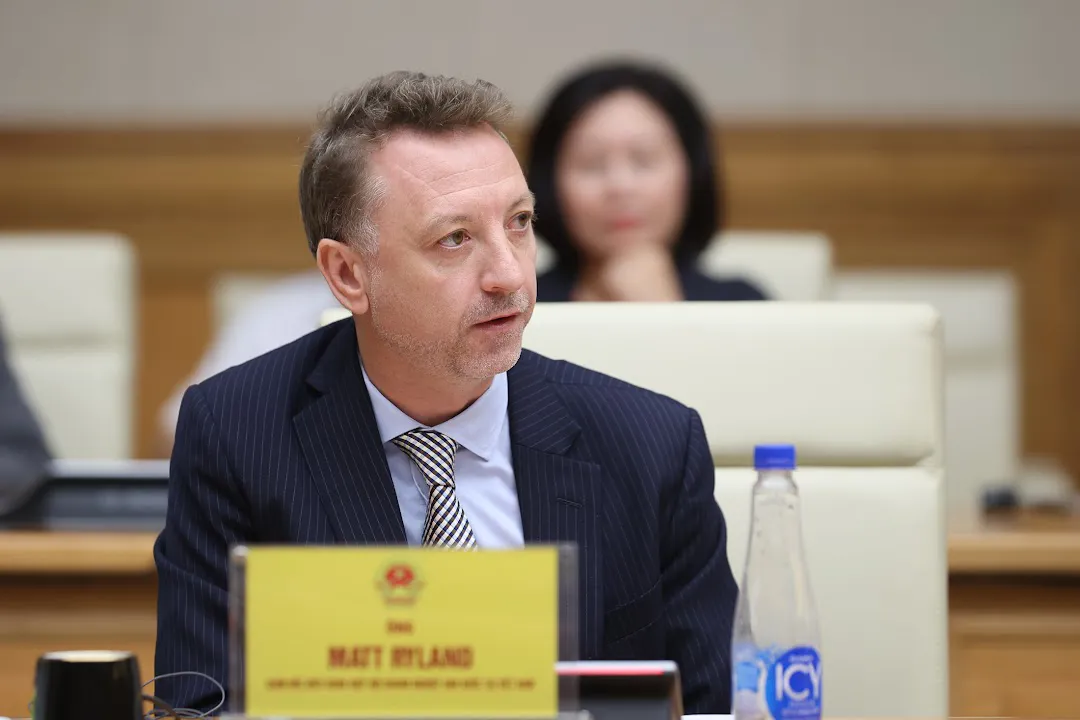
Matt Ryland, CEO of BritCham Vietnam.
Matt Ryland, CEO of BritCham Vietnam, emphasized the need for streamlined customs procedures to support green initiatives. He urged improvements at major port customs checkpoints to enhance trade efficiency.
Regarding digital transformation, Nitin Kapoor discussed AstraZeneca’s investment in healthcare digitalization, noting that the company's smart healthcare city initiative in Bac Ninh uses AI for diagnostics. Kapoor said that Vietnam’s Resolution 57 lays the groundwork for establishing a high-quality healthcare system through digital innovation.
Deputy Minister of Science and Technology Pham Duc Long welcomed UK collaboration in areas like AI, robotics, and digital certification. "We welcome UK collaboration in AI, robotics, and digital signatures as outlined in the 2023 Electronic Transactions Law."
Echoing Long, Deputy Minister of Health Nguyen Tri Thuc said that the ministry seeks UK support in digital health and green medical practices to reduce carbon emissions
In terms of education, UK firms are supporting Vietnam’s efforts to integrate English language and vocational training into the curriculum.
"UK education programs are enhancing Vietnam’s workforce through English and vocational training," said Dang Thi Thanh Truc from the Institute of Chartered Accountants in England and Wales (ICAEW) in Vietnam.
In this regard, Deputy Minister of Education Le Tan Dung said that the ministry is promoting English proficiency and welcoming UK partnerships. He praised the presence of 185 UK-affiliated schools and the 200,000 Vietnamese students studying in the UK.
To promote educational cooperation, Deputy Minister of Home Affairs Nguyen Manh Khuong announced that, starting July 1, 2025, the work permit process will be streamlined, cutting processing time from 36 to 10 days. This aims to ease the entry of UK professionals and educators.
Deputy Minister of Foreign Affairs Le Thi Thu Hang confirmed updates to consular services, which will also take effect in July 2025.
With bilateral trade reaching $10.9 billion in 2024, this high‑level dialogue sets the stage for deeper collaboration from green finance and digital innovation to healthcare, education, and trade. Both sides look forward to translating dialogue into action.