Vietnamese exporters urged to meet EU due diligence standards for sustainability
Experts call on Vietnamese exporters to adapt to the EU’s tough new due diligence laws on human rights and environmental impact, warning that non-compliance could cost them key European partners and long-term growth opportunities.
THE HANOI TIMES — Vietnamese exporters must enhance transparency, environmental responsibility and social standards to meet new due diligence regulations in European markets and remain competitive in global supply chains, heard a seminar on October 21.
According to Dau Anh Tuan, Vice Secretary-General and Head of the Legal Department at the Vietnam Chamber of Commerce and Industry (VCCI), supply chain due diligence regulations require businesses to monitor, assess and prevent risks related to human rights and environmental impacts across their supply chains.
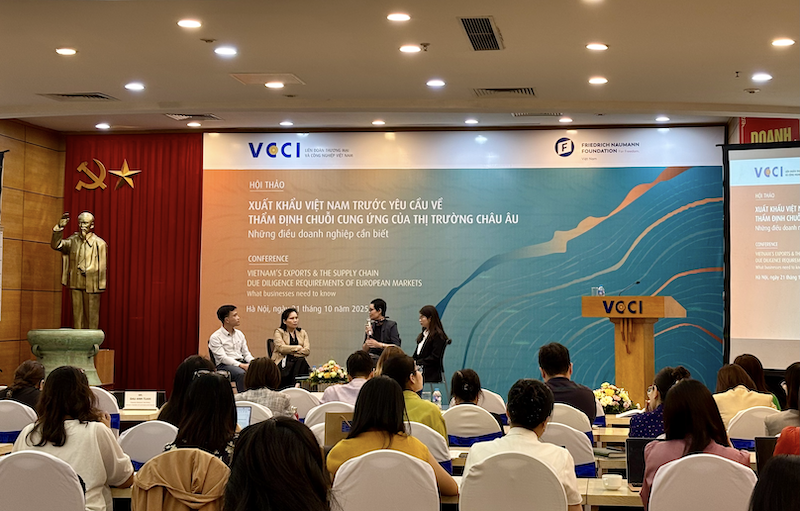
Delegates attend the seminar “Vietnam’s Exports and the Supply Chain Due Due Diligence Requirements of European Markets – What Businesses Need to Know,” held on October 21. Photo: Phi Nhat/The Hanoi Times
The regulations are now applied in several European Union (EU) member states such as Germany, France and the Netherlands, he told the seminar introducing the concept of due diligence rules to Vietnamese exporters.
Two of the most comprehensive frameworks include Germany’s Supply Chain Due Diligence Act (SCDDA) and the EU’s Corporate Sustainability Due Diligence Directive (CSDDD), Tuan said.
“These laws are among the strictest in the world, aiming to ensure responsible production and ethical trade throughout all supply chain tiers,” he said.
Although the legislation targets large European corporations, its impact reaches overseas suppliers, including Vietnamese manufacturers, raw material providers, logistics firms and exporters, Tuan noted.
“Vietnamese companies will face growing pressure to meet these standards if they want to maintain partnerships with major European buyers,” he said. “The gap between new EU policies and the readiness of Vietnamese businesses remains a serious concern.”
Experts at the seminar said Europe’s adoption of due diligence rules presents both challenges and opportunities for sustainable growth.
Vanessa Steinmetz, Country Director of FNF Vietnam, said Europe remains one of Vietnam’s key export destinations and that Vietnamese businesses must understand rapid changes in trade practices.
“Helping Vietnamese companies adapt to these new rules is vital for shaping the country’s export strategy to Europe in the coming years,” she said. “Companies that show transparency, accountability and good governance will gain stronger competitive advantages in global markets.”
According to Nguyen Thi Thu Trang, Head of VCCI’s Research Group, the EU is one of Vietnam’s top export markets, accounting for an average of 15.3% of the country’s total exports between 2015 and 2024.
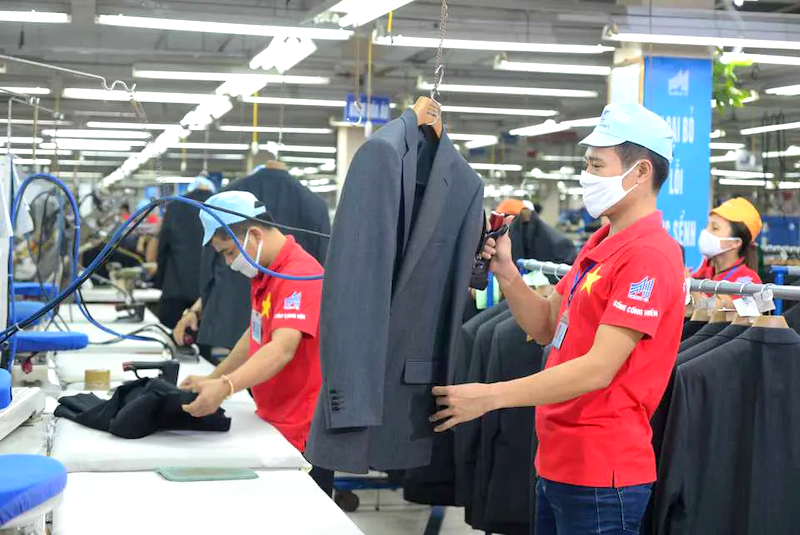
Local workers at the Garco 10 factory. Photo: Khac Kien/The Hanoi Times
In 2024 alone, Vietnam’s exports to the EU rose 18.5% year-on-year to reach US$51.7 billion, showing the bloc’s strong importance.
“The growth of exports to the EU is remarkable amid global trade uncertainties and rising tariff tensions involving the United States,” she said.
Trang noted that the EU-Vietnam Free Trade Agreement (EVFTA) continues to open major opportunities and that compliance with due diligence standards is vital to sustaining export growth.
“Textiles and footwear are among the sectors under the highest scrutiny,” she said. “These industries have complex supply chains involving many stakeholders and workers, especially women and some production stages or materials can directly affect the environment.”
For this reason, Trang said, textile and footwear producers and exporters should pay special attention to EU due diligence frameworks because non-compliance could limit market access or damage long-term reputations.
She urged Vietnamese businesses to comply fully with domestic laws on labor rights and environmental protection while preparing to meet international due diligence requirements.
“Companies should study the new rules more proactively, allocate resources for compliance and work closely with partners during the assessment process,” Trang said.
Recognizing the role of business associations and government agencies, Trang recommended stronger communication, training and early risk warnings through seminars, workshops and practical guidance to help exporters understand their obligations.
Authorities should assist companies in verifying and certifying their compliance, helping them achieve sustainable growth in high-standard markets, she said.
“When companies view due diligence and sustainability as part of their core strategy, they build trust and create long-term value,” Trang added.
Vietnamese enterprises show adaptivity
Some Vietnamese companies have already started adapting to Europe’s evolving sustainability standards.
Phan Thi Thanh Xuan, Vice Chairwoman and Secretary-General of the Vietnam Leather, Footwear and Handbags Association (LEFASO), said the EU remains a traditional and important market for Vietnam with many world-renowned brands sourcing products here.
“Each brand has strict compliance requirements and Vietnamese manufacturers must meet them. Regular audits ensure that all procedures are properly followed,” she said.
Over the past decade, more Vietnamese firms have invited third-party auditors to certify their operations and strengthen their business reputation. These certifications help build credibility and allow companies to approach international clients with greater confidence.
However, small and medium-sized enterprises (SMEs) still face major challenges, especially in understanding and applying new legal and technical requirements.
“Once the regulations take effect, the lack of professional advisory support for SMEs will be a serious obstacle because few experts are available to guide them through compliance,” Xuan said.
Sharing the same view, Hoang Manh Cam, Chief of Office of the Board of Directors of the Vietnam National Textile and Garment Group (Vinatex), said European buyers now request detailed documentation on the origin of raw materials, labor conditions and environmental management.
“At first, these requirements seem difficult because companies must invest in quality management systems and certification processes,” he said. “But once they meet these standards, they gain stronger reputations and are more likely to secure long-term contracts with European partners.”
He added that while compliance costs may seem high, they should be seen as investments rather than burdens.
“If companies treat compliance as a chance to improve governance and operations, they will become more resilient in global markets,” Cam said.