Vietnam to benefit from China’s reopening
China's border reopening will positively impact many Vietnamese enterprises' business activities.
Vietnam's exports will benefit from the reopening of Chinese borders from January 8, according to local experts.
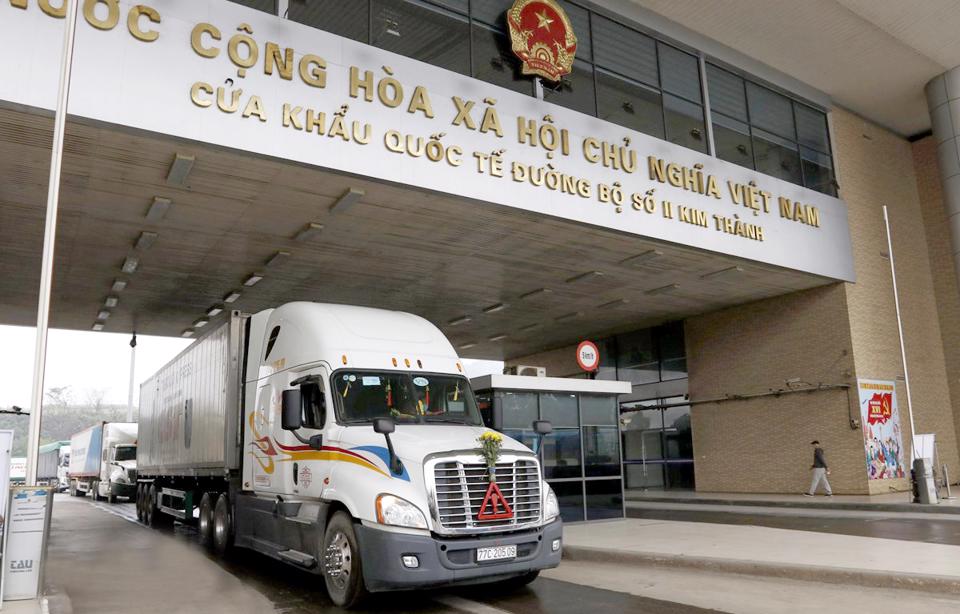
| Container trucks wait for customs clearance at Kim Thanh No.2 international border gate in Lao Cai Province. Photo: Quoc Khanh |
As China is Vietnam's largest importer, the reopening of the market in early 2023 will smooth the export of farm produce, seafood, fibers, cement, rubber, steel, textiles, and others.
General Secretary of the Vietnam Fruit and Vegetable Association Dang Phuc Nguyen said Vietnam’s businesses are looking forward to China’s reopening after a long time of strict Covid-19 restrictions.
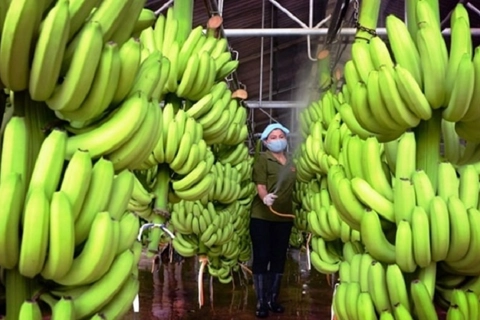
“The resumption will help shorten customs clearance of goods at border gates and seaports, especially the staples obtain “export visa” to the Chinese market like dragon fruit, passion fruit, banana, and durian,” he said.
Businesses in the cement industry also hoped that China's move would help revive construction activities, promote infrastructure investment, boost cement demand, and present more opportunities for companies to increase exports again.
The easing restrictions would also help rubber exporters remove exporting barriers while increasing export prices thanks to China's high demand for rubber to serve its tire production.
Similarly, China is the largest consumer of Vietnam’s fiber, the recovery of the market will lead to an increase in yarn demand, then help Vietnamese exporters increase revenues.
In its latest report, Agribank Securities JSC (Agriseco) noted that Vietnamese companies are expected to benefit from China reopening its doors and resuming flights between the two countries.
During China's shutdown, Vietnamese producers struggled with shortages of raw materials, rising input costs, and goods stuck at the borders.
In addition, with the reduction in freight by more than 50% compared to the beginning of 2022, the recirculation of merchandise and smooth import of raw materials will help improve the production and commercial activities of local companies.
Businesses operating in mechanical engineering, textiles, footwear, electronics, and automobiles will also capitalize on the move by China. In addition, the prices of some input materials, including iron and steel, cement, and metals, may increase again when demand recovers, said the report.
Sharing his views on export prospects, Tran Thanh Hai, the Deputy Director of the Import-Export Department under the Ministry of Industry and Trade, said the bilateral trade between December 2022 and January 2023 would surge, especially Vietnam's exports of vegetables, fruits, and seafood and rice to China are expected to increase thanks to the rising demand during the Lunar New Year.
From December 2022, China started to relax Covid-19 prevention and control measures, and the economic opening is expected to be complete in the second quarter of 2023, he added.
“In general, this will have a positive impact on many Vietnamese enterprises,” Hai emphasized.
The Ministry of Industry and Trade said that in the first 11 months of 2022, bilateral trade reached US$162 billion, compared to $165 billion in 2021. China remains Vietnam's second-largest export market behind the US.