Vietnamese farmers want greater clarity on green agricultural policies
Green farming has been identified as crucial for the sustainable development of agriculture.
New provisions in the 2024 Land Law have begun to change Vietnamese farmers' attitudes and practices regarding agriculture and land use. However, farmers, businesses, and policymakers are still grappling with the necessary framework to foster a green and sustainable agricultural model, according to local insiders.
Policies still lack a “green” focus
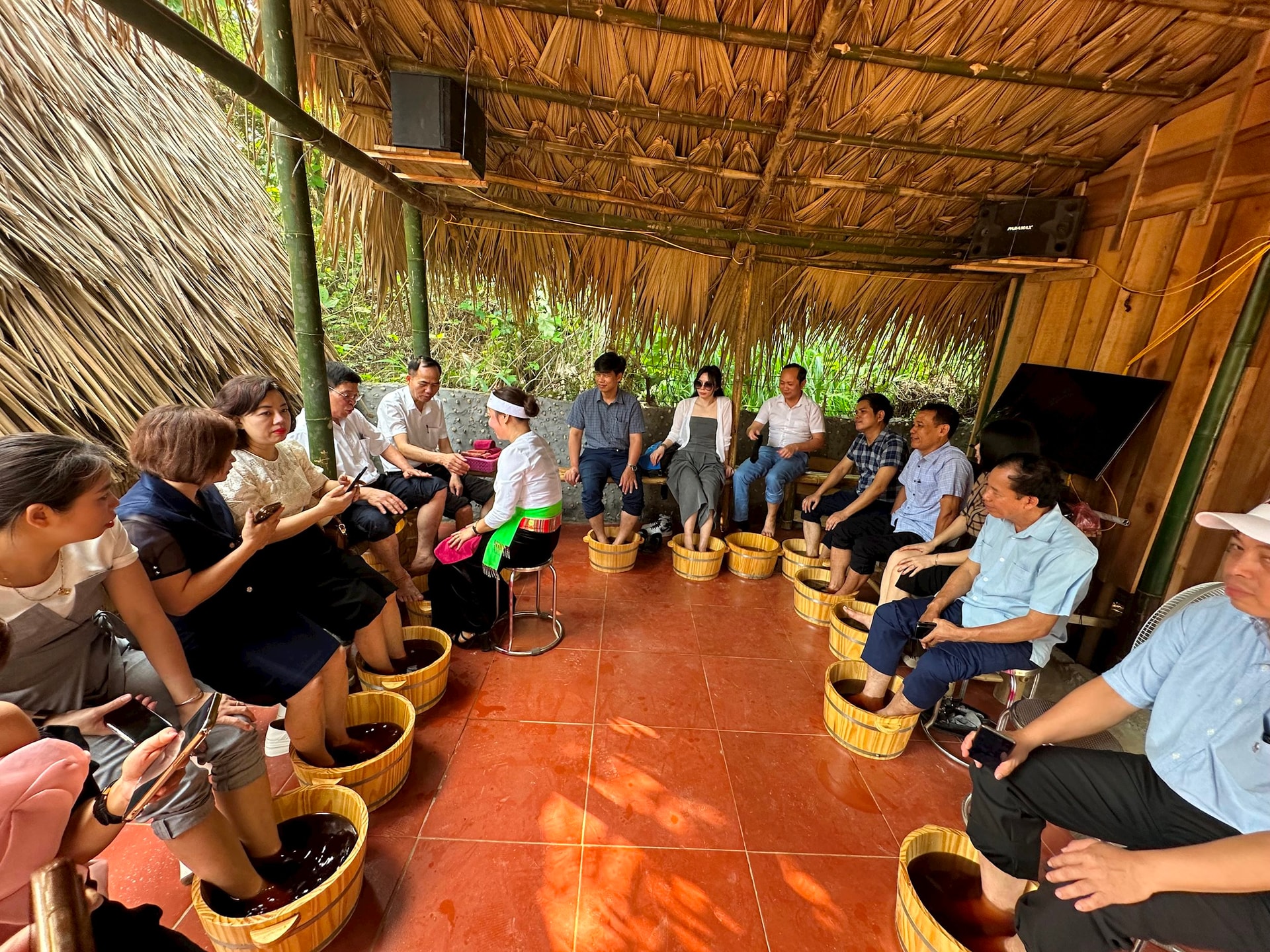
| Visitors experience a variety of activities in the Mien Village tourist area. Photo: Hanoimoi Newspaper |
In Dong Anh District, the Union of Vietnamese Herbal Medicine and Organic Agriculture Cooperative grows medicinal plants under the forest canopy, offering high economic value and helping protect forest ecosystems, Pham Thi Ly, Director of the cooperative, said.
However, there are concerns, stemming from inconsistencies in land policies, that such a practice constitutes encroachment on forest land, Ly said.
Nguyen Van Quyet of Ba Vi District said his project to develop an organic farming model combined with eco-tourism has been stalled due to the complex and lengthy land-use conversion process. He has transformed more than one hectare of agricultural land into an organic garden, accommodation and product display areas,
"There are currently no specific policies that favor my venture to develop green agriculture combined with ecotourism," he said.
Dang The Truyen, who runs an agribusiness in the south-central coastal province of Khanh Hoa, noted that many provinces and cities have not issued detailed guidelines for implementing the land law, leaving businesses to navigate the process on their own, increasing the risk of inadvertent infringements.
To boost green agriculture and sustainable ecological practices through multipurpose farming models, institutional challenges need to be addressed with a coherent set of solutions, local insiders said.
Promotion of farmland consolidation
The lush green of Amour Resort, Ba Vi National Park, Ba Vi District, Hanoi. Photo: Amour Resort |

Doan Thi Thanh My, Director of the Department of Land under the Ministry of Natural Resources and Environment (MoNRE), emphasized that the Land Law 2024 introduces significant reforms to facilitate the consolidation of agricultural land. In particular, Government Decree No. 102/2024/ND-CP, issued on July 30, 2024, outlines the process for land use planning.
Meanwhile, Dao Trung Chinh, Director of the MoNRE's Department of Land Resources Planning and Development, noted that farm ownership is no longer constrained by land use restrictions.
He added that the Land Law also facilitates the use of forest land for ecotourism and the cultivation of medicinal plants, thereby improving land use efficiency. Local authorities and relevant agencies are encouraged to develop specific support programs for landowners and agricultural cooperatives involved in tourism and related services.
Minister of Natural Resources and Environment Do Duc Duy believed the law would create opportunities for multiple land uses, particularly in agriculture, tourism and services. However, he stressed the need to balance economic goals with resource and environmental protection.
The minister said new policies should ensure strict management without discouraging innovation among citizens and businesses. Regulations on land transfer, capital contribution and consolidation must be transparent to minimize the risk of legal breaches.
To this end, collaboration among government, business and communities is essential for the Land Law 2024 to effectively support socio-economic development.
Pham Hai Hoa, Chairwoman of the Hanoi Farmers' Association: The legal framework for agricultural land transactions is urgently needed. Currently, most farmland transactions are based on informal agreements between individuals without the oversight of a coherent legal structure. This creates significant barriers for farmers and companies seeking to invest in large-scale agricultural production and directly impacts the growth of concentrated agricultural commodities. These shortcomings have hindered the progress of green and organic agriculture, a sustainable path in line with Hanoi's long-term development strategy. The challenges stem from the lack of a robust legal framework and delays in policy implementation, while existing regulations do not effectively encourage land consolidation. Comprehensive and practical solutions are needed to address these issues. Immediate steps should focus on refining the legal framework to facilitate agricultural land transactions and prioritizing policies that encourage land accumulation. Economist Dinh Trong Thinh: Danger of "cheap land acquisition The risks of allowing organizations and individuals not directly involved in agriculture to purchase farmland must be controlled. This policy offers great opportunities for attracting investment and promoting large-scale production. However, in the absence of specific regulations and laws, there is a chance that individuals will buy land at low prices and then change the use of the land to make high profits. Establishing a warning system and clear policies is essential to prevent speculation in agricultural land. Left unchecked, these practices could undermine the sustainability of agriculture and hinder the production efforts of genuine farmers. Conversely, overly strict land policies can hinder support for businesses and cooperatives, resulting in fragmented farmland that fails to deliver on its potential value. Trieu Thi Lan Huong, Director of Mien Village, a community-based tourism in Ba Vi District: persistent shortcomings in ecological agriculture support mechanisms While sustainable practices are encouraged, navigating the bureaucratic processes for converting agricultural land for tourism purposes remains challenging and time-consuming. In addition, most organic farmland is located in the suburbs, where transportation and support services are poor. Without government investment or incentives, farms struggle to operate profitably. Policies should prioritize low-interest loans, technical training, and streamlined land use procedures, along with specific and flexible guidelines for integrated models that combine organic production with tourism services. |