14TH NATIONAL CONGRESS OF THE COMMUNIST PARTY OF VIETNAM
Log in
Business

Border trade needs preferential policies to attract investment

Localities should prioritize public investment in the infrastructure of transport, electricity, water, and telecommunications.

Preferential mechanisms and policies will be key factors to attract the domestic and foreign industrial enterprises' investment in border areas, with a focus on promoting cross-border trade, combating smuggling and trade fraud, and creating a healthy environment.

It is one of the measures given by Minister of Industry and Trade Nguyen Hong Dien at a related conference held on August 16 in Hanoi to tap into the potentials of border trade in the coming time.

 An overview of the conference on August 16. Photo: TTXVN

Minister Dien stated economic policies for development in border areas should take into account the neighboring 1.5 billion people Chinese market, the ASEAN market, and the countries signing free trade agreements with Vietnam. 

Therefore, he underlined localities should prioritize public investment in the infrastructure of transport, electricity, water, telecommunications, upgrade and open new pairs of border gates to facilitate business and cross-border exchanges with bordering countries. 

Vietnam should select large-scale export products to the Chinese market, then plan growing areas, and promote commercial infrastructure compatible with the border area, she emphasized.

Tran Anh Thu, Vice Chairman of the An Giang Provincial People's Committee, raised the issue of actively integrating transport infrastructure between the central and local area and building connections to border-gate economic corridors across the country. It is necessary to consider the border gate economic zone at the regional level, he said.

According to the Asia-Africa Market Department under the Ministry of Industry and Trade, up to now, 26 border-gate economic zones have been established in areas sharing borders with Laos, Cambodia, and China.

Some 267 industrial clusters are operating in border economic areas nationwide in a total area of nearly 8,800ha. Le Hoang Oanh, Director General of the Department said, however, the economic development in border areas still faces many difficulties.

"The economic structure in the border area is still based on agriculture, there is no centralized production area, no standards, traceability, branding, and no production-consumption chain," she said.

Industrial production has not yet created key products and has weak competitiveness."

Border trade turnover in 2020 reached US$30 billion, accounting for only 5.5% of the country's total trade revenue in general and of the total trade turnover with China, Laos, and Cambodia (21.5%). The border trade infrastructure has been insufficient to tap into the potential.
Reactions:
Share:
Trending
Most Viewed
Related news
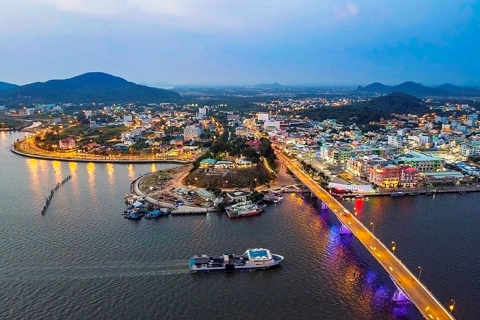
Mong Cai to become national key border-gate EZ by 2040

Mong Cai to become national key border-gate EZ by 2040

19 Mar, 09:23

The Mong Cai border-gate economic zone will become a green, modern and sustainable coastal town, an area with a strategic and important position in terms of security and defense of the Red River delta and the country.

Vietnam commits 3% budget to turbocharge AI and data economy

Vietnam commits 3% budget to turbocharge AI and data economy

At least 3% of state budget spending will fund digital transformation, accelerating Vietnam’s shift toward a data-driven and AI-powered economy.

From labor-intensive to high-tech: Hanoi retrains for global edge

From labor-intensive to high-tech: Hanoi retrains for global edge

Raising the skill standards of high-tech workers is emerging as a decisive factor in strengthening Hanoi’s competitiveness as the capital accelerates its shift toward a knowledge-based industrial economy.

Hanoi craft villages resume production early, aiming for growth in 2026

Hanoi craft villages resume production early, aiming for growth in 2026

After the Lunar New Year break, Hanoi’s traditional craft villages have quickly resumed production, fulfilled orders and prepared for new markets while blending heritage craftsmanship with modern technology to strengthen competitiveness and sustain growth in 2026.

Vietnam stock market poised for post-Tet gains

Vietnam stock market poised for post-Tet gains

The post-Tet period often presents attractive opportunities for investors in the following months.

Spring Fair draws 500,000 visits, elevates Vietnamese brands nationwide

Spring Fair draws 500,000 visits, elevates Vietnamese brands nationwide

Drawing large crowds and strong commercial momentum, the 2026 Spring Fair turned Hanoi into a vibrant showcase of Vietnamese products, culture and innovation, where shopping met heritage experiences and businesses forged valuable partnerships.

Firms seek clearer policy framework for new tech, digital platforms

Firms seek clearer policy framework for new tech, digital platforms

Hanoi’s tech firms are calling for clearer demand mechanisms and transparent evaluation as the city pilots its Technology Exchange and Digital Transformation Market to boost commercialization, innovation and digital growth.

Vietnam Airlines to open first nonstop Hanoi-Amsterdam route to enhance Europe ties

Vietnam Airlines to open first nonstop Hanoi-Amsterdam route to enhance Europe ties

The move aims to open a new gateway to Europe and advance the national flag carrier’s strategy to expand its European network.

Vietnamese goods reach rural areas through Tet fairs

Vietnamese goods reach rural areas through Tet fairs

Hanoi is intensifying communication and outreach for the “Vietnamese people prioritize using Vietnamese goods” campaign to boost consumption ahead of Tet, the country’s most important holiday.