Vietnamese students win Global AI Awards for inclusive innovation
Projects from Vietnam honored at the Intel AI Global Impact Festival 2025 highlight young innovators using artificial intelligence to promote accessibility and social inclusion.
THE HANOI TIMES — Vietnamese students have won top honors at the 5th Intel® AI Global Impact Festival, joining peers from India, the US, Moldova, Singapore and China as the world’s next generation of technology innovators.
This year’s global winners come from 32 countries, recognized for using artificial intelligence (AI) to solve real-world challenges, US chipmaker Intel said on October 23.
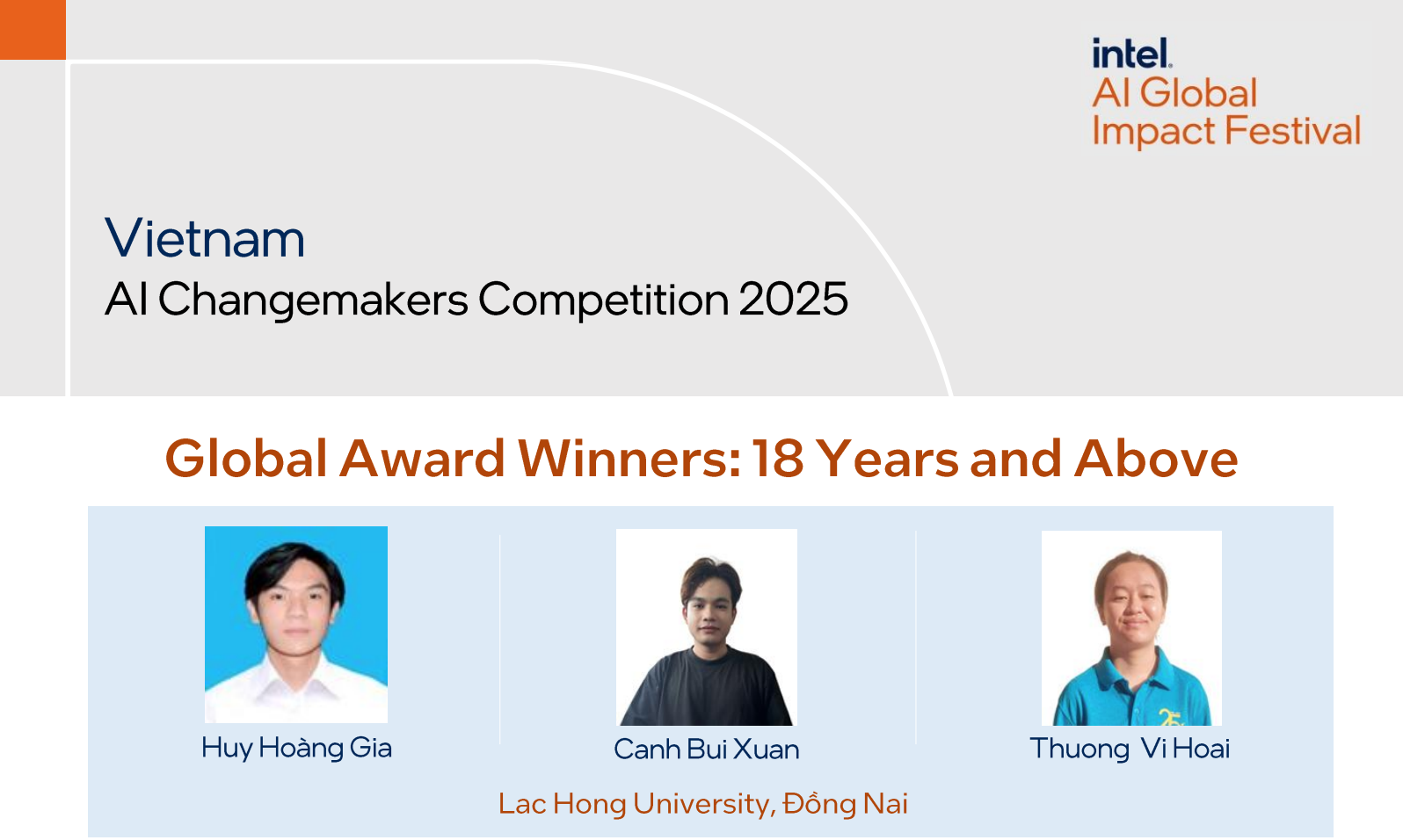
Three students from Lac Hong University (Hoang Gia Huy, Bui Xuan Canh and Vi Hoai Thuong) win a Global Award for their project Your Voice. Photo: Intel
According to Intel, the winners were evaluated on AI innovation, responsible technology use and social impact. Intel technologists also audited their AI ethics to ensure the solutions met the highest standards of responsible AI development.
Vietnam stood out this year as one of the few countries receiving both global and regional awards, highlighting the growing strength of its young talent in technology and STEM education.
In the 18+ category, Hoang Gia Huy, Bui Xuan Canh and Vi Hoai Thuong from Lac Hong University in the southern province of Dong Nai won a Global Award for their project Your Voice.
Their project is an AI-powered application that breaks communication barriers by translating Vietnamese Sign Language (VSL) to text or speech and vice versa in real time using computer vision and animated avatars.
The solution promotes social inclusion and supports more than 2.5 million deaf and mute people by providing accessible, two-way communication tools. Each student received a US$2,000 prize from Intel.
In the 13–17 age group, Ha Ngo from Lam Son High School for the Gifted in Thanh Hoa Province and Phuc Phan from Le Hong Phong High School for the Gifted in Ho Chi Minh City earned a Regional Award for Hap.
Hap is a system that combines smart glasses and a neck-mounted haptic device using YOLOv8 and OpenVINO to translate detected objects into directional vibrations.
Designed for young adults, Hap offers intuitive, silent and screen-free navigation, helping people with blindness gain confidence and independence. Each student received a US$1,000 prize.
These achievements highlight Vietnam’s growing role in the global AI field and reflect the results of Intel’s digital readiness and STEM education programs across the region.
Kimberly Mayes, Intel’s Vice President of Strategic Talent, Inclusion, Engagement and Corporate Social Impact, said AI continues to redefine innovation, with young technologists leading this transformation.
“These young innovators are shaping the future by solving real-world problems through AI,” she said. “With fresh perspectives, technical agility and commitment to ethical innovation, they are driving progress across industries. The future of innovation depends on their curiosity, courage and critical thinking.”
To date, Intel has provided AI skills training to more than eight million people worldwide through partnerships with 29 governments and 27,000 educational institutions, reinforcing its commitment to advancing responsible AI for all.