Business
Vietnam’s agricultural processing sector remains at modest level
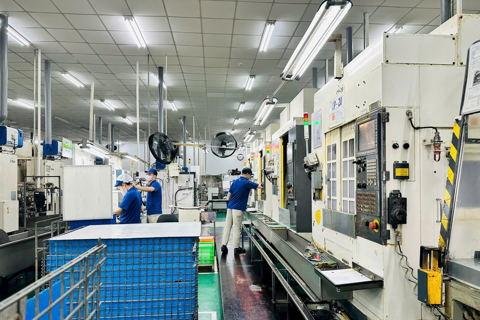
Technologies used in the processing sector is at a modest level compared to regional peers and the world, many of which have not been upgraded in 15 years, said an expert.
Vietnam’s agricultural processing sector remains at a modest level in terms of technologies and product quality, according to Le Thi Bich Thu, expert at the Department of Agro Processing and Market Development (Agrotrade) under the Ministry of Agricultural and Rural Development (MARD).
“Nevertheless, the development of the agricultural processing sector helped transform the structure of Vietnam’s agriculture towards modernization and large scale production,” Thu said at a conference discussing the potential of the agricultural processing sector in Vietnam on September 20.
As of present, Vietnam has over 7,500 export-oriented agricultural processing companies and thousands of similar facilities owned by business households, employing 1.6 million laborers with an average monthly income of VND5 – 7million (US$215-300).
Vietnam now ranks second in Southeast Asia and 15th globally in terms of farm exports, making the country’s agricultural products available in more than 180 countries and territories, including demanding markets such as the US, Japan, EU, and South Korea, among others.
Vietnam’s export growth of farm produce averaged 9% per year over the last 10 years, reaching a record high of US$40.02 billion in export turnover in 2018.
“However, the agricultural sector, particularly the agricultural processing, is facing a turning point during the process of development,” Thu added.
According to Thu, most enterprises have not been able to fully control their source of raw materials, both in terms of quantity and quality, leading to weak linkages during phases of the production value chain.
More importantly, technologies used in the processing sector is at a modest level compared to regional peers and the world, many of which have not been upgraded in 15 years, Thu informed.
“This results in 70 – 80% of agricultural products having low added value, while those with high added value make up 15-30% of the total,” Thu added.
Lack of support from government’s policies
Thu attributed the lack of movement in Vietnam’s agricultural processing sector to inefficient policies and low incentives for investors in the field, particularly with regulations regarding land, financing, technology and science.
Another issue is the low corporate governance capability in most enterprises, as the number of trained and skilled employees account for small proportion out of total workforce in the sector.
Vu Huy Phuc from the Institute for Policy and Strategy for Agriculture and Rural Development (IPSARD) said for many years, the expansion of the agricultural processing sector has relied on factors such as low labor cost and natural resources, instead of applying technologies.
“The government should come up with breakthrough policy to bring substantial change to the sector,” Phuc suggested.
As Vietnam is pushing for deeper integration in the world’s economy, potential for the sector’s development is huge, Phuc added.
In 2015, the global market size of the food processing industry stood at US$6.3 trillion and is on track to reach US$7.7 trillion in 2020 with an annual growth rate of 1.9% in the 2015 – 2020 period.
However, these projections might not be accurate as Vietnam is one of the top 10 most vulnerable countries to climate change, according to an assessment from the World Bank, coupled with a strong volatility of the global market.
For Vietnam to join the 15 most advanced countries in agriculture by 2030, Phuc expected the agricultural processing sector to contribute over 30% of the sector’s GDP.
Additionally, the annual growth rate in value of processed agricultural products is planned to reach 7 – 8% with 50% of companies producing major agricultural products applying modern technologies.
Phuc suggested Vietnam should focus on providing the necessary environment for the development of major agricultural corporations, capable of competing in regional and world stage.

Overview of the conference. Source: Nguyen Tung.
|
As of present, Vietnam has over 7,500 export-oriented agricultural processing companies and thousands of similar facilities owned by business households, employing 1.6 million laborers with an average monthly income of VND5 – 7million (US$215-300).
Vietnam now ranks second in Southeast Asia and 15th globally in terms of farm exports, making the country’s agricultural products available in more than 180 countries and territories, including demanding markets such as the US, Japan, EU, and South Korea, among others.
Vietnam’s export growth of farm produce averaged 9% per year over the last 10 years, reaching a record high of US$40.02 billion in export turnover in 2018.
“However, the agricultural sector, particularly the agricultural processing, is facing a turning point during the process of development,” Thu added.
According to Thu, most enterprises have not been able to fully control their source of raw materials, both in terms of quantity and quality, leading to weak linkages during phases of the production value chain.
More importantly, technologies used in the processing sector is at a modest level compared to regional peers and the world, many of which have not been upgraded in 15 years, Thu informed.
“This results in 70 – 80% of agricultural products having low added value, while those with high added value make up 15-30% of the total,” Thu added.
Lack of support from government’s policies
Thu attributed the lack of movement in Vietnam’s agricultural processing sector to inefficient policies and low incentives for investors in the field, particularly with regulations regarding land, financing, technology and science.
Another issue is the low corporate governance capability in most enterprises, as the number of trained and skilled employees account for small proportion out of total workforce in the sector.
Vu Huy Phuc from the Institute for Policy and Strategy for Agriculture and Rural Development (IPSARD) said for many years, the expansion of the agricultural processing sector has relied on factors such as low labor cost and natural resources, instead of applying technologies.
“The government should come up with breakthrough policy to bring substantial change to the sector,” Phuc suggested.
As Vietnam is pushing for deeper integration in the world’s economy, potential for the sector’s development is huge, Phuc added.
In 2015, the global market size of the food processing industry stood at US$6.3 trillion and is on track to reach US$7.7 trillion in 2020 with an annual growth rate of 1.9% in the 2015 – 2020 period.
However, these projections might not be accurate as Vietnam is one of the top 10 most vulnerable countries to climate change, according to an assessment from the World Bank, coupled with a strong volatility of the global market.
For Vietnam to join the 15 most advanced countries in agriculture by 2030, Phuc expected the agricultural processing sector to contribute over 30% of the sector’s GDP.
Additionally, the annual growth rate in value of processed agricultural products is planned to reach 7 – 8% with 50% of companies producing major agricultural products applying modern technologies.
Phuc suggested Vietnam should focus on providing the necessary environment for the development of major agricultural corporations, capable of competing in regional and world stage.