Vietnam’s banking sector set to turn the corner in 2024
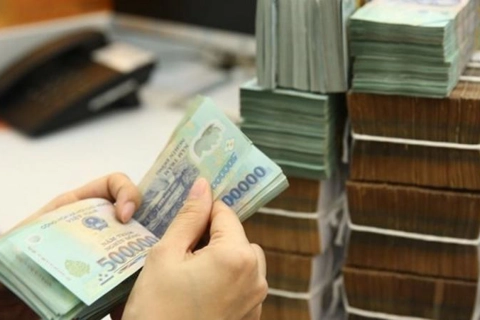
The fact that the Vietnamese dong depreciated by a modest 2.9% year on year in 2023 indicated high stability and improved foreign exchange reserves compared to the end of the previous year.
| The Vietnamese dong remains stable in 2023 despite various challenges. Photos: Pham Hung/The Hanoi Times |

Challenges remain significant
Since the end of the third quarter of 2022, key indicators such as interest rates and exchange rates in Vietnam have experienced significant fluctuations. The transition to 2023 was more challenging due to domestic and international macroeconomic impacts. The uneven economic recovery across countries, high inflation, tightening financial conditions, supply chain disruptions, and projected risks in many countries, including advanced economies, created a complex environment. The US Federal Reserve's commitment to continue raising interest rates in 2023 added to the challenges of monetary policy management in countries worldwide, including Vietnam.
The strong US dollar had negative repercussions on the currencies of many nations, causing them to depreciate significantly. Vietnam was not exempt from this trend, as the USD/VND exchange rate experienced sharp increases at times due to the low-interest rate differential between the USD and VND in the interbank market, leading to speculative exchange rate activities and foreign capital outflows.
In response to the complex and unpredictable global situation, particularly the pressure of soaring inflation and the appreciation of key currencies, the State Bank of Vietnam (SBV) ensured effective and flexible management of its monetary policy, which was coordinated with fiscal policies and other macroeconomic measures. This proactive approach contributed to timely policy adjustments, shifting from "tightening" to "loosening and flexibility."
The SBV closely monitored the available capital of commercial banks to ensure prompt and smooth absorption and injection of funds. Active management of the exchange rate through foreign exchange reserves and the selling of the US dollar in 2023 helped maintain exchange rate stability throughout a challenging year.
With controlled low inflation and a manageable inflation outlook, SBV implemented four interest rate reductions (ranging from 0.5% to 2.0% per year) and lowered lending interest rates by over 2% compared to the end of the previous year, bringing them back to pre-Covid-19 levels.
"Despite the global rise in interest rates, the SBV has been very bold in adjusting interest rates four times to help lower average market rates," stated SBV Governor Nguyen Thi Hong.
As for the exchange rate, the Vietnamese dong depreciated by a modest 2.9%, indicating high stability and improved foreign exchange reserves compared to the end of the previous year. “These positive points contributed to the upgrade of Vietnam's credit rating in 2023,” added Hong.
"It can be said that the effectiveness of exchange rate management is appropriate to Vietnam's conditions. Over the past two years, the global economy has undergone major shocks, and in my opinion, the more flexible exchange rate management has helped Vietnam weather these shocks," remarked Janet Yellen, the US Secretary of the Treasury.
| A banker at HDBank's branch in Hanoi. |

Remaining vigilant to potential risks
Looking ahead to 2024, both the global and domestic economies are expected to continue facing numerous challenges and difficulties. Experts acknowledge that inflationary pressures in 2024 are not excessive and remain at manageable levels, but emphasize the need to remain vigilant to potential risks.
The financial and monetary markets have experienced a state of "stability in uncertainty," but there are still significant latent risks. The domestic non-performing loan (NPL) ratio surpassed 3% (reaching 3.56%) by the end of July. The overall NPL ratio, including on-balance sheet NPLs, NPLs sold to the Vietnam Asset Management Company (VAMC) yet to be resolved, and potential hidden risks, stood at 5.22% for the entire banking system at the end of July 2023.
The issuance of SBV’s Circular 02 in 2023 regarding the debt structure and debt rescheduling, which will expire in June 2024, is expected to exert significant pressure on the financial situation of commercial banks.
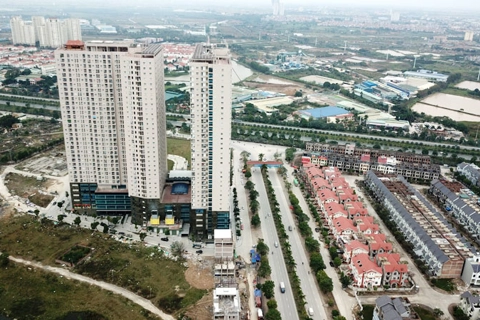
Simultaneously, the real estate market remains sluggish, harboring potential risks. Many projects are unable to proceed, negatively impacting various sectors of the economy. This poses considerable challenges to the management of financial and monetary policies, as well as the supervision of the financial market in Vietnam.
The SBV stated that interest rates have decreased significantly, currently lower than pre-Covid-19 levels for many years. This reduction serves as a fundamental factor for a strong flow of credit into the economy.
Moreover, the SBV has taken a proactive stance and introduced new mechanisms for credit management. Starting from January 1, 2024, the credit limits for all credit institutions are set at 15% (equivalent to VND2,000 trillion or $81.5 billion), instead of quarterly or periodic allocations as in previous years. This allows credit institutions to proactively supply capital to the economy.
The SBV officials reiterated that in 2024, lending rates will be continuously reduced, a credit will be directed to production and business sectors, while credit in areas with potential risks will be tightly controlled, to reduce, NPLs to below 3%.
Circular 02 on debt restructuring will expire on June 30. If necessary, within the three months before the circular expires, the SBV will consider extending it to alleviate difficulties for the economy and businesses.
The entire banking industry is expected to effectively implement the plans for dealing with weak credit institutions by carrying out the restructuring of commercial banks. The collaboration with the owners of non-bank weak credit institutions in guiding the construction and approval of restructuring plans will be emphasized.
"2024 will be a year of more determined action for the banking industry to achieve the set operational goals," said Hong.
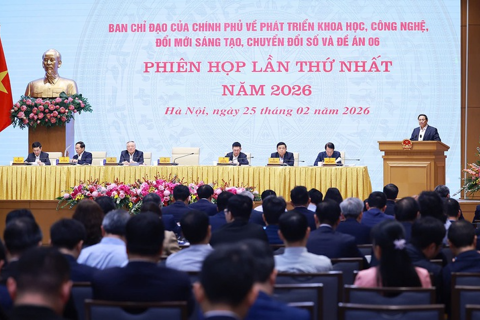
To successfully achieve the goals and tasks set for 2024 and the 2021-2025 period, Prime Minister Pham Minh Chinh urged the SBV and the entire banking sector not to let the government be passive or surprised by monetary policies. He emphasized the importance of maintaining a smooth cash flow, ensuring that people and businesses do not lack capital when they need it, and preventing negativity, corruption, or loopholes in the management of the banking system.
As the backbone of the economy, the tasks and requirements for the banking sector in 2024 and beyond are very high and challenging. However, the Prime Minister believes that the banking sector will continue to leverage its achievements, overcome difficulties and challenges, and strive to excel in accomplishing the tasks for 2024, surpassing the results of 2023.