Business
Vietnam's Industry 4.0 challenge is human resources
Vietnamese scientists and engineers tend to excel in the fields of mathematics and computer science, which require little capital to set up a laboratory.
Vietnam's Industry 4.0 challenge is the human resources, local media cited a recent article by the Singapore-based RSIS International Research School.
The article said that Vietnam's human resources are lagging behind other ASEAN countries and Vietnam has no clear policy or priority for science and technology.
Although Vietnam has a large number of scientists and engineers, qualification is still an issue. Vietnam is lagging behind other ASEAN countries in the rankings of research institutions and universities. Vietnamese scientists and engineers tend to excel in the fields of mathematics and computer science, which require little capital to set up a laboratory, according to the article.
Research organizations tend to conduct independent study with little or no cooperation with other domestic organizations.
In terms of policies, Vietnam lacks strategies or priority to set the directions for science and technology. For example, the number of computer science graduates is insufficient to meet the demand in high-tech fields such as Data Analysis, Internet of Things, Artificial Intelligence, while there is a surplus of engineers and scientists in other fields.
The imbalance in supply and demand of human resources is motivated by the facts students to learn anything other than the technical field. Technology transfer between researchers and investors still remains weak, that’s why mechanisms to promote linkages between them are essential.
What does Vietnam need to do?
Vietnam needs to establish a clear vision for Industry 4.0 and develop a strategy to realize the vision, according to the article.
Besides, the country needs to provide sufficient resources and finance in research facilities and create an environment that encourages innovation. This means increasing research flexibility, autonomy and transparency in career development.
The article suggests Vietnam needs to take advantage of international academies and multilateral organizations to transfer advanced knowledge to domestic research organizations. Vietnam should approach multilateral international organizations such as the World Bank (WB), the Asian Development Bank (ADB), the United Nations (UN), the European Union (EU) as well as multinational corporations to find research funding.
What did Vietnam gain?
Vietnam is adopting policies to promote its growing technology industry. Vietnam's software exports reached US$2.5 billion in 2017. It is known that US$291 million was invested in Vietnamese startups in 2017, which was an increase of 42% compared to 2016.
In 2012, Vietnam launched the science and technology development strategy for the period of 2011-2020, emphasizing that science and technology play an important role in innovating and improving competitiveness of the economy, as well as accelerating the country’s process of industrialization and modernization. Under the strategy, high-tech products and applications will account for 45% of Vietnam's Gross Domestic Product (GDP) by 2020.
In 2018, Vietnam launched a "National action plan for implementing the 2030 program for sustainable development", reiterating that science and technology are the foundation and motivation for the country’s sustainable development.
The article said that Vietnam's human resources are lagging behind other ASEAN countries and Vietnam has no clear policy or priority for science and technology.
Although Vietnam has a large number of scientists and engineers, qualification is still an issue. Vietnam is lagging behind other ASEAN countries in the rankings of research institutions and universities. Vietnamese scientists and engineers tend to excel in the fields of mathematics and computer science, which require little capital to set up a laboratory, according to the article.
Research organizations tend to conduct independent study with little or no cooperation with other domestic organizations.

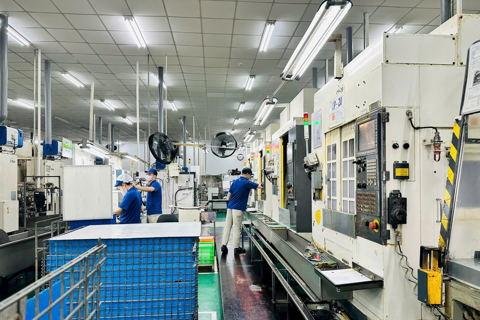
Illustrative photo. Source: Internet
|
The imbalance in supply and demand of human resources is motivated by the facts students to learn anything other than the technical field. Technology transfer between researchers and investors still remains weak, that’s why mechanisms to promote linkages between them are essential.
What does Vietnam need to do?
Vietnam needs to establish a clear vision for Industry 4.0 and develop a strategy to realize the vision, according to the article.
Besides, the country needs to provide sufficient resources and finance in research facilities and create an environment that encourages innovation. This means increasing research flexibility, autonomy and transparency in career development.
The article suggests Vietnam needs to take advantage of international academies and multilateral organizations to transfer advanced knowledge to domestic research organizations. Vietnam should approach multilateral international organizations such as the World Bank (WB), the Asian Development Bank (ADB), the United Nations (UN), the European Union (EU) as well as multinational corporations to find research funding.
What did Vietnam gain?
Vietnam is adopting policies to promote its growing technology industry. Vietnam's software exports reached US$2.5 billion in 2017. It is known that US$291 million was invested in Vietnamese startups in 2017, which was an increase of 42% compared to 2016.
In 2012, Vietnam launched the science and technology development strategy for the period of 2011-2020, emphasizing that science and technology play an important role in innovating and improving competitiveness of the economy, as well as accelerating the country’s process of industrialization and modernization. Under the strategy, high-tech products and applications will account for 45% of Vietnam's Gross Domestic Product (GDP) by 2020.
In 2018, Vietnam launched a "National action plan for implementing the 2030 program for sustainable development", reiterating that science and technology are the foundation and motivation for the country’s sustainable development.