14TH NATIONAL CONGRESS OF THE COMMUNIST PARTY OF VIETNAM
Log in
Business

Vietnam’s pharmaceutical industry needs hi-tech investment

The Hanoi Times - Although Vietnam has a treasure of abundant and diverse sources of pharmaceutical materials, including nearly 4,000 herbal plants, the country’s pharmaceutical industry currently depends o­n material imported from China to make up medicines. To exploit its own resources, it is necessary for Vietnam to boost investments in hi-tech extraction technologies.

The Hanoi Times - Although Vietnam has a treasure of abundant and diverse sources of pharmaceutical materials, including nearly 4,000 herbal plants, the country’s pharmaceutical industry currently depends o­n material imported from China to make up medicines. To exploit its own resources, it is necessary for Vietnam to boost investments in hi-tech extraction technologies.

Latest statistical reports from the Drug Administration of Vietnam indicated that in 2008, locally-produced medicines meet just 50.18 percent of demand, with eighty percent of materials for the production of medicine imported from foreign countries, mainly from China.

Pharmacist Nguyen Tien Hung, chairman of the Board of Directors of the Vietnam Medical Products Import - Export Company (Vimedimex) blamed the situation for the fact that Vietnam has not yet made adequate investment in modern separation and extraction technologies to exploit medicinal plants.

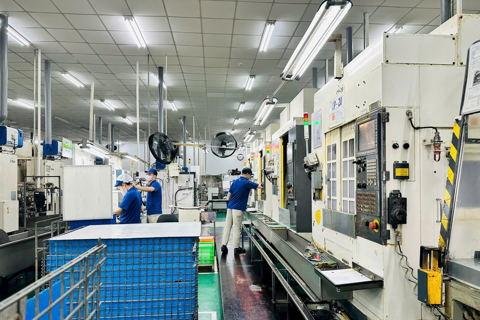
Reality shows that extraction technology of medicinal plants in the country is still underdeveloped. At present, Vietnam does not have any large hi-tech extraction plants. Most oriental medicine businesses build small scale plants, which are suitable for their own production demand.

The main extraction method employed in such plants is just intended for concentrating glues at normal pressure. Extraction plants built in areas where herbal plants are grown as materials, if any, are also small, equipped with rudimentary machines and equipment. Such plants are o­nly used for producing o­ne or two kinds of glues.

Thanks to the growing tendency among consumers to use herbal remedies, a number of oriental medicine businesses have begun to invest in modern plants equipped with controllable heat extraction technology.

No matter how modern they are, such plants cannot produce high-quality medicinal medicines that can compete with imported products because they are still falling short in extraction processes.

Mr Hung pointed out that last year, Prime Minister Nguyen Tan Dung approved a project to boost the development of the pharmaceutical industry and build a drug distribution system for the stages 2007 - 2015 and 2016-2020.

The PM also issued two decisions to stimulate the investment in plants to extract active elements from pharmaceutical materials, but no company has gained benefits from these policies.

It is really a loss for the country because if Vietnam can exploit the resources of medicinal plants appropriately, it can earn millions of US dollars each year.

Cited as an example, Mr Hung said that in 1980s Dr. B. Gluzin, deputy director of Medicinal Plant Research Institute of the Russian Ministry of Agriculture, and his fellow-workers came to work in Vietnam and found a large volume of mangiferin (an anti-oxidant agent) contained in mango leaves. This kind of mango leaf extract is used for making medicines that cures shingles.

Based o­n the discovery, Russia decided to partially transfer the extraction technology to Vimedimex and placed an order, under which Vimedimex would supply mangiferin in the form of crude material to Russia.

In 1998, Vietnam exported mangiferin with a purity of between 75 and 78 percent for the first time. In 2002, Sovipharm Joint -Venture (now BV Pharma) was established and Russia decided to transfer the entire extraction technology to Vietnam.

At present, BV Pharma can produce mangiferin with a purity of 98 and 100 percent. The volume of material and medicines in the form of finished products exported to Russia is worth $1 million a year.

But it is not merely mango leaves, Vietnam has hundreds of kinds of medicinal plants with high contents of precious active elements. For example, Taxol is found in Taxaceae; Rurin and Troxerutin in Sophora japonica L. and Curcumin and Quercetin in Curcuma.

Pharmacist Tran Hung, head of Department of Pharmaceutical Materials of the HCMC University of Medical and Pharmacy, said that to boost the development of the pharmaceutical industry and improve the production capacity of specific medicines, Vietnam has no choice but to stimulate investment in high-tech extraction technologies.

To do so, it is necessary for the Government to have policies to encourage simultaneous investment in material growing areas, high technology and training.

Since businesses feel hesitant to invest in hi-tech extraction technologies, as they require large investment capital, Mr Hung said that the Government should also issue macro policies related to financial funding and tax incentives to encourage investors.

Reactions:
Share:
Trending
Most Viewed
Vietnam commits 3% budget to turbocharge AI and data economy

Vietnam commits 3% budget to turbocharge AI and data economy

At least 3% of state budget spending will fund digital transformation, accelerating Vietnam’s shift toward a data-driven and AI-powered economy.

From labor-intensive to high-tech: Hanoi retrains for global edge

From labor-intensive to high-tech: Hanoi retrains for global edge

Raising the skill standards of high-tech workers is emerging as a decisive factor in strengthening Hanoi’s competitiveness as the capital accelerates its shift toward a knowledge-based industrial economy.

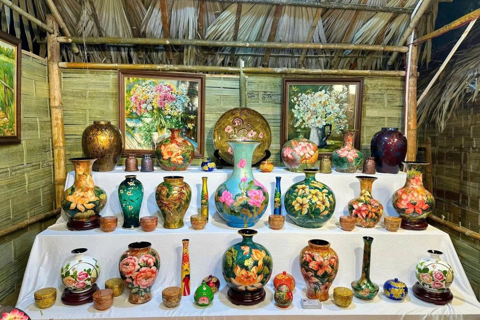
Hanoi craft villages resume production early, aiming for growth in 2026

Hanoi craft villages resume production early, aiming for growth in 2026

After the Lunar New Year break, Hanoi’s traditional craft villages have quickly resumed production, fulfilled orders and prepared for new markets while blending heritage craftsmanship with modern technology to strengthen competitiveness and sustain growth in 2026.

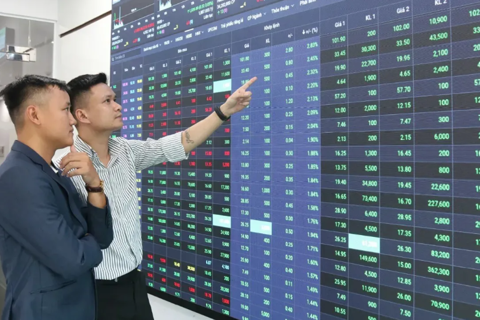
Vietnam stock market poised for post-Tet gains

Vietnam stock market poised for post-Tet gains

The post-Tet period often presents attractive opportunities for investors in the following months.

Spring Fair draws 500,000 visits, elevates Vietnamese brands nationwide

Spring Fair draws 500,000 visits, elevates Vietnamese brands nationwide

Drawing large crowds and strong commercial momentum, the 2026 Spring Fair turned Hanoi into a vibrant showcase of Vietnamese products, culture and innovation, where shopping met heritage experiences and businesses forged valuable partnerships.

Firms seek clearer policy framework for new tech, digital platforms

Firms seek clearer policy framework for new tech, digital platforms

Hanoi’s tech firms are calling for clearer demand mechanisms and transparent evaluation as the city pilots its Technology Exchange and Digital Transformation Market to boost commercialization, innovation and digital growth.

Vietnam Airlines to open first nonstop Hanoi-Amsterdam route to enhance Europe ties

Vietnam Airlines to open first nonstop Hanoi-Amsterdam route to enhance Europe ties

The move aims to open a new gateway to Europe and advance the national flag carrier’s strategy to expand its European network.

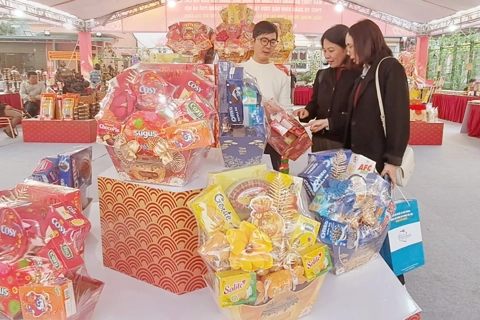
Vietnamese goods reach rural areas through Tet fairs

Vietnamese goods reach rural areas through Tet fairs

Hanoi is intensifying communication and outreach for the “Vietnamese people prioritize using Vietnamese goods” campaign to boost consumption ahead of Tet, the country’s most important holiday.