Weak credit demand leads to credit growth at only 4.81% in Jan-Sept
The growth rate is far away from the credit growth target of 14% set by the government for this year.
Despite abundant liquidity in the banking system, demand for credit remained weak due to the impacts of the Covid-19 pandemic, resulting in credit growth of 4.81% as of September 16 against late 2019, according to the State Bank of Vietnam (SBV).
| Vietnam credit growth is estimated at 4.81% in the 9-month period. |
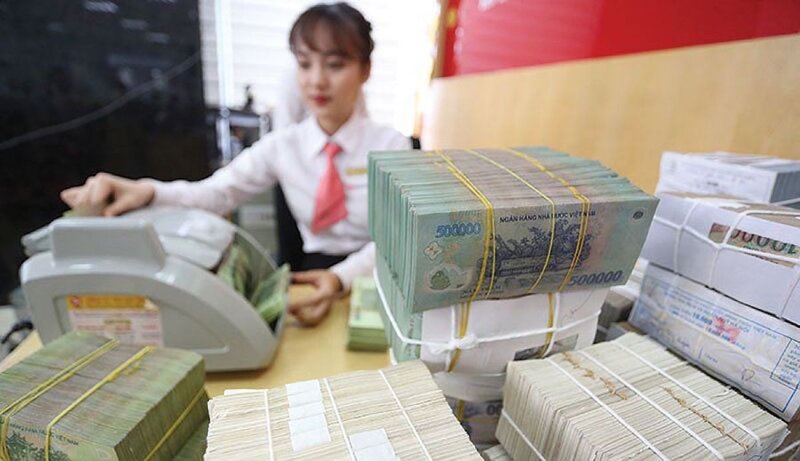
The growth rate is far away from the credit growth target of 14% set by the government for this year.
As of September 15, the growth rate of M2, which measures money supply that covers cash in circulation and all deposits, increased 7.58% against the end of 2019.
To date, the SBV has slashed its policy rates twice by a combined 100 – 150 basis points to support the country's economic recovery; lowered the interest rate cap to 4.25% annually from 4.75% for deposits with maturities of one month to less than six months; and capped interest rates for short-term loans in priority fields at 5% annually.
Meanwhile, to cope with uncertainties stemming from the Covid-19 pandemic, the SBV has been keeping a stable exchange rate and purchasing foreign currency to build up the country’s forex reserves.
As of September 14, credit institutions have restructured debt payment deadline for over 271,000 customers with total outstanding loans of VND321 trillion (US$13.83 billion); reduced interest rates on loans worth a combined of VND1,180 trillion (US$50.84 billion) for 485,000 customers; provided new loans at preferential rates of 50 – 250 basis points lower than pre-Covid-19 levels worth VND1,600 trillion (US$68.93 billion) for 310,000 customers.
Nguyen Tuan Anh, director general of the SBV’s Department of Credit for Economic Sectors, added the Covid-19 pandemic has affected outstanding loans of VND2,270 trillion (US$97.72 billion), or 25% of the total, focusing mainly in the fields of transportation, tourism, hospitality, education, and manufacturing.
Additionally, the majority of banks in the system have adopted capital adequacy ratio (CAR) under Basel II standards, while the bad debt ratio in the sector has been brought down to below 2%.
From 2012 to July 2020, banks have resolved nearly VND1,110 trillion (US$47.82 billion) in bad debts, of which VND63.7 trillion (US$2.74 billion) were cleared in the first seven months of 2020.
The SBV noted that amid the Covid-19 pandemic, the number of online inter-bank payment transactions jumped 13.61% year-on-year in the seven-month period, while payment via bank cards surged 29.7%, with a 15.8% increase in value.
The number of mobile payment transactions increased sharply by 184.2% in the number and 186.3% in value year-on-year during the period.
In the coming time, the SBV is committed to managing monetary policy in a flexible manner and closely monitoring the global financial market situation for appropriate measures.