A full-day journey to discover Hanoi’s timeless Bat Trang pottery village
Bat Trang is where clay, fire and daily life still shape each other. A day here opens a window into five centuries of craft.
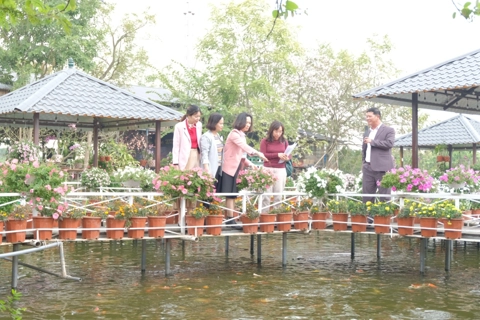
THE HANOI TIMES — Bat Trang Pottery Village, more than half a millennium old and located 15 kilometers east of central Hanoi, is one of the favorite destinations for foreign travelers as they visit the capital.
With more bus routes now linking central Hanoi and Bat Trang, visitors can easily spend a full day exploring workshops, museums, ancient kilns and lively markets.
As the bus crosses the Red River dyke, Hanoi’s skyscrapers fade and life slows down. The city gives way to a riverside village where time feels gentle and unhurried.
Children run across brick courtyards, bicycles lean against mossy walls and a faint scent of smoke drifts from the kilns still burning each week. Bat Trang welcomes visitors as a community where daily life and heritage blend naturally.
Several tour options connect Hanoi and Bat Trang, from half-day trips to full-day programs for schools, families and international travelers. Each tour combines cultural exploration with hands-on experience, allowing visitors to choose how deep they want to dive into the village’s craft.
Most tours begin at the pottery market, where rows of pig-shaped banks, celadon vases and elegant tea sets line the stalls and set the tone for the day.

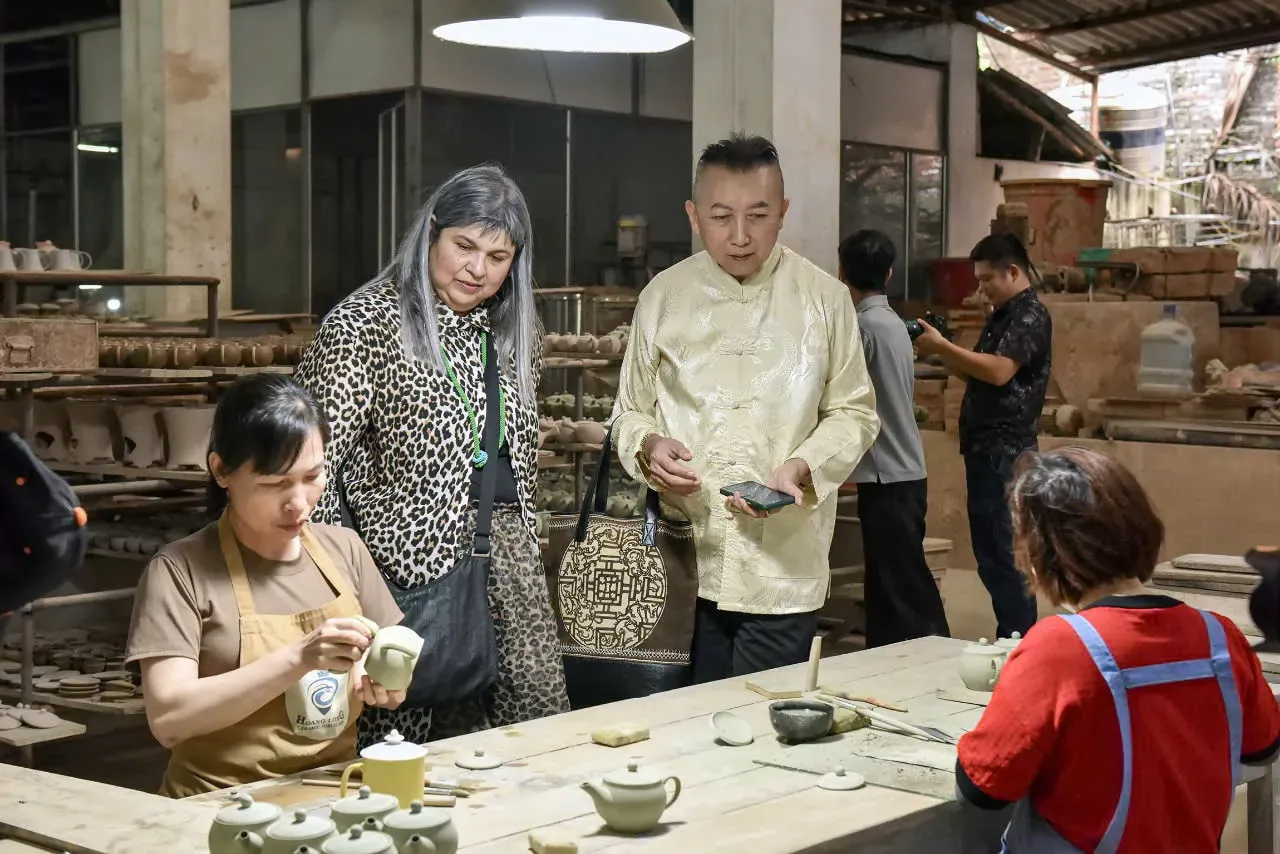
The Bat Trang pottery workshop attracts a large number of foreign visitors. Photos: Nguoi Lao Dong Newspaper
The first stop is often the Vietnamese Soul of Clay Museum, which displays cobalt-blue vases and ash-glazed jars under warm light.
“In Toronto, galleries often feel distant. Here, imperfections are not flaws, they are fingerprints of history,” Canadian traveler Mark Elliott said.
The museum also honors the late artisan Vu Duc Thang, whose masterpieces helped bring Bat Trang ceramics to global recognition.
Next comes the Lo Bau kiln, a gourd-shaped wood-fired furnace unique to Bat Trang. Once, about 20 of these kilns stood in the village, each with several domed chambers used by local workshops.
Today, only one remains, preserved as a living relic of Bat Trang’s ceramic tradition. Its smoke-darkened arch recalls a time when firewood was the heart of production and lighting the kiln was both an art and a ritual.

Schools organize field trips for students at Bat Trang pottery market. Photo: Authentic Bat Trang
A short walk away stands Bat Trang Communal House, adorned with carved dragons and layered roofs. This sacred space once hosted ceremonies for ancestors and scholars, intertwining craft with spiritual and intellectual life.
“I thought I was coming to a pottery village, but it’s also a place of learning and faith,” said Aisha Suleiman, a visitor from Kenya.
The tour then continues to the workshop of artisan To Thanh Son, owner of Thuan An Duong, one of Bat Trang’s most respected studios. Visiting his workshop is a special experience as Son is among the few master potters who welcome visitors by appointment.
Guests are first offered tea in his courtyard before he demonstrates the art of pottery-making. Clay dust still clings to his hands as he guides visitors through centering, trimming and carving. Under his direction, even beginners can turn raw clay into graceful shapes.

“We made some fantastic pots with amazing help and guidance,” wrote Stacey B. from England, describing how crafting with their own hands bridged the gap between travelers and artisans.
By midday, travelers discover another side of Bat Trang with its food. Local restaurants serve hearty northern dishes such as sticky rice, fried spring rolls, grilled pork and clay-pot stews, often in charming courtyards or beside the old kiln.
Sharing a meal here feels like joining the rhythm of village life. An Australian couple described their lunch in Bat Trang as “like stepping into a chapter of living history”, showing how the same fire that shapes clay also warms the community.
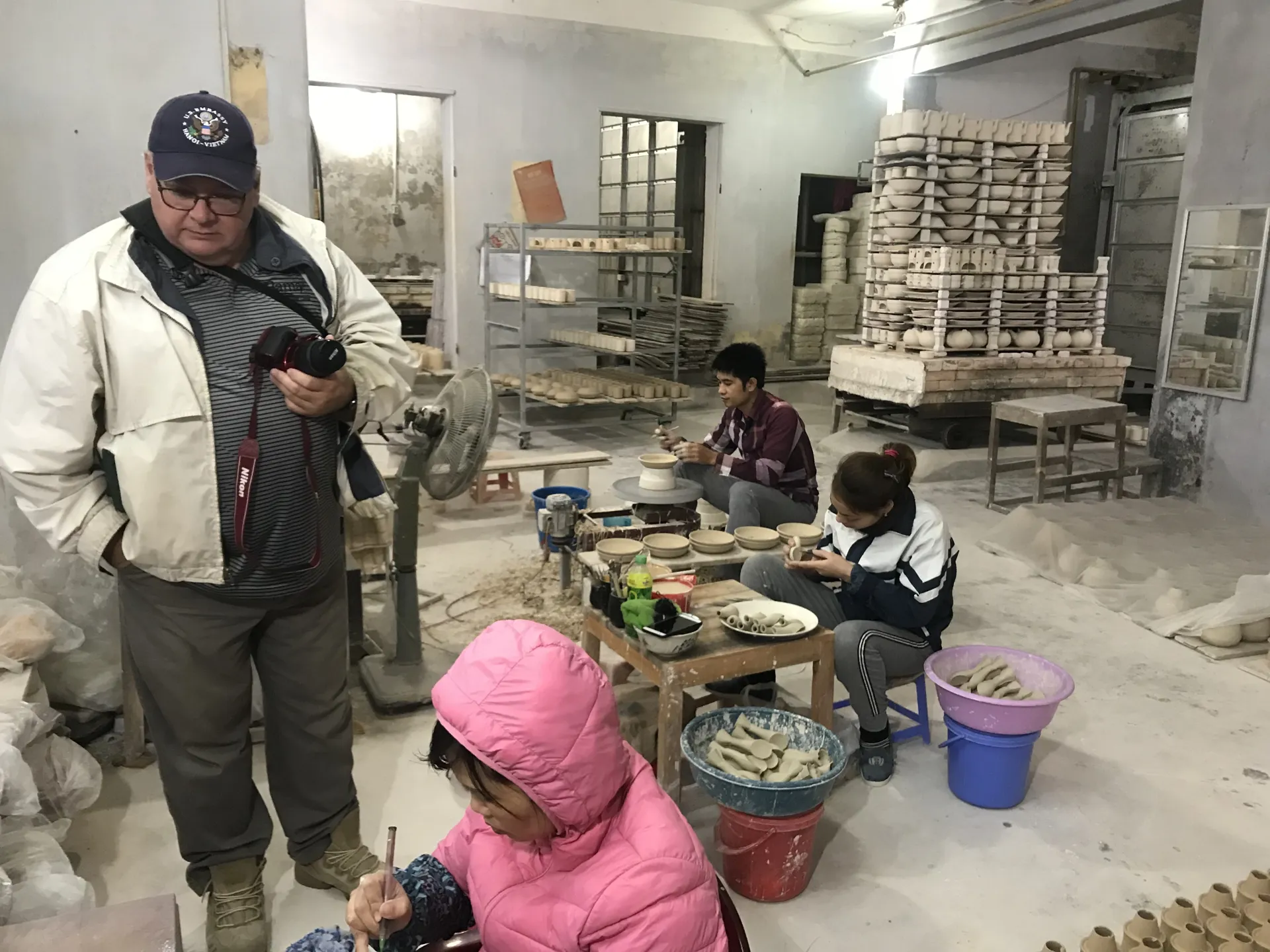
The afternoon brings energy and creativity. Workshops fill with visitors shaping clay, spinning wheels and painting small figurines. Children enjoy coloring statues, while adults mold bowls and vases to take home. These moments keep the spirit of Bat Trang alive for future generations.
Nearby factories welcome guests to observe each stage of production, from molding and drying to glazing and firing. Watching the process helps visitors appreciate the patience and skill behind every cup or vase. Many leave feeling that their purchases carry the story of the people who made them.
As the day winds down, narrow alleys reveal century-old wooden houses still home to local families.
The tour ends where it began at the pottery market, now bustling with cheerful bargaining and smiles. Some choose a tea set, others a simple vase, but everyone leaves with the true treasure of Bat Trang: the memory of a living village that continues to shape both clay and hearts.