Hanoi Book Street: A paradise for dreamers and book lovers
In the middle of Hanoi’s bustling center, a short pedestrian street lined with bookshelves and cafe has turned into one of the city’s most charming cultural corners.
THE HANOI TIMES — Tucked away on December 19 Street in Cua Nam Ward, the so-called "Hanoi Book Street" is far more than a commercial hub for reading materials.
It is a cultural rendezvous where readers, families and travelers find both inspiration and community. In a city that moves at a rapid pace, this 200-meter-long pedestrian street offers a rare moment of pause, a place where stories were sold and shared.
For many Hanoians, the book street carries countless childhood memories.
Tran Ngoc Tuan, 27, laughed as he recalled his school days at nearby Tran Quoc Toan Primary School.
“Back then, I would skip breakfast just to save enough for the newest Doraemon issues,” he said.
“And when my pockets were empty, I’d still show up and beg the book seller to let me read for free. Honestly, half my childhood diet was just Doraemon and secondhand comic papers.”
Walking into the Hanoi Book Street, many visitors share the same surprise: an entire street dedicated to books in the middle of the capital.
“It’s peaceful here, and browsing the shelves feels like stepping into another side of the city,” said Laura Jensen, a traveler from Denmark.
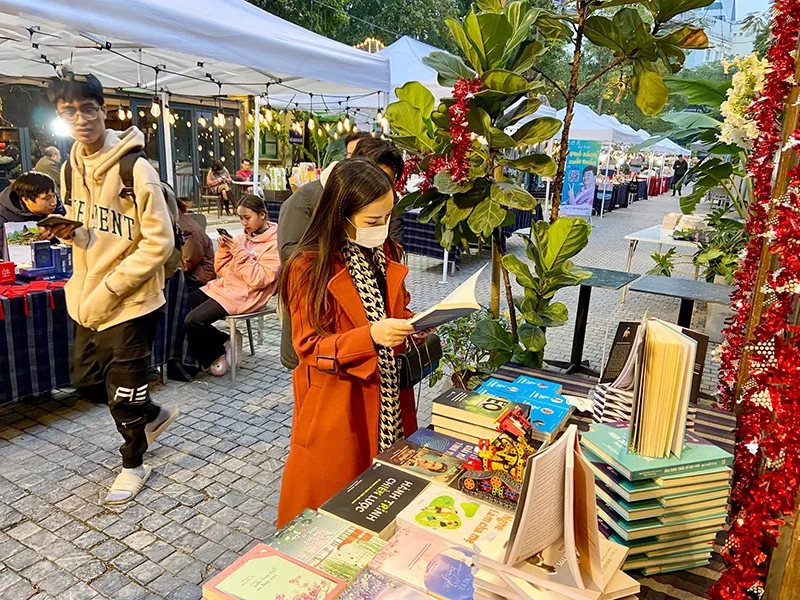
19/12 (December 19) Street in Cua Nam Ward, also known as the Hanoi Book Street, is a true paradise where stories never end. Photos: Vinpearl.com
What makes the street remarkable is not just the number of bookshops but the atmosphere they create together. Each corner has its own character, with children crouching over colourful picture books, students reviewing notes in cafes, or retirees leafing through old Vietnamese novels.
For many families, coming here on the weekend is as natural as going to the park.
Few tourists know that this 200-meter street used to be a car park, a makeshift market, and long before, a cemetery.
Its transformation into a cultural hub is part of Hanoi’s effort to give more space back to pedestrians and creative life. Today, it represents how the city reinvents itself while holding onto tradition.
On weekends, the street feels like a mini-festival. Pop-up stages host storytelling sessions, drawing contests, or small acoustic concerts. It’s not unusual to stumble upon a local author signing books or a group of children acting out scenes from a fairy tale.
The vibe here is informal, warm, and welcoming, more like a neighborhood gathering than a commercial event.

Mao Bookstore opens a 'heaven' for book lovers, both local and international. Photos: The Hanoi Times
The cafe nestled between bookshops add another layer of charm.
The smell of strong Vietnamese coffee mixes with the scent of fresh paper, creating an experience that feels both nostalgic and modern.
Many visitors say sitting here with a book is one of the most memorable ways to feel the “soul” of Hanoi.
There are also fun details that delight foreign guests. The street’s name “December 19” marks the start of Vietnam’s nationwide resistance in 1946 against the French invasion,leading to the nine-year resistence war.
So browsing here is also a walk through history. Some shops sell bilingual children’s books and English translations of Vietnamese classics, perfect souvenirs to take home.
Others display rare volumes you won’t easily find elsewhere, from old political posters to limited-edition art books.
Many international visitors say the street feels unexpectedly intimate.
“I ended up spending nearly three hours here without realizing it,” said Mark Thompson, a traveler from Australia.
“I bought a bilingual children’s book for my niece, had coffee with a group of local students who wanted to practice English, and left with the feeling that I’d been part of something authentic, not just sightseeing.”
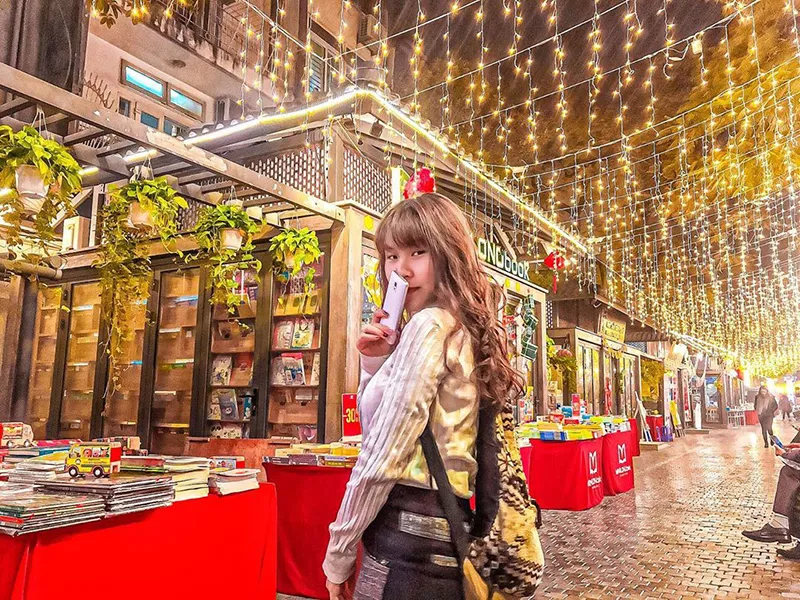
Hidden between the shelves and coffee scents, 19/12 Book Street turns into a perfect photo studio.
For Hanoians, the book street is proof that reading still has a place in daily life, even in the digital age.
And for visitors, it is a cultural window into Vietnam, not just through the titles on the shelves, but through the people who gather here: children laughing, couples sharing coffee, or strangers trading book recommendations.
In the end, the Hanoi Book Street is less about buying books and more about experiencing a slice of the city’s cultural heartbeat.
It’s a reminder that stories represent the way people connect, celebrate, and slow down together.
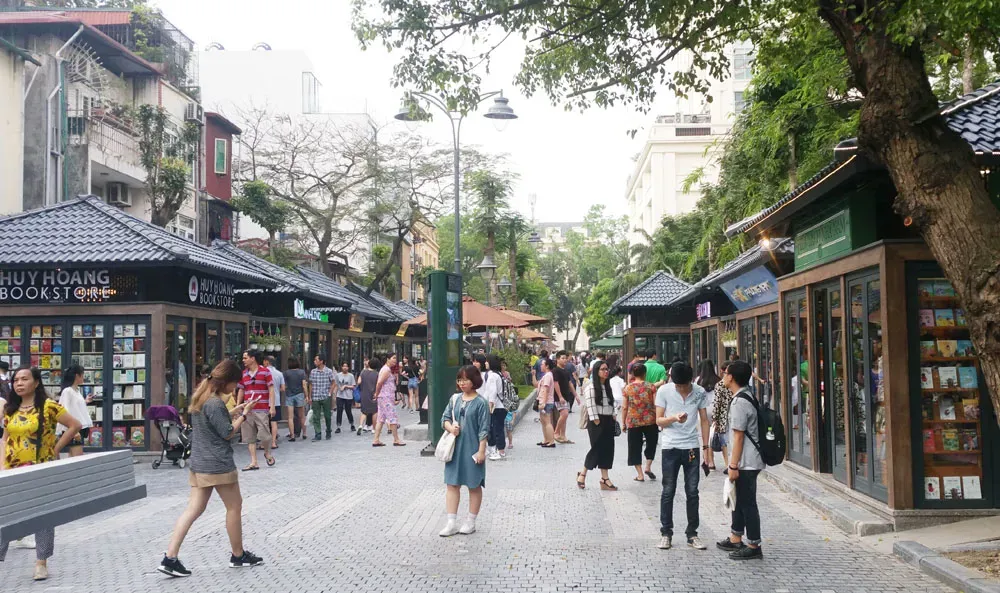
Only 200 meters long, yet 19/12 Book Street holds an irresistible charm.